
Artículos relacionados a Science as Writing
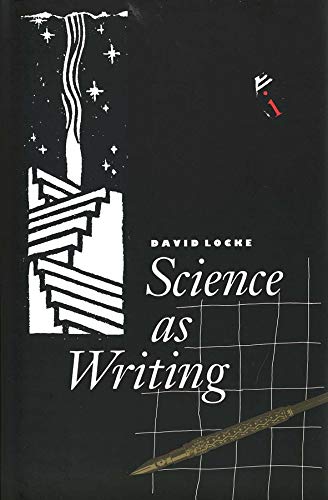
Sinopsis
For many years it has been assumed that a great gulf exists between science and the humanities, that the writings of science are simply the record of things scientists do and find and are devoid of literary features. Recently this assumption has been challenged by those who regard science and literature as companion endeavors, working side by side to describe, in their respective ways, the world of human experience. Now David Locke, a professor of literature who has also been a scientist, joins the debate, arguing that scientific language can be highly imaginative, expressive, and self-conscious and demonstrating for the first time how the major modes of literary criticism can be keys to the reading of scientific texts.
Locke takes up in sequence six critical perspectives on reading. These view literary texts as: essentially a representation of the real world; an expression of its author's thoughts and feelings; an activator of response from its readers; a work of art, interesting in its purely formal properties; an artifact situated in a social milieu; or an instrument that brings the world of phenomena into being. Locke applies these perspectives to the reading of a variety of scientific texts, from works by Galileo and Darwin to writings in contemporary molecular biology and theoretical physics. Locke suggests that attention to the literary qualities of scientific discourse will aid in further opening up the literary canon and widening the practice of literary criticism, even as it sharpens science's growing interest in, and understanding of, its own mode of operation.
"Sinopsis" puede pertenecer a otra edición de este libro.
Acerca del autor
David Locke is associate professor of English at the University of Florida. He has been a staff writer for the American Chemical Society News Service as well as an associate editor at the Encyclopaedia Britannica.
De la contraportada
For many years it has been assumed that a great gulf exists between science and the humanities, that the writings of science are simply the record of things scientists do and find and are devoid of literary features. Recently this assumption has been challenged by those who regard science and literature as companion endeavors, working side by side to describe, in their respective ways, the world of human experience. Now David Locke, a professor of literature who has also been a scientist, joins the debate, arguing that scientific language can be highly imaginative, expressive, and self-conscious and demonstrating for the first time how the major modes of literary criticism can be keys to the reading of scientific texts. Locke takes up in sequence six critical perspectives on reading. These view literary texts as: essentially representation of the real world; an expression of its author's thoughts and feelings; an activator of response from its readers; a work of art, interesting in its purely formal properties; an artifact situated in a social milieu; or an instrument that brings the world of phenomena into being. Locke applies these perspectives to the reading of a variety of scientific texts, from works by Galileo and Darwin to writings in contemporary molecular biology and theoretical physics. Locke suggests that attention to the literary qualities of scientific discourse will aid in further opening up the literary canon and widening the practice of literary criticism, even as it sharpens science's growing interest in, and understanding of, its own mode of operation.
"Sobre este título" puede pertenecer a otra edición de este libro.
Resultados de la búsqueda para Science as Writing

Imagen de archivo
Science as Writing
Publicado por
Yale University Press, 1992
ISBN 10: 0300054521
ISBN 13: 9780300054521
Antiguo o usado
Tapa dura
Librería: Greenworld Books, Arlington, TX, Estados Unidos de America
Calificación del vendedor: 5 de 5 estrellas

Condición: good. Fast Free Shipping â" Good condition. It may show normal signs of use, such as light writing, highlighting, or library markings, but all pages are intact and the book is fully readable. A solid, complete copy that's ready to enjoy. Nº de ref. del artículo: GWV.0300054521.G
Comprar usado
EUR 10,34
Gastos de envío gratis
Se envía dentro de Estados Unidos de America
Se envía dentro de Estados Unidos de America
Cantidad disponible: 1 disponibles
Imagen de archivo
Science As Writing
Publicado por
Yale University Press, 1992
ISBN 10: 0300054521
ISBN 13: 9780300054521
Antiguo o usado
Tapa dura
Librería: Better World Books: West, Reno, NV, Estados Unidos de America
Calificación del vendedor: 5 de 5 estrellas
Condición: Very Good. Former library copy. Pages intact with possible writing/highlighting. Binding strong with minor wear. Dust jackets/supplements may not be included. Includes library markings. Stock photo provided. Product includes identifying sticker. Better World Books: Buy Books. Do Good. Nº de ref. del artículo: 378268-6
Comprar usado
EUR 10,43
Gastos de envío gratis
Se envía dentro de Estados Unidos de America
Se envía dentro de Estados Unidos de America
Cantidad disponible: 1 disponibles
Imagen de archivo
Science As Writing
Publicado por
Yale University Press, 1992
ISBN 10: 0300054521
ISBN 13: 9780300054521
Antiguo o usado
Tapa dura
Librería: Better World Books, Mishawaka, IN, Estados Unidos de America
Calificación del vendedor: 5 de 5 estrellas
Condición: Good. Pages intact with minimal writing/highlighting. The binding may be loose and creased. Dust jackets/supplements are not included. Stock photo provided. Product includes identifying sticker. Better World Books: Buy Books. Do Good. Nº de ref. del artículo: 5001936-20
Comprar usado
EUR 10,43
Gastos de envío gratis
Se envía dentro de Estados Unidos de America
Se envía dentro de Estados Unidos de America
Cantidad disponible: 1 disponibles
Imagen de archivo
Science As Writing
Publicado por
Yale University Press, 1992
ISBN 10: 0300054521
ISBN 13: 9780300054521
Antiguo o usado
Tapa dura
Librería: Better World Books, Mishawaka, IN, Estados Unidos de America
Calificación del vendedor: 5 de 5 estrellas
Condición: Good. Former library copy. Pages intact with minimal writing/highlighting. The binding may be loose and creased. Dust jackets/supplements are not included. Includes library markings. Stock photo provided. Product includes identifying sticker. Better World Books: Buy Books. Do Good. Nº de ref. del artículo: GRP59418912
Comprar usado
EUR 10,43
Gastos de envío gratis
Se envía dentro de Estados Unidos de America
Se envía dentro de Estados Unidos de America
Cantidad disponible: 1 disponibles
Imagen de archivo
Science as Writing
Publicado por
Yale University Press, 1992
ISBN 10: 0300054521
ISBN 13: 9780300054521
Antiguo o usado
Tapa dura
Librería: N. Fagin Books, Chicago, IL, Estados Unidos de America
Calificación del vendedor: 5 de 5 estrellas
Hardcover. Condición: Very Good. Dust Jacket Included. 1992. History of Science. Yale University Press. Very good - fine cloth, very good though black dust jacket is slightly scuffed 10/25. Nº de ref. del artículo: 6478
Comprar usado
EUR 9,19
Envío por EUR 5,36
Se envía dentro de Estados Unidos de America
Se envía dentro de Estados Unidos de America
Cantidad disponible: 1 disponibles
Imagen de archivo
Science As Writing
Publicado por
Yale University Press, 1992
ISBN 10: 0300054521
ISBN 13: 9780300054521
Antiguo o usado
Tapa dura
Librería: Better World Books Ltd, Dunfermline, Reino Unido
Calificación del vendedor: 5 de 5 estrellas
Condición: Good. Former library copy. Pages intact with minimal writing/highlighting. The binding may be loose and creased. Dust jackets/supplements are not included. Includes library markings. Stock photo provided. Product includes identifying sticker. Better World Books: Buy Books. Do Good. Nº de ref. del artículo: GRP59418912
Comprar usado
EUR 10,51
Envío por EUR 5,91
Se envía de Reino Unido a Estados Unidos de America
Se envía de Reino Unido a Estados Unidos de America
Cantidad disponible: 1 disponibles
Imagen de archivo
Science as Writing
Publicado por
Yale University Press, 1992
ISBN 10: 0300054521
ISBN 13: 9780300054521
Antiguo o usado
Tapa dura
Librería: Phatpocket Limited, Waltham Abbey, HERTS, Reino Unido
Calificación del vendedor: 5 de 5 estrellas
Condición: Good. Your purchase helps support Sri Lankan Children's Charity 'The Rainbow Centre'. Ex-library, so some stamps and wear, but in good overall condition. Our donations to The Rainbow Centre have helped provide an education and a safe haven to hundreds of children who live in appalling conditions. Nº de ref. del artículo: Z1-L-017-01656
Comprar usado
EUR 7,54
Envío por EUR 12,57
Se envía de Reino Unido a Estados Unidos de America
Se envía de Reino Unido a Estados Unidos de America
Cantidad disponible: 2 disponibles
Imagen de archivo
Science As Writing
Publicado por
Yale University Press, New Haven, 1992
ISBN 10: 0300054521
ISBN 13: 9780300054521
Antiguo o usado
Tapa dura
Original o primera edición
Librería: Daedalus Books, Portland, OR, Estados Unidos de America
Calificación del vendedor: 4 de 5 estrellas

First Edition. Cloth. Jacket has short edge tear. Near fine in dustjacket.-moved to KF6; 8vo. Nº de ref. del artículo: 156422
Comprar usado
EUR 19,77
Envío por EUR 5,80
Se envía dentro de Estados Unidos de America
Se envía dentro de Estados Unidos de America
Cantidad disponible: 1 disponibles
Imagen de archivo
Science as Writing
Publicado por
Yale University Press, 1992
ISBN 10: 0300054521
ISBN 13: 9780300054521
Antiguo o usado
Tapa dura
Librería: Mooney's bookstore, Den Helder, Holanda
Calificación del vendedor: 4 de 5 estrellas
Condición: Very Good. Nº de ref. del artículo: 8455B2D31CA544B
Comprar usado
EUR 45,88
Envío por EUR 14,95
Se envía de Holanda a Estados Unidos de America
Se envía de Holanda a Estados Unidos de America
Cantidad disponible: 1 disponibles
Imagen de archivo
Science as Writing
Publicado por
Yale University Press, 1992
ISBN 10: 0300054521
ISBN 13: 9780300054521
Nuevo
Tapa dura
Librería: PBShop.store US, Wood Dale, IL, Estados Unidos de America
Calificación del vendedor: 5 de 5 estrellas
HRD. Condición: New. New Book. Shipped from UK. THIS BOOK IS PRINTED ON DEMAND. Established seller since 2000. Nº de ref. del artículo: L1-9780300054521
Comprar nuevo
EUR 74,78
Gastos de envío gratis
Se envía dentro de Estados Unidos de America
Se envía dentro de Estados Unidos de America
Cantidad disponible: Más de 20 disponibles