
Artículos relacionados a Is There a Human Nature?: 18 (Boston University Studies...
Sinopsis
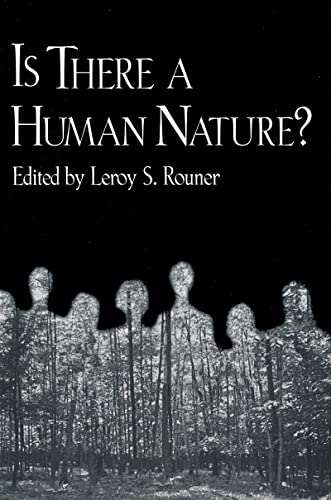
We humans are deeply convinced that there is something distinct about us as a species, but we have never been able to agree on what it is. In the West, the religion of Israel argued that the will is the fundamental vehicle of our relation to God and therefore the determining characteristic of our humanity. Greek philosophy countered with the view that reason is the definitively human characteristic, since humans are the only self-aware animal. Today that unresolved argument is further complicated by the pluralism of contemporary culture and the surprisingly different ways in which different groups understand themselves. These essays approach the question in two different ways. The first is a philosophical attempt at definition. Bhikhu Parekh agrees that there is a universal human nature but that there is also a nature which is culture-specific and a third which is self-reflective. Daniel O. Dahlstrom argues that we know our nature only when it is recognized by our culture and that the liberal democratic idea of the state both celebrates and threatens the notion of fundamental human equality. Stanley H. Rosen gives a contemporary interpretation of the classical Greek view in proposing that philosophy is an expression of our humanity, an openness to the human love of wisdom. Knud Haakonssen is not ready to endorse any given orthodoxy regarding human nature but argues rather for openness to experimental views and promising hypothesis. Lisa Sowle Cahill defends a feminist interpretation of Catholic moral theology; we must be able to say that the battering of women is everywhere and always wrong. And Robert Cummings Neville notes that being human means having the obligation to take responsibility for our history.The second group of essays recognizes that we are what we do as well as what we say we are and asks what it means to be genuinely humane. Glenn C. Loury criticizes Murray and Herrnstein’s The Bell Curve as advocacy for a particular elitist view of human nature, which he rejects. Ray L. Hart explores the moral "fault" and "fallenness" in human nature. Graham Parkes insists that human nature is not morally privileged but must be seen as part of nature taken as a whole. Tu Wei-ming explores the Confucian idea of filial piety as a key to global ethics. Leroy S. Rouner examines Kierkegaard’s psychology of sin, and Sissela Bok uses the metaphor of the lifeboat to see what extreme situations reveal about our nature as human beings.These essays tend to view true humanity as partly given but largely an achievement. Human nature is now more varied than in the past.
"Sinopsis" puede pertenecer a otra edición de este libro.
Acerca del autor
Leroy S. Rouner (d. 2006) was the Professor of Philosophy, Religion and Philosophical Theology and Director of the Institute for Philosophy and Religion at Boston University. He edited a number of books and is the author of Within Human Experience: The Philosophy of William Ernest Hocking and To Be at Home: Christianity, Civil Religion and World Community.
"Sobre este título" puede pertenecer a otra edición de este libro.
Resultados de la búsqueda para Is There a Human Nature?: 18 (Boston University Studies...

Imagen de archivo
Is There a Human Nature?
Publicado por
University of Notre Dame Press, 1997
ISBN 10: 0268031592
ISBN 13: 9780268031596
Antiguo o usado
Paperback
Librería: ThriftBooks-Atlanta, AUSTELL, GA, Estados Unidos de America
Calificación del vendedor: 5 de 5 estrellas

Paperback. Condición: Very Good. No Jacket. May have limited writing in cover pages. Pages are unmarked. ~ ThriftBooks: Read More, Spend Less. Nº de ref. del artículo: G0268031592I4N00
Comprar usado
EUR 14,42
Gastos de envío gratis
Se envía dentro de Estados Unidos de America
Se envía dentro de Estados Unidos de America
Cantidad disponible: 1 disponibles
Imagen de archivo
Is There a Human Nature? (ND BOSTON U STUDIES)
Publicado por
University of Notre Dame Press, 1997
ISBN 10: 0268031592
ISBN 13: 9780268031596
Nuevo
Paperback
Librería: Redux Books, Grand Rapids, MI, Estados Unidos de America
Calificación del vendedor: 5 de 5 estrellas
Paperback. Condición: New. SEALED IN PUBLISHER'S SHRINK WRAP. Paperback. An UNUSED, UNMARKED, UNBLEMISHED copy.; 100% Satisfaction Guaranteed! Ships same or next business day! Nº de ref. del artículo: 142410090086
Comprar nuevo
EUR 21,97
Gastos de envío gratis
Se envía dentro de Estados Unidos de America
Se envía dentro de Estados Unidos de America
Cantidad disponible: 2 disponibles
Imagen de archivo
Is There a Human Nature?
Publicado por
University of Notre Dame Press, 1997
ISBN 10: 0268031592
ISBN 13: 9780268031596
Antiguo o usado
Tapa blanda
Librería: GreatBookPrices, Columbia, MD, Estados Unidos de America
Calificación del vendedor: 5 de 5 estrellas
Condición: As New. Unread book in perfect condition. Nº de ref. del artículo: 15823955
Comprar usado
EUR 28,70
Envío por EUR 2,30
Se envía dentro de Estados Unidos de America
Se envía dentro de Estados Unidos de America
Cantidad disponible: Más de 20 disponibles
Imagen de archivo
Is There a Human Nature?
Publicado por
MR - University of Notre Dame Press, 1997
ISBN 10: 0268031592
ISBN 13: 9780268031596
Nuevo
PAP
Librería: PBShop.store UK, Fairford, GLOS, Reino Unido
Calificación del vendedor: 5 de 5 estrellas
PAP. Condición: New. New Book. Shipped from UK. Established seller since 2000. Nº de ref. del artículo: FW-9780268031596
Comprar nuevo
EUR 30,22
Envío por EUR 5,85
Se envía de Reino Unido a Estados Unidos de America
Se envía de Reino Unido a Estados Unidos de America
Cantidad disponible: 1 disponibles
Imagen de archivo
Is There a Human Nature?
Publicado por
University of Notre Dame Press, 1997
ISBN 10: 0268031592
ISBN 13: 9780268031596
Nuevo
Tapa blanda
Librería: GreatBookPrices, Columbia, MD, Estados Unidos de America
Calificación del vendedor: 5 de 5 estrellas
Condición: New. Nº de ref. del artículo: 15823955-n
Comprar nuevo
EUR 34,66
Envío por EUR 2,30
Se envía dentro de Estados Unidos de America
Se envía dentro de Estados Unidos de America
Cantidad disponible: Más de 20 disponibles
Imagen de archivo
Is There a Human Nature? (ND BOSTON U STUDIES)
Publicado por
University of Notre Dame Press, 1997
ISBN 10: 0268031592
ISBN 13: 9780268031596
Nuevo
Tapa blanda
Librería: California Books, Miami, FL, Estados Unidos de America
Calificación del vendedor: 4 de 5 estrellas

Condición: New. Nº de ref. del artículo: I-9780268031596
Comprar nuevo
EUR 37,66
Gastos de envío gratis
Se envía dentro de Estados Unidos de America
Se envía dentro de Estados Unidos de America
Cantidad disponible: Más de 20 disponibles
Imagen de archivo
Is There a Human Nature? (ND BOSTON U STUDIES)
Publicado por
University of Notre Dame Press, 1997
ISBN 10: 0268031592
ISBN 13: 9780268031596
Nuevo
Tapa blanda
Librería: Ria Christie Collections, Uxbridge, Reino Unido
Calificación del vendedor: 5 de 5 estrellas
Condición: New. In English. Nº de ref. del artículo: ria9780268031596_new
Comprar nuevo
EUR 29,66
Envío por EUR 10,93
Se envía de Reino Unido a Estados Unidos de America
Se envía de Reino Unido a Estados Unidos de America
Cantidad disponible: Más de 20 disponibles
Imagen de archivo
Is There a Human Nature?: Vol 18
Publicado por
Univ of Notre Dame Pr, 2000
ISBN 10: 0268031592
ISBN 13: 9780268031596
Nuevo
Paperback
Librería: Revaluation Books, Exeter, Reino Unido
Calificación del vendedor: 5 de 5 estrellas
Paperback. Condición: Brand New. 232 pages. 8.75x6.00x0.75 inches. In Stock. This item is printed on demand. Nº de ref. del artículo: __0268031592
Comprar nuevo
EUR 34,93
Envío por EUR 11,66
Se envía de Reino Unido a Estados Unidos de America
Se envía de Reino Unido a Estados Unidos de America
Cantidad disponible: 1 disponibles
Imagen de archivo
Is There a Human Nature?
Publicado por
University of Notre Dame Press, 1997
ISBN 10: 0268031592
ISBN 13: 9780268031596
Nuevo
Tapa blanda
Librería: GreatBookPricesUK, Woodford Green, Reino Unido
Calificación del vendedor: 5 de 5 estrellas
Condición: New. Nº de ref. del artículo: 15823955-n
Comprar nuevo
EUR 29,64
Envío por EUR 17,49
Se envía de Reino Unido a Estados Unidos de America
Se envía de Reino Unido a Estados Unidos de America
Cantidad disponible: Más de 20 disponibles
Imagen de archivo
Is There a Human Nature?
Publicado por
University of Notre Dame Press, 1997
ISBN 10: 0268031592
ISBN 13: 9780268031596
Antiguo o usado
Tapa blanda
Librería: GreatBookPricesUK, Woodford Green, Reino Unido
Calificación del vendedor: 5 de 5 estrellas
Condición: As New. Unread book in perfect condition. Nº de ref. del artículo: 15823955
Comprar usado
EUR 31,94
Envío por EUR 17,49
Se envía de Reino Unido a Estados Unidos de America
Se envía de Reino Unido a Estados Unidos de America
Cantidad disponible: Más de 20 disponibles