
Artículos relacionados a Protocol: How Control Exists After Decentralization...
Protocol: How Control Exists After Decentralization (Leonardo Book Series) - Tapa dura
Libro 2 de 28: Leonardo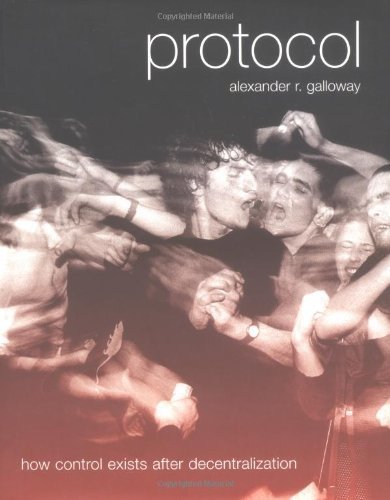
Sinopsis
Is the Internet a vast arena of unrestricted communication and freely exchanged information or a regulated, highly structured virtual bureaucracy? In Protocol, Alexander Galloway argues that the founding principle of the Net is control, not freedom, and that the controlling power lies in the technical protocols that make network connections (and disconnections) possible. He does this by treating the computer as a textual medium that is based on a technological language, code. Code, he argues, can be subject to the same kind of cultural and literary analysis as any natural language; computer languages have their own syntax, grammar, communities, and cultures. Instead of relying on established theoretical approaches, Galloway finds a new way to write about digital media, drawing on his backgrounds in computer programming and critical theory. "Discipline-hopping is a necessity when it comes to complicated socio-technical topics like protocol," he writes in the preface.
Galloway begins by examining the types of protocols that exist, including TCP/IP, DNS, and HTML. He then looks at examples of resistance and subversion—hackers, viruses, cyberfeminism, Internet art—which he views as emblematic of the larger transformations now taking place within digital culture. Written for a nontechnical audience, Protocol serves as a necessary counterpoint to the wildly utopian visions of the Net that were so widespread in earlier days.
"Sinopsis" puede pertenecer a otra edición de este libro.
Críticas
"A very valuable, very original, and very significant contribution to the field of media studies and cultural theory." - Tilman Baumgartel, media critic, author of net.art and net.art 2.0 - New Material towards Net Art"
Reseña del editor
Is the Internet a vast arena of unrestricted communication and freely exchanged information or a regulated, highly structured virtual bureaucracy? In Protocol Alexander Galloway argues that the founding principle of the Net is control, not freedom, and that the controlling power lies in the technical protocols that make network connections (and disconnections) possible. He does this by treating the computer as a textual medium that is based on a technological language, code. Code, he argues, can be subject to the same kind of cultural and literary analysis as any natural language; computer languages have their own syntax, grammar, communities and cultures. Instead of relying on established theoretical approaches, Galloway finds a new way to write about digital media, drawing on his backgrounds in computer programming and critical theory. "Discipline-hopping is a necessity when it comes to complicated socio-technical topics like protocol," he writes in the preface. Galloway begins by examining the types of protocols that exist, including TCP/IP, DNS and HTML. He then looks at examples of resistance and subversion - hackers, viruses, cyberfeminism, Internet art - which he views as emblematic of the larger transformations now taking place within digital culture. Written for a nontechnical audience, Protocol serves as a necessary counterpoint to the wildly utopian visions of the Net that were so widespread in earlier days.
"Sobre este título" puede pertenecer a otra edición de este libro.
Resultados de la búsqueda para Protocol: How Control Exists After Decentralization...

Imagen de archivo
Protocol: How Control Exists After Decentralization (Leonardo Series)
Publicado por
Mit Pr (edition ), 2004
ISBN 10: 0262072475
ISBN 13: 9780262072472
Antiguo o usado
Tapa dura
Librería: BooksRun, Philadelphia, PA, Estados Unidos de America
Calificación del vendedor: 5 de 5 estrellas

Hardcover. Condición: Fair. With dust jacket. The item might be beaten up but readable. May contain markings or highlighting, as well as stains, bent corners, or any other major defect, but the text is not obscured in any way. Nº de ref. del artículo: 0262072475-7-1-29
Comprar usado
EUR 19,40
Gastos de envío gratis
Se envía dentro de Estados Unidos de America
Se envía dentro de Estados Unidos de America
Cantidad disponible: 1 disponibles
Imagen del vendedor
Protocol: How Control Exists After Decentralization (Leonardo Series)
Librería: Bay State Book Company, North Smithfield, RI, Estados Unidos de America
Calificación del vendedor: 5 de 5 estrellas
Condición: good. The book is in good condition with all pages and cover intact, including the dust jacket if originally issued. The spine may show light wear. Pages may contain some notes or highlighting, and there might be a "From the library of" label. Boxed set packaging, shrink wrap, or included media like CDs may be missing. Nº de ref. del artículo: BSM.1BZUN
Comprar usado
EUR 19,82
Gastos de envío gratis
Se envía dentro de Estados Unidos de America
Se envía dentro de Estados Unidos de America
Cantidad disponible: 1 disponibles
Imagen del vendedor
Protocol: How Control Exists After Decentralization
Publicado por
MIT Press, 2004
ISBN 10: 0262072475
ISBN 13: 9780262072472
Antiguo o usado
Tapa dura
Original o primera edición
Librería: Southampton Books, Sag Harbor, NY, Estados Unidos de America
Calificación del vendedor: 5 de 5 estrellas
Hardcover. Condición: Very Good. First Edition. First Edition, First Printing. Published by MIT Press, 2004. Quarto. Hardcover. Book is very good with the previous owner's highlighting throughout the pages. Dust jacket is very good with light edgewear.100% positive feedback. 30 day money back guarantee. NEXT DAY SHIPPING! Excellent customer service. Please email with any questions. All books packed carefully and ship with free delivery confirmation/tracking. All books come with free bookmarks. Ships from Sag Harbor, New York. Nº de ref. del artículo: 367165
Comprar usado
EUR 31,83
Envío por EUR 4,41
Se envía dentro de Estados Unidos de America
Se envía dentro de Estados Unidos de America
Cantidad disponible: 1 disponibles
Imagen de archivo
Protocol: How Control Exists After Decentralization (Leonardo Series)
Librería: GoldBooks, Denver, CO, Estados Unidos de America
Calificación del vendedor: 5 de 5 estrellas
Hardcover. Condición: new. New Copy. Customer Service Guaranteed. Nº de ref. del artículo: 74A42_31_0262072475
Comprar nuevo
EUR 100,53
Envío por EUR 4,86
Se envía dentro de Estados Unidos de America
Se envía dentro de Estados Unidos de America
Cantidad disponible: 1 disponibles
Imagen de archivo
Protocol: How Control Exists after Decentralization (Leonardo Books)
Librería: The Book Spot, Sioux Falls, MN, Estados Unidos de America
Calificación del vendedor: 4 de 5 estrellas

Hardcover. Condición: New. Nº de ref. del artículo: Abebooks7305
Comprar nuevo
EUR 109,12
Gastos de envío gratis
Se envía dentro de Estados Unidos de America
Se envía dentro de Estados Unidos de America
Cantidad disponible: 1 disponibles
Imagen de archivo
Protocol ? How Control Exists after Decentralization (Leonardo Book Series)
Librería: Hard To Find Editions, Bristol, AVON, Reino Unido
Calificación del vendedor: 5 de 5 estrellas
Hardcover. Condición: Very Good. Estado de la sobrecubierta: Very Good. This book has been read, but is in a clean and very good condition. All pages are intact with no highlighting or writing contained within. The spine remains undamaged with tight binding. The paperback cover or dust cover are also in very good condition. Fast dispatch within and from the UK. 100% money back guarantee. Nº de ref. del artículo: ABE-1683141405810
Comprar usado
EUR 68,60
Envío por EUR 56,21
Se envía de Reino Unido a Estados Unidos de America
Se envía de Reino Unido a Estados Unidos de America
Cantidad disponible: 1 disponibles
Imagen de archivo
Protocol: How Control Exists after Decentralization (Leonardo Books)
Publicado por
The MIT Press, 2004
ISBN 10: 0262072475
ISBN 13: 9780262072472
Antiguo o usado
Tapa dura
Librería: Mispah books, Redhill, SURRE, Reino Unido
Calificación del vendedor: 4 de 5 estrellas
Hardcover. Condición: Like New. LIKE NEW. SHIPS FROM MULTIPLE LOCATIONS. book. Nº de ref. del artículo: ERICA82902620724754
Comprar usado
EUR 104,94
Envío por EUR 29,28
Se envía de Reino Unido a Estados Unidos de America
Se envía de Reino Unido a Estados Unidos de America
Cantidad disponible: 1 disponibles