
Artículos relacionados a Little Labels - Big Sound: Small Record Companies and...
Sinopsis
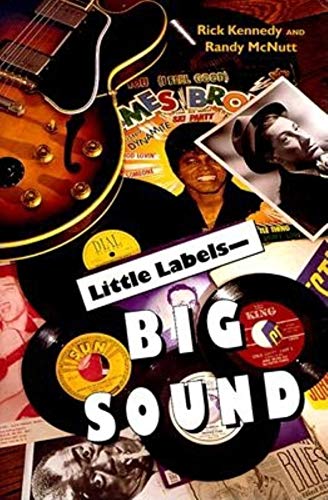
'There would be no record business as we know it without the passion of these pioneers. Today's leaders and label heads pale in comparison to these legendary giants. Show me a man today who could stand up to a Syd Nathan or a Don Robey, and I'll show you a man behind bars - not behind a desk. Why, without Sam Phillips, the founder of Sun Records and the man who unearthed Elvis, Carl Perkins, Johnny Cash, Roy Orbison, Jerry Lee Lewis, Rufus Thomas, and Howling Wolf to name but a few, there might not even have been any rock 'n' roll, electric blues, or rockabilly music' - Al Kooper, from the Foreword.From the 1920s through the 1960s, scores of small, independent record companies nurtured distinctly American music: jazz, blues, gospel, country, rhythm and blues, and the 1950s offspring of R&B, rock n' roll. Operated by families or individuals, often on the fringe of mainstream culture, these labels fostered America's musical voice by discovering original artists who would become giants of popular culture. "Little Labels - Big Sound" profiles ten such companies. Louis Armstrong, Hank Williams, James Brown, Roy Orbison, and other musicians, black and white, brought regional American styles to a world audience and won enduring fame for themselves.But often forgotten are the colorful owners of small record labels who first recorded these musicians and helped to popularize their sound before the dominant, more bureaucratic competitors knew what had happened. And yet, so many of these small labels crashed and burned almost as fast as they rose. Sometimes, their owners were visionaries. Ross Russell, a record-store owner in Los Angeles in the mid-1940s, risked his last dollar to create Dial Records because he was convinced that an obscure jazz saxophonist named Charlie Parker was creating a music revolution with his bebop jazz.Because Sam Phillips of Sun Records in Memphis recorded white country and black R&B singers in the early 1950s, he knew exactly what he was looking for when a shy, teenaged Elvis Presley walked into his storefront studio in 1954 and asked to make a record. Other owners had little appreciation for the music but were street-smart entrepreneurs. The white-owned 'race' labels of the 1920s, for example, recognized in black consumers a market that had been ignored by the major companies that dominated the recording business. Some small record companies have been extensions of a nightclub, record store, or booking agency. Influencing the development of music wasn't what these record label owners had in mind: they were trying to earn a living. While most of these record labels are long gone, the music that they produced on primitive equipment remains fresh - and bigger than life.
"Sinopsis" puede pertenecer a otra edición de este libro.
Críticas
"In this era of monolithic record companies and predictably contrived music, it's refreshing to read about mavericks who took chances... a look at ten visionaries who altered the course of popular music." --Playboy " ... close-up portraits of risk-taking label owners who often gambled their careers and livelihoods to release music they believed in." --Billboard " ... [a] volume that--like the labels it celebrates, and the 45s and 78s those labels put out--is full of exciting and vital content." --San Francisco Chronicle "This book is a great piece of storytelling... well written, crammed full of interesting facts, and great fun." --Dirty Linen "Kennedy and McNutt celebrate the predecessors of today's vaunted indie record companies in this rich survey... In profiling the feisty underdogs who produced so much music that 'is still very much with us,' Kennedy and McNutt also explore the commercial and social forces affecting the industry." --Booklist
Reseña del editor
'There would be no record business as we know it without the passion of these pioneers. Today's leaders and label heads pale in comparison to these legendary giants. Show me a man today who could stand up to a Syd Nathan or a Don Robey, and I'll show you a man behind bars - not behind a desk. Why, without Sam Phillips, the founder of Sun Records and the man who unearthed Elvis, Carl Perkins, Johnny Cash, Roy Orbison, Jerry Lee Lewis, Rufus Thomas, and Howling Wolf to name but a few, there might not even have been any rock 'n' roll, electric blues, or rockabilly music' - Al Kooper, from the Foreword.From the 1920s through the 1960s, scores of small, independent record companies nurtured distinctly American music: jazz, blues, gospel, country, rhythm and blues, and the 1950s offspring of R&B, rock n' roll. Operated by families or individuals, often on the fringe of mainstream culture, these labels fostered America's musical voice by discovering original artists who would become giants of popular culture. "Little Labels - Big Sound" profiles ten such companies. Louis Armstrong, Hank Williams, James Brown, Roy Orbison, and other musicians, black and white, brought regional American styles to a world audience and won enduring fame for themselves.But often forgotten are the colorful owners of small record labels who first recorded these musicians and helped to popularize their sound before the dominant, more bureaucratic competitors knew what had happened. And yet, so many of these small labels crashed and burned almost as fast as they rose. Sometimes, their owners were visionaries. Ross Russell, a record-store owner in Los Angeles in the mid-1940s, risked his last dollar to create Dial Records because he was convinced that an obscure jazz saxophonist named Charlie Parker was creating a music revolution with his bebop jazz.Because Sam Phillips of Sun Records in Memphis recorded white country and black R&B singers in the early 1950s, he knew exactly what he was looking for when a shy, teenaged Elvis Presley walked into his storefront studio in 1954 and asked to make a record. Other owners had little appreciation for the music but were street-smart entrepreneurs. The white-owned 'race' labels of the 1920s, for example, recognized in black consumers a market that had been ignored by the major companies that dominated the recording business. Some small record companies have been extensions of a nightclub, record store, or booking agency. Influencing the development of music wasn't what these record label owners had in mind: they were trying to earn a living. While most of these record labels are long gone, the music that they produced on primitive equipment remains fresh - and bigger than life.
"Sobre este título" puede pertenecer a otra edición de este libro.
Resultados de la búsqueda para Little Labels - Big Sound: Small Record Companies and...

Imagen del vendedor
Little Labels--Big Sound: Small Record Companies and the Rise of American Music
Publicado por
Indiana University Press, 1999
ISBN 10: 0253335485
ISBN 13: 9780253335487
Antiguo o usado
Tapa dura
Librería: Gate City Books, GREENSBORO, NC, Estados Unidos de America
Calificación del vendedor: 5 de 5 estrellas

Condición: good. USED book in GOOD condition. Great binding, pages and cover show normal signs of wear from use. Nº de ref. del artículo: GCM.3LMH
Comprar usado
EUR 11,72
Gastos de envío gratis
Se envía dentro de Estados Unidos de America
Se envía dentro de Estados Unidos de America
Cantidad disponible: 1 disponibles
Imagen de archivo
Little Labels, Big Sound: Small Record Companies and the Rise of American Music
Publicado por
Indiana Univ Pr, 1999
ISBN 10: 0253335485
ISBN 13: 9780253335487
Antiguo o usado
Tapa dura
Librería: Magers and Quinn Booksellers, Minneapolis, MN, Estados Unidos de America
Calificación del vendedor: 5 de 5 estrellas
hardcover. Condición: Acceptable. May have underlining, highlighting, margin notes, remainder marks, inscriptions, book plates, tears, significant wear, and/or a missing dust jacket, box, or discs. Damaged item. Nº de ref. del artículo: 1535423
Comprar usado
EUR 9,98
Envío por EUR 3,56
Se envía dentro de Estados Unidos de America
Se envía dentro de Estados Unidos de America
Cantidad disponible: 1 disponibles
Imagen de archivo
Little Labels--Big Sound: Small Record Companies and the Rise of American Music
Publicado por
Indiana University Press, 1999
ISBN 10: 0253335485
ISBN 13: 9780253335487
Antiguo o usado
Tapa dura
Librería: Visible Voice Books, Cleveland, OH, Estados Unidos de America
Calificación del vendedor: 5 de 5 estrellas
hardcover. Condición: Very Good. Indiana University Press May 1999 Jacketed, crisp, clean & tight. Nº de ref. del artículo: 196844
Comprar usado
EUR 10,09
Envío por EUR 4,01
Se envía dentro de Estados Unidos de America
Se envía dentro de Estados Unidos de America
Cantidad disponible: 1 disponibles
Imagen de archivo
Little Labels--Big Sound: Small Record Companies and the Rise of American Music
Publicado por
Indiana University Press, 1999
ISBN 10: 0253335485
ISBN 13: 9780253335487
Antiguo o usado
Tapa dura
Librería: HPB Inc., Dallas, TX, Estados Unidos de America
Calificación del vendedor: 5 de 5 estrellas
hardcover. Condición: Very Good. Connecting readers with great books since 1972! Used books may not include companion materials, and may have some shelf wear or limited writing. We ship orders daily and Customer Service is our top priority! Nº de ref. del artículo: S_484028049
Comprar usado
EUR 11,18
Envío por EUR 3,34
Se envía dentro de Estados Unidos de America
Se envía dentro de Estados Unidos de America
Cantidad disponible: 1 disponibles
Imagen de archivo
Little Labels -- Big Sound: Small Record Companies and the Rise of American Music
Publicado por
Indiana University Press, Bloomington, IN, 1999
ISBN 10: 0253335485
ISBN 13: 9780253335487
Antiguo o usado
Hardcover
Original o primera edición
Librería: Lowry's Books, Three Rivers, MI, Estados Unidos de America
Calificación del vendedor: 4 de 5 estrellas

Hardcover. Condición: Very Good. Estado de la sobrecubierta: Very Good. Photographs Ilustrador. First Edition. Cover is in excellent condition. DJ is unclipped and in very good condition. Text is otherwise tight in binding. Text is clean and free of blemishes throughout. No other markings or indications of note. Size: 8vo - over 7¾" - 9¾" tall. Nº de ref. del artículo: 123259
Comprar usado
EUR 12,86
Envío por EUR 5,30
Se envía dentro de Estados Unidos de America
Se envía dentro de Estados Unidos de America
Cantidad disponible: 1 disponibles
Imagen de archivo
Little Labels--Big Sound: Small Record Companies and the Rise of American Music
Publicado por
Indiana University Press, 1999
ISBN 10: 0253335485
ISBN 13: 9780253335487
Nuevo
Tapa dura
Original o primera edición
Librería: Neils Books, Moline, IL, Estados Unidos de America
Calificación del vendedor: 2 de 5 estrellas

Hardcover. Condición: New. 1st Edition. Nº de ref. del artículo: 11011ab
Comprar nuevo
EUR 18,36
Envío por EUR 4,46
Se envía dentro de Estados Unidos de America
Se envía dentro de Estados Unidos de America
Cantidad disponible: 1 disponibles
Imagen de archivo
Little Labels - Big Sound: Small Record Companies and the Rise of American Music
Publicado por
Indiana University Press, Bloomington, Indiana, 1999
ISBN 10: 0253335485
ISBN 13: 9780253335487
Antiguo o usado
Tapa dura
Librería: Andover Books and Antiquities, Andover, MA, Estados Unidos de America
Calificación del vendedor: 2 de 5 estrellas
Hardcover. Condición: Very good condition. Estado de la sobrecubierta: Very good. xxiii, 198 pp. LCC: 9849455. Nº de ref. del artículo: LN07170196
Comprar usado
EUR 22,96
Envío por EUR 11,59
Se envía dentro de Estados Unidos de America
Se envía dentro de Estados Unidos de America
Cantidad disponible: 1 disponibles