
Artículos relacionados a The Spatial Humanities: GIS and the Future of Humanities...
The Spatial Humanities: GIS and the Future of Humanities Scholarship - Tapa blanda
Libro 1 de 10: The Spatial Humanities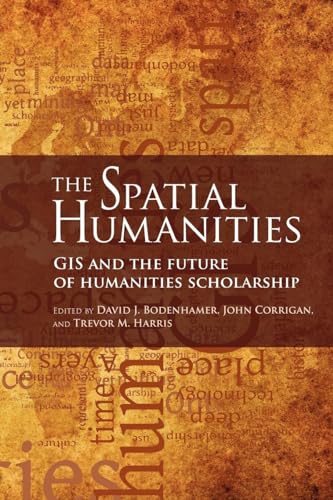
Sinopsis
Geographic information systems (GIS) have spurred a renewed interest in the influence of geographical space on human behavior and cultural development. Ideally GIS enables humanities scholars to discover relationships of memory, artifact, and experience that exist in a particular place and across time. Although successfully used by other disciplines, efforts by humanists to apply GIS and the spatial analytic method in their studies have been limited and halting. The Spatial Humanities aims to re-orient, and perhaps revolutionize, humanities scholarship by critically engaging the technology and specifically directing it to the subject matter of the humanities. This book explores the potential of spatial methods such as text-based geographical analysis, multimedia GIS, animated maps, deep contingency, deep mapping, and the geo-spatial semantic web to re-orient humanities scholarship. It also grapples with the need to create a language that bridges disciplines, how to re-conceptualize the humanities to include the spatial perspective, how to use GIS to analyze text and images, and suggests approaches that will prompt a long-needed reintegration of geography into the humanities.
"Sinopsis" puede pertenecer a otra edición de este libro.
Acerca del autor
David J. Bodenhamer is Executive Director of the Polis Center and Professor of History at Indiana University Purdue University Indianapolis.
John Corrigan is Lucius Moody Bristol Distinguished Professor of Religion and Professor of History at Florida State University.
Trevor M. Harris is Eberly Professor of Geography and Chair of the Department of Geology and Geography at West Virginia University.
"Sobre este título" puede pertenecer a otra edición de este libro.
Resultados de la búsqueda para The Spatial Humanities: GIS and the Future of Humanities...

Imagen del vendedor
The Spatial Humanities: GIS and the Future of Humanities Scholarship
Publicado por
Indiana University Press, 2010
ISBN 10: 0253222176
ISBN 13: 9780253222176
Antiguo o usado
Tapa blanda
Librería: Zoom Books East, Glendale Heights, IL, Estados Unidos de America
Calificación del vendedor: 5 de 5 estrellas

Condición: very_good. Book is in very good condition and may include minimal underlining highlighting. The book can also include "From the library of" labels. May not contain miscellaneous items toys, dvds, etc. . We offer 100% money back guarantee and 24 7 customer service. Nº de ref. del artículo: ZEV.0253222176.VG
Comprar usado
EUR 5,71
Gastos de envío gratis
Se envía dentro de Estados Unidos de America
Se envía dentro de Estados Unidos de America
Cantidad disponible: 1 disponibles
Imagen del vendedor
The Spatial Humanities: GIS and the Future of Humanities Scholarship
Publicado por
Indiana University Press, 2010
ISBN 10: 0253222176
ISBN 13: 9780253222176
Antiguo o usado
Tapa blanda
Librería: Greenworld Books, Arlington, TX, Estados Unidos de America
Calificación del vendedor: 5 de 5 estrellas
Condición: very_good. Fast Free Shipping â" Very Good condition book with a firm cover and clean pages. Shows normal use and some light wear or limited notes markings. A solid, nice copy to enjoy. Nº de ref. del artículo: GWV.0253222176.VG
Comprar usado
EUR 6,97
Gastos de envío gratis
Se envía dentro de Estados Unidos de America
Se envía dentro de Estados Unidos de America
Cantidad disponible: 1 disponibles
Imagen de archivo
The Spatial Humanities : GIS and the Future of Humanities Scholarship
Publicado por
Indiana University Press, 2010
ISBN 10: 0253222176
ISBN 13: 9780253222176
Antiguo o usado
Tapa blanda
Librería: Better World Books, Mishawaka, IN, Estados Unidos de America
Calificación del vendedor: 5 de 5 estrellas
Condición: Very Good. Former library copy. Pages intact with possible writing/highlighting. Binding strong with minor wear. Dust jackets/supplements may not be included. Includes library markings. Stock photo provided. Product includes identifying sticker. Better World Books: Buy Books. Do Good. Nº de ref. del artículo: 13389295-6
Comprar usado
EUR 10,13
Gastos de envío gratis
Se envía dentro de Estados Unidos de America
Se envía dentro de Estados Unidos de America
Cantidad disponible: 1 disponibles
Imagen de archivo
The Spatial Humanities : GIS and the Future of Humanities Scholarship
Publicado por
Indiana University Press, 2010
ISBN 10: 0253222176
ISBN 13: 9780253222176
Antiguo o usado
Tapa blanda
Librería: Better World Books, Mishawaka, IN, Estados Unidos de America
Calificación del vendedor: 5 de 5 estrellas
Condición: Good. Pages intact with minimal writing/highlighting. The binding may be loose and creased. Dust jackets/supplements are not included. Stock photo provided. Product includes identifying sticker. Better World Books: Buy Books. Do Good. Nº de ref. del artículo: 7921375-6
Comprar usado
EUR 10,13
Gastos de envío gratis
Se envía dentro de Estados Unidos de America
Se envía dentro de Estados Unidos de America
Cantidad disponible: 1 disponibles
Imagen de archivo
The Spatial Humanities: GIS and the Future of Humanities Scholarship
Publicado por
Indiana University Press, 2010
ISBN 10: 0253222176
ISBN 13: 9780253222176
Antiguo o usado
Paperback
Librería: WorldofBooks, Goring-By-Sea, WS, Reino Unido
Calificación del vendedor: 5 de 5 estrellas
Paperback. Condición: Very Good. The book has been read, but is in excellent condition. Pages are intact and not marred by notes or highlighting. The spine remains undamaged. Nº de ref. del artículo: GOR010842655
Comprar usado
EUR 5,77
Envío por EUR 6,70
Se envía de Reino Unido a Estados Unidos de America
Se envía de Reino Unido a Estados Unidos de America
Cantidad disponible: 1 disponibles
Imagen de archivo
The Spatial Humanities: GIS and the Future of Humanities Scholarship
Librería: AwesomeBooks, Wallingford, Reino Unido
Calificación del vendedor: 5 de 5 estrellas
paperback. Condición: Very Good. The Spatial Humanities: GIS and the Future of Humanities Scholarship This book is in very good condition and will be shipped within 24 hours of ordering. The cover may have some limited signs of wear but the pages are clean, intact and the spine remains undamaged. This book has clearly been well maintained and looked after thus far. Money back guarantee if you are not satisfied. See all our books here, order more than 1 book and get discounted shipping. Nº de ref. del artículo: 7719-9780253222176
Comprar usado
EUR 7,75
Envío por EUR 4,93
Se envía de Reino Unido a Estados Unidos de America
Se envía de Reino Unido a Estados Unidos de America
Cantidad disponible: 2 disponibles
Imagen de archivo
The Spatial Humanities: GIS and the Future of Humanities Scholarship
Publicado por
Indiana University Press, 2010
ISBN 10: 0253222176
ISBN 13: 9780253222176
Antiguo o usado
paperback
Librería: Book House in Dinkytown, IOBA, Minneapolis, MN, Estados Unidos de America
Calificación del vendedor: 5 de 5 estrellas
paperback. Condición: Good. Good paperback copy, from a personal collection (NOT ex-library). Spine is uncreased, binding tight and sturdy. Light corner/edge-wear. Ten pages have blue ink underlining. Ships same or next day from Dinkytown, Minneapolis, Minnesota. Nº de ref. del artículo: 335588
Comprar usado
EUR 11,05
Envío por EUR 5,81
Se envía dentro de Estados Unidos de America
Se envía dentro de Estados Unidos de America
Cantidad disponible: 1 disponibles
Imagen de archivo
The Spatial Humanities: GIS and the Future of Humanities Scholarship
Publicado por
Indiana University Press, 2010
ISBN 10: 0253222176
ISBN 13: 9780253222176
Antiguo o usado
Soft cover
Librería: Maxwell's House of Books, La Mesa, CA, Estados Unidos de America
Calificación del vendedor: 2 de 5 estrellas

Soft cover. Condición: Fine. A beautiful, crisp, clean softcover in fine condition. We are a brick-and-mortar store and sell our own inventory. We will refuse any orders from book brokers who sell to AI companies. Nº de ref. del artículo: 071183
Comprar usado
EUR 16,58
Envío por EUR 4,16
Se envía dentro de Estados Unidos de America
Se envía dentro de Estados Unidos de America
Cantidad disponible: 1 disponibles
Imagen de archivo
The Spatial Humanities: GIS and the Future of Humanities Scholarship
Publicado por
Indiana University Press, 2010
ISBN 10: 0253222176
ISBN 13: 9780253222176
Antiguo o usado
Tapa blanda
Librería: Anybook.com, Lincoln, Reino Unido
Calificación del vendedor: 5 de 5 estrellas
Condición: Good. This is an ex-library book and may have the usual library/used-book markings inside.This book has soft covers. In good all round condition. Please note the Image in this listing is a stock photo and may not match the covers of the actual item,450grams, ISBN:9780253222176. Nº de ref. del artículo: 5806968
Comprar usado
EUR 5,24
Envío por EUR 15,82
Se envía de Reino Unido a Estados Unidos de America
Se envía de Reino Unido a Estados Unidos de America
Cantidad disponible: 1 disponibles
Imagen de archivo
The Spatial Humanities: GIS and the Future of Humanities Scholarship
Publicado por
Indiana University Press, 2010
ISBN 10: 0253222176
ISBN 13: 9780253222176
Antiguo o usado
Tapa blanda
Librería: Anybook.com, Lincoln, Reino Unido
Calificación del vendedor: 5 de 5 estrellas
Condición: Good. This is an ex-library book and may have the usual library/used-book markings inside.This book has soft covers. In good all round condition. Please note the Image in this listing is a stock photo and may not match the covers of the actual item,450grams, ISBN:9780253222176. Nº de ref. del artículo: 5806967
Comprar usado
EUR 5,24
Envío por EUR 15,82
Se envía de Reino Unido a Estados Unidos de America
Se envía de Reino Unido a Estados Unidos de America
Cantidad disponible: 1 disponibles