
Artículos relacionados a Managing Transitions: Making the Most of Change
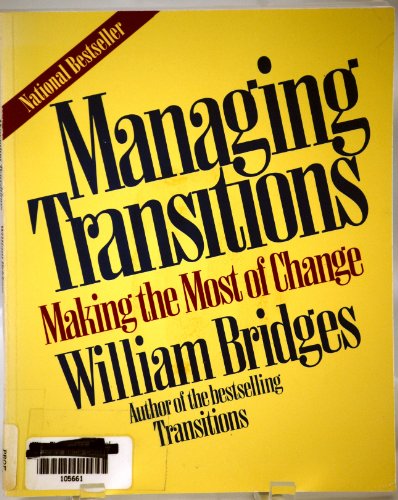
Sinopsis
A practical guide to help managers and employees understand and successfully cope with organizational change.. }Every day the newspapers report more corporate mergers and restructuring. Every day thousands of lives are altered by these changes. Most managers and employees, however, do not have the experience to effectively work through such transitions. In Managing Transitions, William Bridges provides a clear understanding of what change does to employees and what employees in transition can do to an organization, and he shows how to minimize the distress and disruptions caused by change.Directed at managers and employees in todays corporations, where change is necessary to revitalize and improve corporate performance, Managing Transitions addresses the fact that it is people who have to carry out the change. It not only talks about what should be done, but also shows how to do it, giving managers practical ways to bring the people on board. Armed with this new information, managers will look at future changes in a new way, no longer feeling anxious and hopeless, but rather looking at opportunities.Everybody talks about managing change and resistance to change, but Bridges is the first to talk about what is going on inside the people who have to make the change work. He is the first to provide any real sense of the emotional impact of change and what can be done to keep it from disrupting the entire organization. Bridgess years of experience helping organizations and individuals successfully take control of change has proven the need for specific, concrete guidelines for dealing with change. Managing Transitions provides these guidelines. }
"Sinopsis" puede pertenecer a otra edición de este libro.
Reseña del editor
Every day the newspapers report more corporate mergers and restructuring. Every day thousands of lives are altered by these changes. Most managers and employees, however, do not have the experience to effectively work through such transitions. In Managing Transitions, William Bridges provides a clear understanding of what change does to employees and what employees in transition can do to an organization, and he shows how to minimize the distress and disruptions caused by change.Directed at managers and employees in today's corporations, where change is necessary to revitalize and improve corporate performance, Managing Transitions addresses the fact that it is people who have to carry out the change. It not only talks about what should be done, but also shows how to do it, giving managers practical ways to bring the people "on board." Armed with this new information, managers will look at future changes in a new way, no longer feeling anxious and hopeless, but rather looking at opportunities.Everybody talks about "managing change" and "resistance to change," but Bridges is the first to talk about what is going on inside the people who have to make the change work. He is the first to provide any real sense of the emotional impact of change and what can be done to keep it from disrupting the entire organization. Bridges's years of experience helping organizations and individuals successfully take control of change has proven the need for specific, concrete guidelines for dealing with change. Managing Transitions provides these guidelines.
Reseña del editor
A practical guide to help managers and employees understand and successfully cope with organizational change.. }Every day the newspapers report more corporate mergers and restructuring. Every day thousands of lives are altered by these changes. Most managers and employees, however, do not have the experience to effectively work through such transitions. In Managing Transitions, William Bridges provides a clear understanding of what change does to employees and what employees in transition can do to an organization, and he shows how to minimize the distress and disruptions caused by change.Directed at managers and employees in todays corporations, where change is necessary to revitalize and improve corporate performance, Managing Transitions addresses the fact that it is people who have to carry out the change. It not only talks about what should be done, but also shows how to do it, giving managers practical ways to bring the people on board. Armed with this new information, managers will look at future changes in a new way, no longer feeling anxious and hopeless, but rather looking at opportunities.Everybody talks about managing change and resistance to change, but Bridges is the first to talk about what is going on inside the people who have to make the change work. He is the first to provide any real sense of the emotional impact of change and what can be done to keep it from disrupting the entire organization. Bridgess years of experience helping organizations and individuals successfully take control of change has proven the need for specific, concrete guidelines for dealing with change. Managing Transitions provides these guidelines. }
"Sobre este título" puede pertenecer a otra edición de este libro.
Resultados de la búsqueda para Managing Transitions: Making the Most of Change

Imagen de archivo
Managing Transitions: Making The Most Of Change
Publicado por
Da Capo Lifelong Books, 1991
ISBN 10: 0201550733
ISBN 13: 9780201550733
Antiguo o usado
Paperback
Librería: Orion Tech, Kingwood, TX, Estados Unidos de America
Calificación del vendedor: 5 de 5 estrellas

Paperback. Condición: Good. Nº de ref. del artículo: 0201550733-3-24723574
Comprar usado
EUR 3,80
Gastos de envío gratis
Se envía dentro de Estados Unidos de America
Se envía dentro de Estados Unidos de America
Cantidad disponible: 2 disponibles
Imagen de archivo
Managing Transitions: Making The Most Of Change
Publicado por
Da Capo Lifelong Books, 1991
ISBN 10: 0201550733
ISBN 13: 9780201550733
Antiguo o usado
Paperback
Librería: Gulf Coast Books, Cypress, TX, Estados Unidos de America
Calificación del vendedor: 5 de 5 estrellas
Paperback. Condición: Good. Nº de ref. del artículo: 0201550733-3-22147341
Comprar usado
EUR 3,80
Gastos de envío gratis
Se envía dentro de Estados Unidos de America
Se envía dentro de Estados Unidos de America
Cantidad disponible: 4 disponibles
Imagen de archivo
Managing Transitions: Making The Most Of Change
Publicado por
Da Capo Lifelong Books, 1991
ISBN 10: 0201550733
ISBN 13: 9780201550733
Antiguo o usado
Paperback
Librería: Gulf Coast Books, Cypress, TX, Estados Unidos de America
Calificación del vendedor: 5 de 5 estrellas
Paperback. Condición: Fair. Nº de ref. del artículo: 0201550733-4-22649878
Comprar usado
EUR 3,80
Gastos de envío gratis
Se envía dentro de Estados Unidos de America
Se envía dentro de Estados Unidos de America
Cantidad disponible: 1 disponibles
Imagen de archivo
Managing Transitions: Making The Most Of Change
Publicado por
Da Capo Lifelong Books, 1991
ISBN 10: 0201550733
ISBN 13: 9780201550733
Antiguo o usado
Paperback
Librería: Your Online Bookstore, Houston, TX, Estados Unidos de America
Calificación del vendedor: 5 de 5 estrellas
Paperback. Condición: Good. Nº de ref. del artículo: 0201550733-3-24990037
Comprar usado
EUR 3,80
Gastos de envío gratis
Se envía dentro de Estados Unidos de America
Se envía dentro de Estados Unidos de America
Cantidad disponible: 6 disponibles
Imagen de archivo
Managing Transitions: Making The Most Of Change
Publicado por
Da Capo Lifelong Books, 1991
ISBN 10: 0201550733
ISBN 13: 9780201550733
Antiguo o usado
paperback
Librería: Orion Tech, Kingwood, TX, Estados Unidos de America
Calificación del vendedor: 5 de 5 estrellas
paperback. Condición: Fair. Nº de ref. del artículo: 0201550733-4-26958790
Comprar usado
EUR 3,80
Gastos de envío gratis
Se envía dentro de Estados Unidos de America
Se envía dentro de Estados Unidos de America
Cantidad disponible: 4 disponibles
Imagen de archivo
Managing Transitions: Making the Most of Change
Publicado por
Hachette Books, 1991
ISBN 10: 0201550733
ISBN 13: 9780201550733
Antiguo o usado
Paperback
Librería: World of Books (was SecondSale), Montgomery, IL, Estados Unidos de America
Calificación del vendedor: 5 de 5 estrellas
Paperback. Condición: Very Good. A practical guide to help managers and employees understand and successfully cope with organizational change. }Every day the newspapers report more corporate mergers and restructuring. Every day thousands of lives are altered by these changes. Most managers and employees, however, do not have the experience to effectively work through such transitions. In Managing Transitions, William Bridges provides a clear understanding of what change does to employees and what employees in transition can do to an organization, and he shows how to minimize the distress and disruptions caused by change.Directed at managers and employees in todays corporations, where change is necessary to revitalize and improve corporate performance, Managing Transitions addresses the fact that it is people who have to carry out the change. It not only talks about what should be done, but also shows how to do it, giving managers practical ways to bring the people on board. Armed with this new information, managers will look at future changes in a new way, no longer feeling anxious and hopeless, but rather looking at opportunities.Everybody talks about managing change and resistance to change, but Bridges is the first to talk about what is going on inside the people who have to make the change work. He is the first to provide any real sense of the emotional impact of change and what can be done to keep it from disrupting the entire organization. Bridgess years of experience helping organizations and individuals successfully take control of change has proven the need for specific, concrete guidelines for dealing with change. Managing Transitions provides these guidelines. }. Nº de ref. del artículo: 00106477283
Comprar usado
EUR 3,81
Gastos de envío gratis
Se envía dentro de Estados Unidos de America
Se envía dentro de Estados Unidos de America
Cantidad disponible: 3 disponibles
Imagen de archivo
Managing Transitions: Making the Most of Change
Publicado por
Hachette Books, 1991
ISBN 10: 0201550733
ISBN 13: 9780201550733
Antiguo o usado
Paperback
Librería: World of Books (was SecondSale), Montgomery, IL, Estados Unidos de America
Calificación del vendedor: 5 de 5 estrellas
Paperback. Condición: Fair. A practical guide to help managers and employees understand and successfully cope with organizational change. }Every day the newspapers report more corporate mergers and restructuring. Every day thousands of lives are altered by these changes. Most managers and employees, however, do not have the experience to effectively work through such transitions. In Managing Transitions, William Bridges provides a clear understanding of what change does to employees and what employees in transition can do to an organization, and he shows how to minimize the distress and disruptions caused by change.Directed at managers and employees in todays corporations, where change is necessary to revitalize and improve corporate performance, Managing Transitions addresses the fact that it is people who have to carry out the change. It not only talks about what should be done, but also shows how to do it, giving managers practical ways to bring the people on board. Armed with this new information, managers will look at future changes in a new way, no longer feeling anxious and hopeless, but rather looking at opportunities.Everybody talks about managing change and resistance to change, but Bridges is the first to talk about what is going on inside the people who have to make the change work. He is the first to provide any real sense of the emotional impact of change and what can be done to keep it from disrupting the entire organization. Bridgess years of experience helping organizations and individuals successfully take control of change has proven the need for specific, concrete guidelines for dealing with change. Managing Transitions provides these guidelines. }. Nº de ref. del artículo: 00071479147
Comprar usado
EUR 3,81
Gastos de envío gratis
Se envía dentro de Estados Unidos de America
Se envía dentro de Estados Unidos de America
Cantidad disponible: 3 disponibles
Imagen de archivo
Managing Transitions: Making the Most of Change
Publicado por
Hachette Books, 1991
ISBN 10: 0201550733
ISBN 13: 9780201550733
Antiguo o usado
Paperback
Librería: World of Books (was SecondSale), Montgomery, IL, Estados Unidos de America
Calificación del vendedor: 5 de 5 estrellas
Paperback. Condición: Good. A practical guide to help managers and employees understand and successfully cope with organizational change. }Every day the newspapers report more corporate mergers and restructuring. Every day thousands of lives are altered by these changes. Most managers and employees, however, do not have the experience to effectively work through such transitions. In Managing Transitions, William Bridges provides a clear understanding of what change does to employees and what employees in transition can do to an organization, and he shows how to minimize the distress and disruptions caused by change.Directed at managers and employees in todays corporations, where change is necessary to revitalize and improve corporate performance, Managing Transitions addresses the fact that it is people who have to carry out the change. It not only talks about what should be done, but also shows how to do it, giving managers practical ways to bring the people on board. Armed with this new information, managers will look at future changes in a new way, no longer feeling anxious and hopeless, but rather looking at opportunities.Everybody talks about managing change and resistance to change, but Bridges is the first to talk about what is going on inside the people who have to make the change work. He is the first to provide any real sense of the emotional impact of change and what can be done to keep it from disrupting the entire organization. Bridgess years of experience helping organizations and individuals successfully take control of change has proven the need for specific, concrete guidelines for dealing with change. Managing Transitions provides these guidelines. }. Nº de ref. del artículo: 00061972170
Comprar usado
EUR 3,81
Gastos de envío gratis
Se envía dentro de Estados Unidos de America
Se envía dentro de Estados Unidos de America
Cantidad disponible: Más de 20 disponibles
Imagen del vendedor
Managing Transitions: Making The Most Of Change
Publicado por
Da Capo Lifelong Books, 1991
ISBN 10: 0201550733
ISBN 13: 9780201550733
Antiguo o usado
Tapa blanda
Librería: 3Brothers Bookstore, Egg harbor township, NJ, Estados Unidos de America
Calificación del vendedor: 5 de 5 estrellas
Condición: very_good. Cover may have light wear, pages in very good condition and binding is sturdy; may have other light shelf wear or creases. May have notes or highlighting. Nº de ref. del artículo: EVV.0201550733.VG
Comprar usado
EUR 3,89
Gastos de envío gratis
Se envía dentro de Estados Unidos de America
Se envía dentro de Estados Unidos de America
Cantidad disponible: 2 disponibles
Imagen del vendedor
Managing Transitions: Making The Most Of Change
Publicado por
Da Capo Lifelong Books, 1991
ISBN 10: 0201550733
ISBN 13: 9780201550733
Antiguo o usado
Tapa blanda
Librería: Used Book Company, Egg Harbor Township, NJ, Estados Unidos de America
Calificación del vendedor: 5 de 5 estrellas
Condición: Very Good. Shows minimal signs of wear and previous use. Can include minimal notes/highlighting. A portion of your purchase benefits nonprofits! - Note: Edition & format may differ from what is shown in stock photo & item details. May not include supplementary material (toys, access code, dvds, etc). Nº de ref. del artículo: 584ZSU0001TF_ns
Comprar usado
EUR 3,92
Gastos de envío gratis
Se envía dentro de Estados Unidos de America
Se envía dentro de Estados Unidos de America
Cantidad disponible: 1 disponibles