
Artículos relacionados a Exorbitant Privilege: The Rise and Fall of the Dollar...
Exorbitant Privilege: The Rise and Fall of the Dollar and the Future of the International Monetary System - Tapa dura
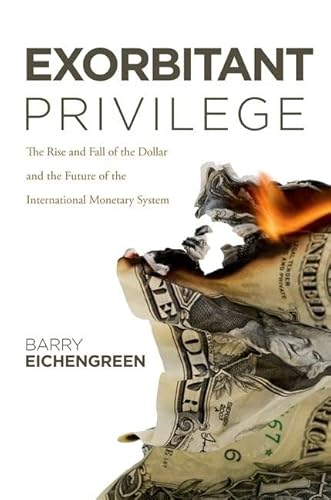
Sinopsis
For more than half a century, the U.S. dollar has been not just America's currency but the world's. It is used globally by importers, exporters, investors, governments and central banks alike. Nearly three-quarters of all $100 bills circulate outside the United States. The dollar holdings of the Chinese government alone come to more than $1,000 per Chinese resident.
This dependence on dollars, by banks, corporations and governments around the world, is a source of strength for the United States. It is, as a critic of U.S. policies once put it, America's "exorbitant privilege." However, recent events have raised concerns that this soon may be a privilege lost. Among these have been the effects of the financial crisis and the Great Recession: high unemployment, record federal deficits, and financial distress. In addition there is the rise of challengers like the euro and China's renminbi. Some say that the dollar may soon cease to be the world's standard currency--which would depress American living standards and weaken the country's international influence.
In Exorbitant Privilege, one of our foremost economists, Barry Eichengreen, traces the rise of the dollar to international prominence over the course of the 20th century. He shows how the greenback dominated internationally in the second half of the century for the same reasons--and in the same way--that the United States dominated the global economy. But now, with the rise of China, India, Brazil and other emerging economies, America no longer towers over the global economy. It follows, Eichengreen argues, that the dollar will not be as dominant. But this does not mean that the coming changes will necessarily be sudden and dire--or that the dollar is doomed to lose its international status. Challenging the presumption that there is room for only one true global currency--either the dollar or something else--Eichengreen shows that several currencies have shared this international role over long periods. What was true in the distant past will be true, once again, in the not-too-distant future.
The dollar will lose its international currency status, Eichengreen warns, only if the United States repeats the mistakes that led to the financial crisis and only if it fails to put its fiscal and financial house in order. The greenback's fate hinges, in other words, not on the actions of the Chinese government but on economic policy decisions here in the United States.
Incisive, challenging and iconoclastic, Exorbitant Privilege, which was shortlisted for the FT Goldman Sachs 2011 Best Business Book of the Year, is a fascinating analysis of the changes that lie ahead. It is a challenge, equally, to those who warn that the dollar is doomed and to those who regard its continuing dominance as inevitable.
"Sinopsis" puede pertenecer a otra edición de este libro.
Acerca de los autores
Barry Eichengreen is Professor of Political Science and Economics at the University of California, Berkeley. His previous books include The European Economy Since 1945, Global Imbalances and the Lessons of Bretton Woods, Capital Flows and Crises, and Financial Crises and What to Do About Them. He has written for the Financial Times, Wall Street Journal, Foreign Affairs, and other publications.
Barry Eichengreen is Professor of Economics and Political Science at the University of California, Berkeley.
"Sobre este título" puede pertenecer a otra edición de este libro.
Resultados de la búsqueda para Exorbitant Privilege: The Rise and Fall of the Dollar...

Imagen de archivo
Exorbitant Privilege: The Rise and Fall of the Dollar and the Future of the International Monetary System
Publicado por
Oxford University Press, 2011
ISBN 10: 0199753784
ISBN 13: 9780199753789
Antiguo o usado
Tapa dura
Librería: HPB-Red, Dallas, TX, Estados Unidos de America
Calificación del vendedor: 5 de 5 estrellas

Hardcover. Condición: Good. Connecting readers with great books since 1972! Used textbooks may not include companion materials such as access codes, etc. May have some wear or writing/highlighting. We ship orders daily and Customer Service is our top priority! Nº de ref. del artículo: S_466268784
Comprar usado
EUR 13,58
Envío por EUR 3,36
Se envía dentro de Estados Unidos de America
Se envía dentro de Estados Unidos de America
Cantidad disponible: 1 disponibles
Imagen de archivo
Exorbitant Privilege: The Rise and Fall of the Dollar and the Future of the International Monetary System
Publicado por
Oxford University Press Inc, 2011
ISBN 10: 0199753784
ISBN 13: 9780199753789
Antiguo o usado
Tapa dura
Librería: World of Books (was SecondSale), Montgomery, IL, Estados Unidos de America
Calificación del vendedor: 5 de 5 estrellas
Hardback. Condición: Very Good. For more than half a century, the U.S. dollar has been the single most important currency, not just in the United States but globally. When the greenback became the leading international currency after World War II, this reinforced America's status one of the mightiest economic powers in world history. However, recent events have raised serious doubts about the future of the dollar. Among these have been the effects of the Great Recession in the U.S.: high unemployment, record federal deficits, and unprecedented financial distress. So profound has been the impact on the esteem in which the dollar is held that some say it may soon cease to be the world's standard currency - which could significant depress American living standards and weaken the country's international influence. Is the situation that bad? In Exorbitant Privilege, one of our foremost experts on the international financial system argues that while the dollar is bound to lose its singular status - that it will be forced to share it with newcomers like the Euro and the Chinese Renminbi - the coming changes will be neither sudden nor dire. Barry Eichengreen puts today's crisis in historical context, revealing that even after the United States became the world's largest economy around 1880, the dollar had a limited international role. While the founding of the Federal Reserve in 1914 launched the dollar's international career, only after World War II, with Europe and Japan in ruins, did the dollar become the world's monetary lingua franca - the reserve currency of the world's banks and the kind of cash accepted virtually everywhere. French President Charles de Gaulle complained of this "exorbitant privilege" - that a captive demand for dollars allowed the United States to inflate its living standard and extend military power. Now, with the rise of China, India, Brazil and other emerging economies, America no longer towers over the global economy like before. And the U.S. itself faces very serious economic and financial challenges as it contemplates its medium-term future. But despite this, Eichengreen argues, predictions of the dollar's demise are greatly exaggerated. The most likely outcome is that the dollar will only slowly be supplanted by other currencies in a gradual transition that will resemble the relatively stable situation that prevailed before World War I. Incisive, challenging and frequently iconoclastic, Exorbitant Privilege is a fascinating analysis of the changes that lie ahead, and a welcome rejoinder to predictions of America's inevitable decline. Nº de ref. del artículo: CIN0199753784VG
Comprar usado
EUR 17,16
Gastos de envío gratis
Se envía dentro de Estados Unidos de America
Se envía dentro de Estados Unidos de America
Cantidad disponible: 1 disponibles
Imagen de archivo
Exorbitant Privilege: The Rise and Fall of the Dollar and the Future of the International Monetary System
Publicado por
Oxford University Press, 2011
ISBN 10: 0199753784
ISBN 13: 9780199753789
Antiguo o usado
Tapa dura
Librería: Half Price Books Inc., Dallas, TX, Estados Unidos de America
Calificación del vendedor: 5 de 5 estrellas
hardcover. Condición: Very Good. Connecting readers with great books since 1972! Used books may not include companion materials, and may have some shelf wear or limited writing. We ship orders daily and Customer Service is our top priority! Nº de ref. del artículo: S_477753006
Comprar usado
EUR 14,06
Envío por EUR 3,36
Se envía dentro de Estados Unidos de America
Se envía dentro de Estados Unidos de America
Cantidad disponible: 1 disponibles
Imagen de archivo
Exorbitant Privilege: The Rise and Fall of the Dollar and the Future of the International Monetary System
Publicado por
Oxford University Press Inc, 2011
ISBN 10: 0199753784
ISBN 13: 9780199753789
Antiguo o usado
Tapa dura
Librería: World of Books Inc, Montgomery, IL, Estados Unidos de America
Calificación del vendedor: 4 de 5 estrellas

Hardback. Condición: Very Good. For more than half a century, the U.S. dollar has been the single most important currency, not just in the United States but globally. When the greenback became the leading international currency after World War II, this reinforced America's status one of the mightiest economic powers in world history. However, recent events have raised serious doubts about the future of the dollar. Among these have been the effects of the Great Recession in the U.S.: high unemployment, record federal deficits, and unprecedented financial distress. So profound has been the impact on the esteem in which the dollar is held that some say it may soon cease to be the world's standard currency - which could significant depress American living standards and weaken the country's international influence. Is the situation that bad? In Exorbitant Privilege, one of our foremost experts on the international financial system argues that while the dollar is bound to lose its singular status - that it will be forced to share it with newcomers like the Euro and the Chinese Renminbi - the coming changes will be neither sudden nor dire. Barry Eichengreen puts today's crisis in historical context, revealing that even after the United States became the world's largest economy around 1880, the dollar had a limited international role. While the founding of the Federal Reserve in 1914 launched the dollar's international career, only after World War II, with Europe and Japan in ruins, did the dollar become the world's monetary lingua franca - the reserve currency of the world's banks and the kind of cash accepted virtually everywhere. French President Charles de Gaulle complained of this "exorbitant privilege" - that a captive demand for dollars allowed the United States to inflate its living standard and extend military power. Now, with the rise of China, India, Brazil and other emerging economies, America no longer towers over the global economy like before. And the U.S. itself faces very serious economic and financial challenges as it contemplates its medium-term future. But despite this, Eichengreen argues, predictions of the dollar's demise are greatly exaggerated. The most likely outcome is that the dollar will only slowly be supplanted by other currencies in a gradual transition that will resemble the relatively stable situation that prevailed before World War I. Incisive, challenging and frequently iconoclastic, Exorbitant Privilege is a fascinating analysis of the changes that lie ahead, and a welcome rejoinder to predictions of America's inevitable decline. Nº de ref. del artículo: CIN0199753784VG
Comprar usado
EUR 19,01
Gastos de envío gratis
Se envía dentro de Estados Unidos de America
Se envía dentro de Estados Unidos de America
Cantidad disponible: 1 disponibles
Imagen de archivo
Exorbitant Privilege: The Rise and Fall of the Dollar and the Future of the International Monetary System
Publicado por
Oxford University Press, 2011
ISBN 10: 0199753784
ISBN 13: 9780199753789
Antiguo o usado
Tapa dura
Librería: HPB-Ruby, Dallas, TX, Estados Unidos de America
Calificación del vendedor: 5 de 5 estrellas
hardcover. Condición: Very Good. Connecting readers with great books since 1972! Used books may not include companion materials, and may have some shelf wear or limited writing. We ship orders daily and Customer Service is our top priority! Nº de ref. del artículo: S_485265258
Comprar usado
EUR 17,47
Envío por EUR 3,36
Se envía dentro de Estados Unidos de America
Se envía dentro de Estados Unidos de America
Cantidad disponible: 1 disponibles
Imagen de archivo
Exorbitant Privilege: The Rise and Fall of the Dollar and the Future of the International Monetary System
Librería: Borden's Book Shoppe, Astoria, IL, Estados Unidos de America
Calificación del vendedor: 4 de 5 estrellas
hardcover. Condición: Very Good. Nº de ref. del artículo: V-20261021-CB3-S8052
Comprar usado
EUR 18,04
Envío por EUR 3,58
Se envía dentro de Estados Unidos de America
Se envía dentro de Estados Unidos de America
Cantidad disponible: 1 disponibles
Imagen del vendedor
Exorbitant Privilege: The Rise and Fall of the Dollar and the Future of the International Monetary System
Publicado por
Oxford University Press, 2011
ISBN 10: 0199753784
ISBN 13: 9780199753789
Antiguo o usado
Tapa dura
Original o primera edición
Librería: Rosario Beach Rare Books, Lake Stevens, WA, Estados Unidos de America
Calificación del vendedor: 5 de 5 estrellas
Hardcover. Condición: Good. Estado de la sobrecubierta: Very Good. 1st Edition. *Veteran-Owned, Family-Run, Small Book Store in the Pacific Northwest* FAST SHIPPING!! roughly a dozen pages with underlining; otherwise in very good condition and clean. dust jacket VG with a bar code label on the back cover. Nº de ref. del artículo: ABE-1754439060385
Comprar usado
EUR 26,05
Gastos de envío gratis
Se envía dentro de Estados Unidos de America
Se envía dentro de Estados Unidos de America
Cantidad disponible: 1 disponibles
Imagen de archivo
Exorbitant Privilege: The Rise and Fall of the Dollar and the Future of the International Monetary System
Publicado por
Oxford University Press, 2011
ISBN 10: 0199753784
ISBN 13: 9780199753789
Antiguo o usado
Tapa dura
Librería: Benny's Books, WOODSTOCK, GA, Estados Unidos de America
Calificación del vendedor: 3 de 5 estrellas

Condición: Good. PLEASE READ! Dust jacket not included. May contain some notes, underlining and/or highlighting. Some shelf wear and tear. Supplemental material and access codes likely will not be included with used books. Nº de ref. del artículo: THRIFT_11-04-26_789K_H00009ZH
Comprar usado
EUR 17,95
Envío por EUR 8,96
Se envía dentro de Estados Unidos de America
Se envía dentro de Estados Unidos de America
Cantidad disponible: 1 disponibles
Imagen de archivo
Exorbitant Privilege: The Rise and Fall of the Dollar and the Future of the International Monetary System
Publicado por
Oxford University Press, 2011
ISBN 10: 0199753784
ISBN 13: 9780199753789
Nuevo
Tapa dura
Librería: GoldBooks, Denver, CO, Estados Unidos de America
Calificación del vendedor: 5 de 5 estrellas
Hardcover. Condición: new. New Copy. Customer Service Guaranteed. Nº de ref. del artículo: 6M87_90_0199753784
Comprar nuevo
EUR 39,62
Envío por EUR 4,93
Se envía dentro de Estados Unidos de America
Se envía dentro de Estados Unidos de America
Cantidad disponible: 1 disponibles
Imagen de archivo
Exorbitant Privilege: The Rise and Fall of the Dollar and the Future of the International Monetary System
Librería: Revaluation Books, Exeter, Reino Unido
Calificación del vendedor: 5 de 5 estrellas
Hardcover. Condición: Brand New. 224 pages. 9.40x6.40x1.00 inches. In Stock. Nº de ref. del artículo: 0199753784
Comprar nuevo
EUR 55,25
Envío por EUR 11,99
Se envía de Reino Unido a Estados Unidos de America
Se envía de Reino Unido a Estados Unidos de America
Cantidad disponible: 1 disponibles