
Artículos relacionados a The Normalized Difference Vegetation Index
Sinopsis
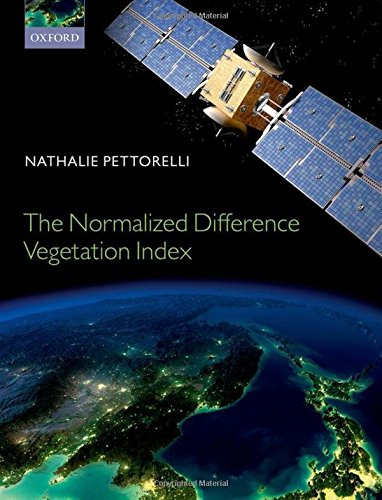
There has been a recent surge of interest in remote sensing and its use in ecology and conservation but this is the first book to focus explicitly on the NDVI (Normalised Difference Vegetation Index), a simple numerical indicator and powerful tool that can be used to assess spatio-temporal changes in green vegetation. The NDVI opens the possibility of addressing questions on scales inaccessible to ground-based methods alone; it is mostly freely available with global coverage over several decades.
This novel text provides an authoritative overview of the principles and possible applications of the NDVI in ecology, environmental and wildlife management, and conservation. NDVI data can provide valuable information about temporal and spatial changes in vegetation distribution, productivity, and dynamics; allowing monitoring of habitat degradation and fragmentation, or assessment of the ecological effects of climatic disasters such as drought or fire. The NDVI has also provided ecologists with a promising way to couple vegetation with animal distribution, abundance, movement, survival and reproductive parameters. Over the last few decades, numerous studies have highlighted the potential key role of satellite data and the NDVI in macroecology, plant ecology, animal population dynamics, environmental monitoring, habitat selection and habitat use studies, and paleoecology. The chapters are organised around two sections: the first detailing vegetation indices and the NDVI, the principles behind the NDVI, its correlation with climate, the available NDVI datasets, and the possible complications and errors associated with the use of this satellite-based vegetation index. The second section discusses the possible applications of the NDVI in ecology, environmental and wildlife management, and conservation.
This practical handbook is suitable for terrestrial ecologists and conservation biologists working with remote sensing tools. It will also be of relevance and use to both graduate students in the biological and ecological sciences and specialists in the fields of conservation biology, biodiversity monitoring, and natural resource management.
"Sinopsis" puede pertenecer a otra edición de este libro.
Acerca del autor
Nathalie Pettorelli is a research fellow working at the Institute of Zoology, Zoological Society of London. Her research is focused on the impact of climate change on ecosystem functioning and mammalian population dynamics in alpine, arctic, and tropical environments. She has published 47 peer-reviewed articles and is on the editorial boards of Journal of Applied Ecology (Associate Editor since 2007) and Animal Conservation (Associate editor since 2008, Editor since 2011). Since 2002 her research has focused on satellite-based data, and in particular on its role in understanding the impact of global environmental change on wildlife. For this work, she was awarded a L'Oreal UNESCO Fellowship in 2010.
"Sobre este título" puede pertenecer a otra edición de este libro.
Resultados de la búsqueda para The Normalized Difference Vegetation Index

Imagen de archivo
The Normalized Difference Vegetation Index
Publicado por
Oxford, United Kingdom: Oxford University Press, 2013
ISBN 10: 0199693161
ISBN 13: 9780199693160
Antiguo o usado
Tapa dura
Original o primera edición
Librería: Time Tested Books, Sacramento, CA, Estados Unidos de America
Calificación del vendedor: 5 de 5 estrellas

Hardcover. Condición: Near Fine. No Jacket. 1st Edition. "First Edition published in 2013" and "Impression 1" stated. No additional date, edition or printing indicated. Near fine plus, if not fine hardback. No dust jacket. Only trivial signs of age/wear/previous use. Nº de ref. del artículo: 107137
Comprar usado
EUR 45,91
Envío por EUR 5,85
Se envía dentro de Estados Unidos de America
Se envía dentro de Estados Unidos de America
Cantidad disponible: 1 disponibles
Imagen de archivo
The Normalized Difference Vegetation Index
Publicado por
Oxford University Press, 2014
ISBN 10: 0199693161
ISBN 13: 9780199693160
Nuevo
Tapa dura
Librería: Basi6 International, Irving, TX, Estados Unidos de America
Calificación del vendedor: 5 de 5 estrellas
Condición: Brand New. New. US edition. Expediting shipping for all USA and Europe orders excluding PO Box. Excellent Customer Service. Nº de ref. del artículo: ABEOCT25-63840
Comprar nuevo
EUR 96,40
Gastos de envío gratis
Se envía dentro de Estados Unidos de America
Se envía dentro de Estados Unidos de America
Cantidad disponible: 8 disponibles
Imagen de archivo
NORM DIFF VEGETATION INDEX C
ISBN 10: 0199693161
ISBN 13: 9780199693160
Nuevo
Librería: Romtrade Corp., STERLING HEIGHTS, MI, Estados Unidos de America
Calificación del vendedor: 5 de 5 estrellas
Condición: New. This is a Brand-new US Edition. This Item may be shipped from US or any other country as we have multiple locations worldwide. Nº de ref. del artículo: ABBB-37781
Comprar nuevo
EUR 97,68
Gastos de envío gratis
Se envía dentro de Estados Unidos de America
Se envía dentro de Estados Unidos de America
Cantidad disponible: 5 disponibles
Imagen de archivo
NORM DIFF VEGETATION INDEX C
ISBN 10: 0199693161
ISBN 13: 9780199693160
Nuevo
Librería: SMASS Sellers, IRVING, TX, Estados Unidos de America
Calificación del vendedor: 4 de 5 estrellas

Condición: New. Brand New Original US Edition. Customer service! Satisfaction Guaranteed. Nº de ref. del artículo: SNTNB-37781
Comprar nuevo
EUR 101,09
Gastos de envío gratis
Se envía dentro de Estados Unidos de America
Se envía dentro de Estados Unidos de America
Cantidad disponible: 5 disponibles
Imagen de archivo
The Normalized Difference Vegetation Index
Publicado por
Oxford University Press OUP, 2014
ISBN 10: 0199693161
ISBN 13: 9780199693160
Nuevo
Tapa dura
Librería: Books Puddle, Woodside, NY, Estados Unidos de America
Calificación del vendedor: 4 de 5 estrellas
Condición: New. pp. 208. Nº de ref. del artículo: 2697319572
Comprar nuevo
EUR 99,54
Envío por EUR 3,56
Se envía dentro de Estados Unidos de America
Se envía dentro de Estados Unidos de America
Cantidad disponible: 4 disponibles
Imagen de archivo
The Normalized Difference Vegetation Index
Publicado por
Oxford University Press, 2014
ISBN 10: 0199693161
ISBN 13: 9780199693160
Nuevo
Tapa dura
Librería: Majestic Books, Hounslow, Reino Unido
Calificación del vendedor: 4 de 5 estrellas
Condición: New. pp. 208 12 Illus. (Col.). Nº de ref. del artículo: 96159051
Comprar nuevo
EUR 101,08
Envío por EUR 7,75
Se envía de Reino Unido a Estados Unidos de America
Se envía de Reino Unido a Estados Unidos de America
Cantidad disponible: 4 disponibles
Imagen de archivo
The Normalized Difference Vegetation Index
Publicado por
Oxford University Press, 2014
ISBN 10: 0199693161
ISBN 13: 9780199693160
Nuevo
Tapa dura
Librería: Biblios, Frankfurt am main, HESSE, Alemania
Calificación del vendedor: 4 de 5 estrellas
Condición: New. pp. 208. Nº de ref. del artículo: 1897319582
Comprar nuevo
EUR 100,18
Envío por EUR 9,95
Se envía de Alemania a Estados Unidos de America
Se envía de Alemania a Estados Unidos de America
Cantidad disponible: 4 disponibles
Imagen de archivo
NORM DIFF VEGETATION INDEX C (eng)
Impresión bajo demandaLibrería: Brook Bookstore On Demand, Napoli, NA, Italia
Calificación del vendedor: 5 de 5 estrellas
Condición: new. Questo è un articolo print on demand. Nº de ref. del artículo: 0314b40d27ffa5d20692b2bd5202054a
Comprar nuevo
EUR 133,14
Envío por EUR 6,80
Se envía de Italia a Estados Unidos de America
Se envía de Italia a Estados Unidos de America
Cantidad disponible: Más de 20 disponibles
Imagen de archivo
The Normalized Difference Vegetation Index
Publicado por
Oxford University Press, 2014
ISBN 10: 0199693161
ISBN 13: 9780199693160
Nuevo
Tapa dura
Librería: THE SAINT BOOKSTORE, Southport, Reino Unido
Calificación del vendedor: 5 de 5 estrellas
Hardback. Condición: New. New copy - Usually dispatched within 4 working days. Nº de ref. del artículo: B9780199693160
Comprar nuevo
EUR 174,16
Envío por EUR 20,95
Se envía de Reino Unido a Estados Unidos de America
Se envía de Reino Unido a Estados Unidos de America
Cantidad disponible: 15 disponibles
Imagen del vendedor
The Normalized Difference Vegetation Index
Publicado por
Oxford University Press (UK) Feb 2014, 2014
ISBN 10: 0199693161
ISBN 13: 9780199693160
Nuevo
Tapa dura
Librería: AHA-BUCH GmbH, Einbeck, Alemania
Calificación del vendedor: 5 de 5 estrellas
Buch. Condición: Neu. Neuware - There has been a recent surge of interest in remote sensing and its use in ecology and conservation but this is the first book to focus explicitly on the NDVI (Normalised Difference Vegetation Index), a simple numerical indicator and powerful tool that can be used to assess spatio-temporal changes in green vegetation. The NDVI opens the possibility of addressing questions on scales inaccessible to ground-based methods alone; it is mostly freely available with globalcoverage over several decades.This novel text provides an authoritative overview of the principles and possible applications of the NDVI in ecology, environmental and wildlife management, and conservation. NDVI data can provide valuable information about temporal and spatial changes in vegetation distribution, productivity, and dynamics; allowing monitoring of habitat degradation and fragmentation, or assessment of the ecological effects of climatic disasters such as drought or fire. The NDVI has also provided ecologistswith a promising way to couple vegetation with animal distribution, abundance, movement, survival and reproductive parameters. Over the last few decades, numerous studies have highlighted the potential key role of satellite data and the NDVI in macroecology, plant ecology, animal population dynamics,environmental monitoring, habitat selection and habitat use studies, and paleoecology. The chapters are organised around two sections: the first detailing vegetation indices and the NDVI, the principles behind the NDVI, its correlation with climate, the available NDVI datasets, and the possible complications and errors associated with the use of this satellite-based vegetation index. The second section discusses the possible applications of the NDVI in ecology, environmental and wildlifemanagement, and conservation.This practical handbook is suitable for terrestrial ecologists and conservation biologists working with remote sensing tools. It will also be of relevance and use to both graduate students in the biological and ecological sciences and specialists in the fields of conservation biology, biodiversity monitoring, and natural resource management. Nº de ref. del artículo: 9780199693160
Comprar nuevo
EUR 194,24
Envío por EUR 35,00
Se envía de Alemania a Estados Unidos de America
Se envía de Alemania a Estados Unidos de America
Cantidad disponible: 2 disponibles