
Artículos relacionados a Languages: A Very Short Introduction
Sinopsis
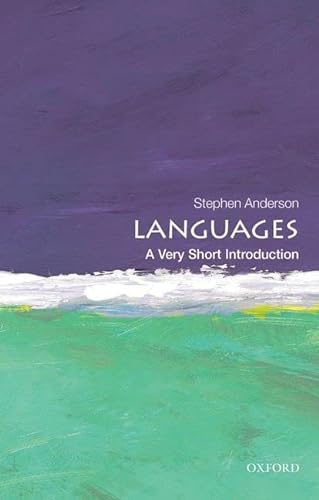
How many languages are there? What differentiates one language from another? Are new languages still being discovered? Why are so many languages disappearing?
The diversity of languages today is varied, but it is steadily declining. In this Very Short Introduction, Stephen Anderson answers the above questions by looking at the science behind languages. Considering a wide range of different languages and linguistic examples, he demonstrates how languages are not uniformly distributed around the world; just as some places are more diverse than others in terms of plants and animal species, the same goes for the distribution of languages.
Exploring the basis for linguistic classification and raising questions about how we identify a language, as well as considering signed languages as well as spoken, Anderson examines the wider social issues of losing languages, and their impact in terms of the endangerment of cultures and peoples.
ABOUT THE SERIES: The Very Short Introductions series from Oxford University Press contains hundreds of titles in almost every subject area. These pocket-sized books are the perfect way to get ahead in a new subject quickly. Our expert authors combine facts, analysis, perspective, new ideas, and enthusiasm to make interesting and challenging topics highly readable.
"Sinopsis" puede pertenecer a otra edición de este libro.
Acerca del autor
Stephen Anderson has been the Dorothy R. Diebold Professor of Linguistics at Yale University for the last 15 years. He has written or co-authored six books in Linguistics, including Doctor Dolittle's Delusion (Yale University Press, 2004) a book on animal communication and its relation to human language intended for the educated general reader that was chosen as the Best Book in Psychology for 2004 by the Professional/Scholarly Publishing Division of the Association of American Publishers. He is a Fellow of the American Academy of Arts and Sciences, the American Association for the Advancement of Science, the Linguistic Society of America, and the Association for Psychological Science. He was also President of the Linguistic Society of America in 2007.
"Sobre este título" puede pertenecer a otra edición de este libro.
Resultados de la búsqueda para Languages: A Very Short Introduction

Imagen de archivo
Languages: A Very Short Introduction
Publicado por
Oxford University Press, 2012
ISBN 10: 0199590591
ISBN 13: 9780199590599
Antiguo o usado
Paperback
Librería: World of Books (was SecondSale), Montgomery, IL, Estados Unidos de America
Calificación del vendedor: 5 de 5 estrellas

Paperback. Condición: Good. How many languages are there? What differentiates one language from another? Are new languages still being discovered? Why are so many languages disappearing? The diversity of languages today is varied, but it is steadily declining. In this Very Short Introduction, Stephen Anderson answers the above questions by looking at the science behind languages. Considering a wide range of different languages and linguistic examples, he demonstrates how languages are not uniformly distributed around the world; just as some places are more diverse than others in terms of plants and animal species, the same goes for the distribution of languages. Exploring the basis for linguistic classification and raising questions about how we identify a language, as well as considering signed languages as well as spoken, Anderson examines the wider social issues of losing languages, and their impact in terms of the endangerment of cultures and peoples. Nº de ref. del artículo: 00105097427
Comprar usado
EUR 6,80
Gastos de envío gratis
Se envía dentro de Estados Unidos de America
Se envía dentro de Estados Unidos de America
Cantidad disponible: 1 disponibles
Imagen de archivo
Languages: A Very Short Introduction
Publicado por
Oxford University Press, 2012
ISBN 10: 0199590591
ISBN 13: 9780199590599
Antiguo o usado
Paperback
Librería: World of Books (was SecondSale), Montgomery, IL, Estados Unidos de America
Calificación del vendedor: 5 de 5 estrellas
Paperback. Condición: Very Good. How many languages are there? What differentiates one language from another? Are new languages still being discovered? Why are so many languages disappearing? The diversity of languages today is varied, but it is steadily declining. In this Very Short Introduction, Stephen Anderson answers the above questions by looking at the science behind languages. Considering a wide range of different languages and linguistic examples, he demonstrates how languages are not uniformly distributed around the world; just as some places are more diverse than others in terms of plants and animal species, the same goes for the distribution of languages. Exploring the basis for linguistic classification and raising questions about how we identify a language, as well as considering signed languages as well as spoken, Anderson examines the wider social issues of losing languages, and their impact in terms of the endangerment of cultures and peoples. Nº de ref. del artículo: 00110780893
Comprar usado
EUR 6,80
Gastos de envío gratis
Se envía dentro de Estados Unidos de America
Se envía dentro de Estados Unidos de America
Cantidad disponible: 1 disponibles
Imagen de archivo
Languages : A Very Short Introduction
Publicado por
Oxford University Press, Incorporated, 2012
ISBN 10: 0199590591
ISBN 13: 9780199590599
Antiguo o usado
Tapa blanda
Original o primera edición
Librería: Better World Books, Mishawaka, IN, Estados Unidos de America
Calificación del vendedor: 5 de 5 estrellas
Condición: Good. 1st Edition. Pages intact with minimal writing/highlighting. The binding may be loose and creased. Dust jackets/supplements are not included. Stock photo provided. Product includes identifying sticker. Better World Books: Buy Books. Do Good. Nº de ref. del artículo: 4762570-6
Comprar usado
EUR 6,81
Gastos de envío gratis
Se envía dentro de Estados Unidos de America
Se envía dentro de Estados Unidos de America
Cantidad disponible: 1 disponibles
Imagen de archivo
Languages : A Very Short Introduction
Publicado por
Oxford University Press, Incorporated, 2012
ISBN 10: 0199590591
ISBN 13: 9780199590599
Antiguo o usado
Tapa blanda
Original o primera edición
Librería: Better World Books: West, Reno, NV, Estados Unidos de America
Calificación del vendedor: 5 de 5 estrellas
Condición: Good. 1st Edition. Pages intact with minimal writing/highlighting. The binding may be loose and creased. Dust jackets/supplements are not included. Stock photo provided. Product includes identifying sticker. Better World Books: Buy Books. Do Good. Nº de ref. del artículo: 4762570-6
Comprar usado
EUR 6,81
Gastos de envío gratis
Se envía dentro de Estados Unidos de America
Se envía dentro de Estados Unidos de America
Cantidad disponible: 1 disponibles
Imagen del vendedor
Languages: A Very Short Introduction
Publicado por
Oxford University Press, 2012
ISBN 10: 0199590591
ISBN 13: 9780199590599
Antiguo o usado
Tapa blanda
Librería: 3Brothers Bookstore, Egg harbor township, NJ, Estados Unidos de America
Calificación del vendedor: 5 de 5 estrellas
Condición: good. Books may contain some notes and highlighting. Supplements such as Access Codes, Cd's Dust Jackets, etc. are not guaranteed with used book purchases. Nº de ref. del artículo: EVV.0199590591.G
Comprar usado
EUR 7,17
Gastos de envío gratis
Se envía dentro de Estados Unidos de America
Se envía dentro de Estados Unidos de America
Cantidad disponible: 1 disponibles
Imagen del vendedor
Languages: A Very Short Introduction
Publicado por
Oxford University Press, 2012
ISBN 10: 0199590591
ISBN 13: 9780199590599
Antiguo o usado
Tapa blanda
Librería: Zoom Books Company, Lynden, WA, Estados Unidos de America
Calificación del vendedor: 5 de 5 estrellas
Condición: like_new. Nº de ref. del artículo: ZBV.0199590591.LN
Comprar usado
EUR 7,55
Gastos de envío gratis
Se envía dentro de Estados Unidos de America
Se envía dentro de Estados Unidos de America
Cantidad disponible: 1 disponibles
Imagen de archivo
Languages: A Very Short Introduction
Publicado por
Oxford University Press, 2012
ISBN 10: 0199590591
ISBN 13: 9780199590599
Antiguo o usado
Paperback
Librería: World of Books Inc, Montgomery, IL, Estados Unidos de America
Calificación del vendedor: 4 de 5 estrellas

Paperback. Condición: Good. How many languages are there? What differentiates one language from another? Are new languages still being discovered? Why are so many languages disappearing? The diversity of languages today is varied, but it is steadily declining. In this Very Short Introduction, Stephen Anderson answers the above questions by looking at the science behind languages. Considering a wide range of different languages and linguistic examples, he demonstrates how languages are not uniformly distributed around the world; just as some places are more diverse than others in terms of plants and animal species, the same goes for the distribution of languages. Exploring the basis for linguistic classification and raising questions about how we identify a language, as well as considering signed languages as well as spoken, Anderson examines the wider social issues of losing languages, and their impact in terms of the endangerment of cultures and peoples. Nº de ref. del artículo: CIN0199590591G
Comprar usado
EUR 8,64
Gastos de envío gratis
Se envía dentro de Estados Unidos de America
Se envía dentro de Estados Unidos de America
Cantidad disponible: 1 disponibles
Imagen de archivo
Languages: A Very Short Introduction
Publicado por
Oxford University Press, 2012
ISBN 10: 0199590591
ISBN 13: 9780199590599
Antiguo o usado
Paperback
Librería: World of Books Inc, Montgomery, IL, Estados Unidos de America
Calificación del vendedor: 4 de 5 estrellas
Paperback. Condición: Very Good. How many languages are there? What differentiates one language from another? Are new languages still being discovered? Why are so many languages disappearing? The diversity of languages today is varied, but it is steadily declining. In this Very Short Introduction, Stephen Anderson answers the above questions by looking at the science behind languages. Considering a wide range of different languages and linguistic examples, he demonstrates how languages are not uniformly distributed around the world; just as some places are more diverse than others in terms of plants and animal species, the same goes for the distribution of languages. Exploring the basis for linguistic classification and raising questions about how we identify a language, as well as considering signed languages as well as spoken, Anderson examines the wider social issues of losing languages, and their impact in terms of the endangerment of cultures and peoples. Nº de ref. del artículo: CIN0199590591VG
Comprar usado
EUR 8,64
Gastos de envío gratis
Se envía dentro de Estados Unidos de America
Se envía dentro de Estados Unidos de America
Cantidad disponible: 1 disponibles
Imagen de archivo
Languages: A Very Short Introduction
Publicado por
Oxford University Press, United Kingdom, Oxford, 2012
ISBN 10: 0199590591
ISBN 13: 9780199590599
Antiguo o usado
Paperback
Librería: WorldofBooks, Goring-By-Sea, WS, Reino Unido
Calificación del vendedor: 5 de 5 estrellas
Paperback. Condición: Very Good. How many languages are there? What differentiates one language from another? Are new languages still being discovered? Why are so many languages disappearing? The diversity of languages today is varied, but it is steadily declining. In this Very Short Introduction, Stephen Anderson answers the above questions by looking at the science behind languages. Considering a wide range of different languages and linguistic examples, he demonstrates how languages are not uniformly distributed around the world; just as some places are more diverse than others in terms of plants and animal species, the same goes for the distribution of languages. Exploring the basis for linguistic classification and raising questions about how we identify a language, as well as considering signed languages as well as spoken, Anderson examines the wider social issues of losing languages, and their impact in terms of the endangerment of cultures and peoples. ABOUT THE SERIES: The Very Short Introductions series from Oxford University Press contains hundreds of titles in almost every subject area. These pocket-sized books are the perfect way to get ahead in a new subject quickly. Our expert authors combine facts, analysis, perspective, new ideas, and enthusiasm to make interesting and challenging topics highly readable. The book has been read, but is in excellent condition. Pages are intact and not marred by notes or highlighting. The spine remains undamaged. Nº de ref. del artículo: GOR004844973
Comprar usado
EUR 4,96
Envío por EUR 6,62
Se envía de Reino Unido a Estados Unidos de America
Se envía de Reino Unido a Estados Unidos de America
Cantidad disponible: 1 disponibles
Imagen de archivo
Languages : A Very Short Introduction
Publicado por
Oxford University Press, Incorporated, 2012
ISBN 10: 0199590591
ISBN 13: 9780199590599
Antiguo o usado
Tapa blanda
Original o primera edición
Librería: Better World Books Ltd, Dunfermline, Reino Unido
Calificación del vendedor: 5 de 5 estrellas
Condición: Good. 1st Edition. Former library copy. Pages intact with minimal writing/highlighting. The binding may be loose and creased. Dust jackets/supplements are not included. Includes library markings. Stock photo provided. Product includes identifying sticker. Better World Books: Buy Books. Do Good. Nº de ref. del artículo: GRP84606167
Comprar usado
EUR 5,70
Envío por EUR 5,91
Se envía de Reino Unido a Estados Unidos de America
Se envía de Reino Unido a Estados Unidos de America
Cantidad disponible: 1 disponibles