
Sinopsis
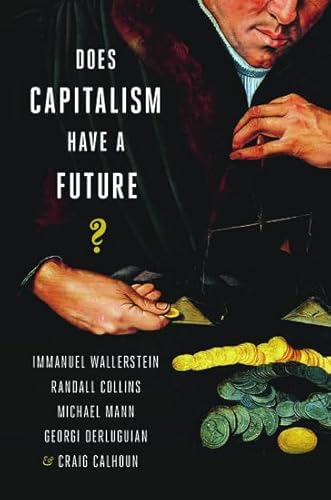
The Great Recession has prompted a reassessment of the specific mode of capitalist accumulation that achieved dominance in the era of globalization. Yet just about all of this literature has focused on one of two issues: why things went wrong, and what we need to do in order to return the system to stability. Outside of a contingent of radical socialists on the fringes of the debate, virtually no one questioned whether capitalism could continue. In Does Capitalism Have a Future?, the prominent theorist Georgi Derleugian has gathered together a quintet of eminent macrosociologists to assess whether the capitalist system can survive.
The prevalent common wisdom, for all its current gloom, nevertheless safely assumes that capitalism cannot break down permanently because there is no alternative. The authors shatter this assumption, arguing that this generalization is not supported by theory but is rather an outgrowth of the optimistic nineteenth-century claim that human history ascends through stages to an enlightened equilibrium of liberal capitalism. Yet as they point out, just about all major historical systems have broken down in the end (e.g., the Roman empire). In the modern epoch there have been several cataclysmic events-notably the French revolution, World War I, and the collapse of the Soviet bloc--that came to pass mainly because contemporary political elites had spectacularly failed to calculate the consequences of the processes they presumed to govern. At present, none of our governing elites and very few of our intellectuals can fathom an ending to our current reigning system. Considering whether a collapse is possible is the task that the quintet--Derleugian, Michael Mann, Randall Collins, Craig Calhoun, and Immanuel Wallerstein--sets out to explore. While all of the contributors arrive at different conclusions, they are in constant dialogue with each other and therefore able to construct relatively seamless--if open-ended--whole. For instance, Wallerstein (who accurately predicted the collapse of the Soviet system in 1979) and Collins, identify fatal structural faults in twenty-first century capitalism. Mann, on the other hand, does not think that there is any serious alternative to the market dynamic, but he does identify other serious threats to the system, including environmental degradation. Calhoun and Derluguian are more circumspect and focus on the role of politics in steering the system toward either revival or collapse.
This most ambitious of books, written by the highest caliber of sociologists, asks the biggest of questions: are we on the cusp of a radical world historical shift or not?
"Sinopsis" puede pertenecer a otra edición de este libro.
Acerca del autor
Immanuel Wallerstein is Senior Research Scholar at Yale and founder of the Fernand Braudel Center at Binghamton University.
Randall Collins is Dorothy Swaine Thomas Professor of Sociology University of Pennsylvania and former President of American Sociological Association.
Michael Mann teaches sociology at UCLA.
Georgi Derluguian teaches Social Research and Public Policy at New York University Abu Dhabi.
Craig Calhoun is Director of the London School of Economics.
"Sobre este título" puede pertenecer a otra edición de este libro.
Otras ediciones populares con el mismo título

Resultados de la búsqueda para Does Capitalism Have a Future?

Imagen de archivo
Does Capitalism Have a Future?
Publicado por
Oxford University Press Inc, 2014
ISBN 10: 0199330840
ISBN 13: 9780199330843
Nuevo
Tapa dura
Librería: PBShop.store UK, Fairford, GLOS, Reino Unido
Calificación del vendedor: 5 de 5 estrellas

HRD. Condición: New. New Book. Delivered from our UK warehouse in 4 to 14 business days. THIS BOOK IS PRINTED ON DEMAND. Established seller since 2000. Nº de ref. del artículo: L1-9780199330843
Comprar nuevo
EUR 153,90
Envío por EUR 4,87
Se envía de Reino Unido a Estados Unidos de America
Se envía de Reino Unido a Estados Unidos de America
Cantidad disponible: Más de 20 disponibles
Imagen de archivo
Does Capitalism Have a Future?
Publicado por
Oxford University Press, 2013
ISBN 10: 0199330840
ISBN 13: 9780199330843
Nuevo
Tapa dura
Librería: Ria Christie Collections, Uxbridge, Reino Unido
Calificación del vendedor: 5 de 5 estrellas
Condición: New. In. Nº de ref. del artículo: ria9780199330843_new
Comprar nuevo
EUR 148,11
Envío por EUR 14,03
Se envía de Reino Unido a Estados Unidos de America
Se envía de Reino Unido a Estados Unidos de America
Cantidad disponible: Más de 20 disponibles
Imagen de archivo
Does Capitalism Have a Future? (eng)
Publicado por
Oxford University Press, 2013
ISBN 10: 0199330840
ISBN 13: 9780199330843
Nuevo
Tapa dura
Librería: Brook Bookstore On Demand, Napoli, NA, Italia
Calificación del vendedor: 5 de 5 estrellas
Condición: new. Questo è un articolo print on demand. Nº de ref. del artículo: 37eb1fac809a420f6a04181a57ee120c
Comprar nuevo
EUR 175,87
Envío por EUR 5,50
Se envía de Italia a Estados Unidos de America
Se envía de Italia a Estados Unidos de America
Cantidad disponible: Más de 20 disponibles
Imagen de archivo
Does Capitalism Have a Future?
Publicado por
Oxford University Press Inc, 2014
ISBN 10: 0199330840
ISBN 13: 9780199330843
Nuevo
Tapa dura
Librería: PBShop.store US, Wood Dale, IL, Estados Unidos de America
Calificación del vendedor: 5 de 5 estrellas
HRD. Condición: New. New Book. Shipped from UK. THIS BOOK IS PRINTED ON DEMAND. Established seller since 2000. Nº de ref. del artículo: L1-9780199330843
Comprar nuevo
EUR 190,13
Gastos de envío gratis
Se envía dentro de Estados Unidos de America
Se envía dentro de Estados Unidos de America
Cantidad disponible: Más de 20 disponibles
Imagen de archivo
Does Capitalism Have a Future?
Publicado por
Oxford University Press Inc, 2013
ISBN 10: 0199330840
ISBN 13: 9780199330843
Nuevo
Tapa dura
Librería: THE SAINT BOOKSTORE, Southport, Reino Unido
Calificación del vendedor: 5 de 5 estrellas
Hardback. Condición: New. This item is printed on demand. New copy - Usually dispatched within 5-9 working days. Nº de ref. del artículo: C9780199330843
Comprar nuevo
EUR 175,51
Envío por EUR 17,98
Se envía de Reino Unido a Estados Unidos de America
Se envía de Reino Unido a Estados Unidos de America
Cantidad disponible: Más de 20 disponibles
Imagen de archivo
Does Capitalism Have a Future? (Hardcover)
Publicado por
Oxford University Press Inc, New York, 2014
ISBN 10: 0199330840
ISBN 13: 9780199330843
Nuevo
Tapa dura
Librería: CitiRetail, Stevenage, Reino Unido
Calificación del vendedor: 5 de 5 estrellas
Hardcover. Condición: new. Hardcover. In Does Capitalism Have a Future?, a global quintet of distinguished scholars cut their way through to the question of whether our capitalist system can survive in the medium run. Despite the current gloom, conventional wisdom still assumes that there is no real alternative to capitalism. The authors argue that this generalization is a mistaken outgrowth of the optimistic nineteenth-century claim that human history ascends through stages to an enlightenedequilibrium of liberal capitalism. All major historical systems have broken down in the end, and in the modern epoch several cataclysmic events-notably the French revolution, World War I, and the collapse of theSoviet bloc-came to pass when contemporary political elites failed to calculate the consequences of the processes they presumed to govern. At present, none of our governing elites and very few intellectuals can fathom a systemic collapse in the coming decades. While the book's contributors arrive at different conclusions, they are in constant dialogue with one another, and they construct a relatively seamless-if open-ended-whole. Written by five of world's most respectedscholars of global historical trends, this ambitious book asks the most important of questions: are we on the cusp of a radical world historical shift? In Does Capitalism Have a Future?, the prominent theorist Georgi Derleugian has gathered together a quintet of eminent macrosociologists to assess whether the capitalist system can survive. This item is printed on demand. Shipping may be from our UK warehouse or from our Australian or US warehouses, depending on stock availability. Nº de ref. del artículo: 9780199330843
Comprar nuevo
EUR 158,57
Envío por EUR 43,32
Se envía de Reino Unido a Estados Unidos de America
Se envía de Reino Unido a Estados Unidos de America
Cantidad disponible: 1 disponibles
Imagen del vendedor
Does Capitalism Have a Future?
Impresión bajo demandaLibrería: AHA-BUCH GmbH, Einbeck, Alemania
Calificación del vendedor: 5 de 5 estrellas
Buch. Condición: Neu. nach der Bestellung gedruckt Neuware - Printed after ordering - The Great Recession has prompted a reassessment of the specific mode of capitalist accumulation that achieved dominance in the era of globalization. Yet just about all of this literature has focused on one of two issues: why things went wrong, and what we need to do in order to return the system to stability. Outside of a contingent of radical socialists on the fringes of the debate, virtually no one questioned whether capitalism could continue. In Does Capitalism Have a Future , the prominent theorist Georgi Derleugian has gathered together a quintet of eminent macrosociologists to assess whether the capitalist system can survive. The prevalent common wisdom, for all its current gloom, nevertheless safely assumes that capitalism cannot break down permanently because there is no alternative. The authors shatter this assumption, arguing that this generalization is not supported by theory but is rather an outgrowth of the optimistic nineteenth-century claim that human history ascends through stages to an enlightened equilibrium of liberal capitalism. Yet as they point out, just about all major historical systems have broken down in the end (e.g., the Roman empire). In the modern epoch there have been several cataclysmic events-notably the French revolution, World War I, and the collapse of the Soviet bloc--that came to pass mainly because contemporary political elites had spectacularly failed to calculate the consequences of the processes they presumed to govern. At present, none of our governing elites and very few of our intellectuals can fathom an ending to our current reigning system. Considering whether a collapse is possible is the task that the quintet--Derleugian, Michael Mann, Randall Collins, Craig Calhoun, and Immanuel Wallerstein--sets out to explore. While all of the contributors arrive at different conclusions, they are in constant dialogue with each other and therefore able to construct relatively seamless--if open-ended--whole. For instance, Wallerstein (who accurately predicted the collapse of the Soviet system in 1979) and Collins, identify fatal structural faults in twenty-first century capitalism. Mann, on the other hand, does not think that there is any serious alternative to the market dynamic, but he does identify other serious threats to the system, including environmental degradation. Calhoun and Derluguian are more circumspect and focus on the role of politics in steering the system toward either revival or collapse.This most ambitious of books, written by the highest caliber of sociologists, asks the biggest of questions: are we on the cusp of a radical world historical shift or not. Nº de ref. del artículo: 9780199330843
Comprar nuevo
EUR 199,45
Envío por EUR 62,35
Se envía de Alemania a Estados Unidos de America
Se envía de Alemania a Estados Unidos de America
Cantidad disponible: 1 disponibles
Imagen de archivo
Does Capitalism Have a Future?
Publicado por
Oxford University Press OUP, 2013
ISBN 10: 0199330840
ISBN 13: 9780199330843
Nuevo
Tapa dura
Librería: Books Puddle, New York, NY, Estados Unidos de America
Calificación del vendedor: 4 de 5 estrellas

Condición: New. Print on Demand. Nº de ref. del artículo: 2696992417
Comprar nuevo
EUR 277,11
Envío por EUR 3,51
Se envía dentro de Estados Unidos de America
Se envía dentro de Estados Unidos de America
Cantidad disponible: 4 disponibles
Imagen de archivo
Does Capitalism Have a Future?
Publicado por
Oxford University Press, 2013
ISBN 10: 0199330840
ISBN 13: 9780199330843
Nuevo
Tapa dura
Librería: Biblios, Frankfurt am main, HESSE, Alemania
Calificación del vendedor: 4 de 5 estrellas
Condición: New. PRINT ON DEMAND. Nº de ref. del artículo: 1896992427
Comprar nuevo
EUR 294,36
Envío por EUR 9,95
Se envía de Alemania a Estados Unidos de America
Se envía de Alemania a Estados Unidos de America
Cantidad disponible: 4 disponibles
Imagen del vendedor
Does Capitalism Have a Future?
Impresión bajo demandaLibrería: preigu, Osnabrück, Alemania
Calificación del vendedor: 5 de 5 estrellas
Buch. Condición: Neu. Does Capitalism Have a Future? | Derleugian | Buch | Gebunden | Englisch | 2017 | ACADEMIC | EAN 9780199330843 | Verantwortliche Person für die EU: Libri GmbH, Europaallee 1, 36244 Bad Hersfeld, gpsr[at]libri[dot]de | Anbieter: preigu Print on Demand. Nº de ref. del artículo: 134007073
Comprar nuevo
EUR 240,95
Envío por EUR 70,00
Se envía de Alemania a Estados Unidos de America
Se envía de Alemania a Estados Unidos de America
Cantidad disponible: 5 disponibles