
Artículos relacionados a Crystallography: A Very Short Introduction
Sinopsis
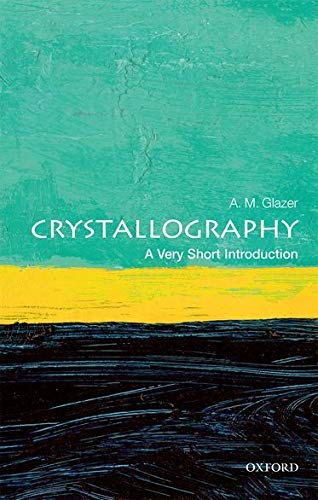
Crystals have fascinated us for centuries with their beauty and symmetry, and have often been invested with magical powers. The use of X-ray diffraction, first pioneered in 1912 by father and son William and Lawrence Bragg, enabled us to probe the structure of molecules, and heralded the scientific study of crystals, leading to an understanding of their atomic arrangements at a fundamental level. The new discipline, called X-ray crystallography, has subsequently evolved into a formidable science that underpins many other scientific areas. Starting from the determination of the structures of very simple crystals, such as that of common salt, today it has become almost routine to determine the positions of tens of thousands of atoms in a crystal.
In this Very Short Introduction Mike Glazer shows how the discoveries in crystallography have been applied to the creation of new and important materials, to drugs and pharmaceuticals and to our understanding of genetics, cell biology, proteins, and viruses. Tracing the history of crystallography, he analyses astonishing developments in new sources of X-rays, as well as of neutrons, and in electron microscopy, and considers the impact they have on the study of crystals today.
ABOUT THE SERIES: The Very Short Introductions series from Oxford University Press contains hundreds of titles in almost every subject area. These pocket-sized books are the perfect way to get ahead in a new subject quickly. Our expert authors combine facts, analysis, perspective, new ideas, and enthusiasm to make interesting and challenging topics highly readable.
"Sinopsis" puede pertenecer a otra edición de este libro.
Acerca del autor
Mike Glazer is Emeritus Professor of Physics at the University of Oxford and Visiting Professor at the University of Warwick. Originally trained as a chemist at the University of St. Andrews, he was one of the last research students of Professor Dame Kathleen Lonsdale, who had originally been a student of Sir William Henry Bragg. He was invited to the Cavendish Laboratory Cambridge by Dr. Helen D. Megaw to work on the structures of an important class of materials known as perovskites, and his classification of tilting of octahedra in these compounds has become internationally accepted. After seven years in Cambridge he was appointed as Lecturer in Physics in Oxford and Official fellow and Tutor in Physics at Jesus College Oxford. From 1996-2000 he was President of the British Crystallographic Association. He was for many years Editor in Chief of the Journal of Applied Crystallography and in 2014 he was elected Vice President of the International Union of Crystallography.
"Sobre este título" puede pertenecer a otra edición de este libro.
Resultados de la búsqueda para Crystallography: A Very Short Introduction

Imagen de archivo
Crystallography: A Very Short Introduction
Publicado por
Oxford University Press, 2016
ISBN 10: 0198717598
ISBN 13: 9780198717591
Antiguo o usado
Paperback
Librería: ThriftBooks-Dallas, Dallas, TX, Estados Unidos de America
Calificación del vendedor: 5 de 5 estrellas

Paperback. Condición: Good. No Jacket. Former library book; Pages can have notes/highlighting. Spine may show signs of wear. ~ ThriftBooks: Read More, Spend Less. Nº de ref. del artículo: G0198717598I3N10
Comprar usado
EUR 9,21
Gastos de envío gratis
Se envía dentro de Estados Unidos de America
Se envía dentro de Estados Unidos de America
Cantidad disponible: 1 disponibles
Imagen de archivo
Crystallography : A Very Short Introduction
Publicado por
Oxford University Press, Incorporated, 2016
ISBN 10: 0198717598
ISBN 13: 9780198717591
Antiguo o usado
Tapa blanda
Librería: Better World Books, Mishawaka, IN, Estados Unidos de America
Calificación del vendedor: 5 de 5 estrellas
Condición: Good. Former library copy. Pages intact with minimal writing/highlighting. The binding may be loose and creased. Dust jackets/supplements are not included. Includes library markings. Stock photo provided. Product includes identifying sticker. Better World Books: Buy Books. Do Good. Nº de ref. del artículo: 38823896-6
Comprar usado
EUR 9,90
Gastos de envío gratis
Se envía dentro de Estados Unidos de America
Se envía dentro de Estados Unidos de America
Cantidad disponible: 1 disponibles
Imagen de archivo
Crystallography A Very Short Introduction (Very Short Introductions)
Publicado por
Oxford University Press, USA, 2016
ISBN 10: 0198717598
ISBN 13: 9780198717591
Nuevo
Tapa blanda
Librería: Lakeside Books, Benton Harbor, MI, Estados Unidos de America
Calificación del vendedor: 5 de 5 estrellas
Condición: New. Brand New! Not Overstocks or Low Quality Book Club Editions! Direct From the Publisher! We're not a giant, faceless warehouse organization! We're a small town bookstore that loves books and loves it's customers! Buy from Lakeside Books! Nº de ref. del artículo: OTF-S-9780198717591
Comprar nuevo
EUR 8,19
Envío por EUR 3,52
Se envía dentro de Estados Unidos de America
Se envía dentro de Estados Unidos de America
Cantidad disponible: Más de 20 disponibles
Imagen del vendedor
Crystallography : A Very Short Introduction
Publicado por
Oxford University Press, 2016
ISBN 10: 0198717598
ISBN 13: 9780198717591
Nuevo
Tapa blanda
Librería: GreatBookPrices, Columbia, MD, Estados Unidos de America
Calificación del vendedor: 5 de 5 estrellas
Condición: New. Nº de ref. del artículo: 24267354-n
Comprar nuevo
EUR 9,41
Envío por EUR 2,33
Se envía dentro de Estados Unidos de America
Se envía dentro de Estados Unidos de America
Cantidad disponible: 2 disponibles
Imagen del vendedor
Crystallography : A Very Short Introduction
Publicado por
Oxford University Press, 2016
ISBN 10: 0198717598
ISBN 13: 9780198717591
Antiguo o usado
Tapa blanda
Librería: GreatBookPrices, Columbia, MD, Estados Unidos de America
Calificación del vendedor: 5 de 5 estrellas
Condición: As New. Unread book in perfect condition. Nº de ref. del artículo: 24267354
Comprar usado
EUR 10,21
Envío por EUR 2,33
Se envía dentro de Estados Unidos de America
Se envía dentro de Estados Unidos de America
Cantidad disponible: 2 disponibles
Imagen de archivo
Crystallography: A Very Short Introduction
Publicado por
Oxford University Press, 2016
ISBN 10: 0198717598
ISBN 13: 9780198717591
Antiguo o usado
Paperback
Librería: WorldofBooks, Goring-By-Sea, WS, Reino Unido
Calificación del vendedor: 5 de 5 estrellas
Paperback. Condición: Very Good. The book has been read, but is in excellent condition. Pages are intact and not marred by notes or highlighting. The spine remains undamaged. Nº de ref. del artículo: GOR007744259
Comprar usado
EUR 6,64
Envío por EUR 6,53
Se envía de Reino Unido a Estados Unidos de America
Se envía de Reino Unido a Estados Unidos de America
Cantidad disponible: 1 disponibles
Imagen de archivo
Crystallography: A Very Short Introduction Format: Paperback
Publicado por
Oxford University Press, 2016
ISBN 10: 0198717598
ISBN 13: 9780198717591
Nuevo
Tapa blanda
Librería: INDOO, Avenel, NJ, Estados Unidos de America
Calificación del vendedor: 5 de 5 estrellas
Condición: New. Brand New. Nº de ref. del artículo: 9780198717591
Comprar nuevo
EUR 13,25
Gastos de envío gratis
Se envía dentro de Estados Unidos de America
Se envía dentro de Estados Unidos de America
Cantidad disponible: Más de 20 disponibles
Imagen de archivo
Crystallography: A Very Short Introduction (Very Short Introductions)
Publicado por
Oxford University Press, 2016
ISBN 10: 0198717598
ISBN 13: 9780198717591
Nuevo
Tapa blanda
Librería: Majestic Books, Hounslow, Reino Unido
Calificación del vendedor: 4 de 5 estrellas

Condición: New. pp. 152. Nº de ref. del artículo: 374292755
Comprar nuevo
EUR 5,79
Envío por EUR 7,58
Se envía de Reino Unido a Estados Unidos de America
Se envía de Reino Unido a Estados Unidos de America
Cantidad disponible: 1 disponibles
Imagen de archivo
Crystallography
Librería: PBShop.store US, Wood Dale, IL, Estados Unidos de America
Calificación del vendedor: 5 de 5 estrellas
PAP. Condición: New. New Book. Shipped from UK. Established seller since 2000. Nº de ref. del artículo: FU-9780198717591
Comprar nuevo
EUR 13,67
Gastos de envío gratis
Se envía dentro de Estados Unidos de America
Se envía dentro de Estados Unidos de America
Cantidad disponible: 15 disponibles
Imagen del vendedor
Crystallography
Publicado por
Oxford University Press, GB, 2016
ISBN 10: 0198717598
ISBN 13: 9780198717591
Nuevo
Paperback
Librería: Rarewaves.com USA, London, LONDO, Reino Unido
Calificación del vendedor: 5 de 5 estrellas
Paperback. Condición: New. Crystals have fascinated us for centuries with their beauty and symmetry, and have often been invested with magical powers. The use of X-ray diffraction, first pioneered in 1912 by father and son William and Lawrence Bragg, enabled us to probe the structure of molecules, and heralded the scientific study of crystals, leading to an understanding of their atomic arrangements at a fundamental level. The new discipline, called X-ray crystallography, has subsequently evolved into a formidable science that underpins many other scientific areas. Starting from the determination of the structures of very simple crystals, such as that of common salt, today it has become almost routine to determine the positions of tens of thousands of atoms in a crystal. In this Very Short Introduction Mike Glazer shows how the discoveries in crystallography have been applied to the creation of new and important materials, to drugs and pharmaceuticals and to our understanding of genetics, cell biology, proteins, and viruses. Tracing the history of crystallography, he analyses astonishing developments in new sources of X-rays, as well as of neutrons, and in electron microscopy, and considers the impact they have on the study of crystals today. ABOUT THE SERIES: The Very Short Introductions series from Oxford University Press contains hundreds of titles in almost every subject area. These pocket-sized books are the perfect way to get ahead in a new subject quickly. Our expert authors combine facts, analysis, perspective, new ideas, and enthusiasm to make interesting and challenging topics highly readable. Nº de ref. del artículo: LU-9780198717591
Comprar nuevo
EUR 13,80
Gastos de envío gratis
Se envía de Reino Unido a Estados Unidos de America
Se envía de Reino Unido a Estados Unidos de America
Cantidad disponible: 1 disponibles