
Artículos relacionados a UNITED NATIONS HUMAN RIGHTS 2E C: A Critical Appraisal...
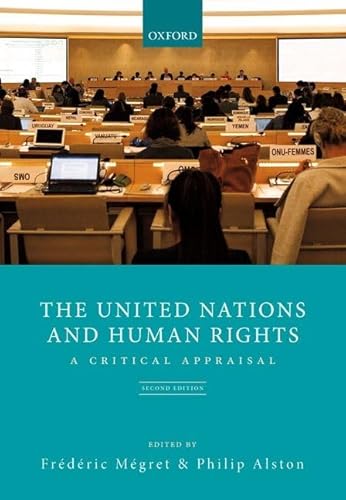
Sinopsis
The very concept of human rights implies governmental accountability. To ensure that governments are indeed held accountable for their treatment of citizens and others the United Nations has established a wide range of mechanisms to monitor compliance, and to seek to prevent as well as respond to violations.
The panoply of implementation measures that the UN has taken since 1945 has resulted in a diverse and complex set of institutional arrangements, the effectiveness of which varies widely. Indeed, there is much doubt as to the effectiveness of much of the UN's human rights efforts but also about what direction it should take. Inevitable instances of politicization and the hostile, or at best ambivalent, attitude of most governments, has at times endangered the fragile progress made on the more technical fronts. At the same time, technical efforts cannot dispense with the complex politics of actualizing the promise of human rights at and through the UN. In addition to significant actual and potential problems of duplication, overlapping and inconsistent approaches, there are major problems of under-funding and insufficient expertise. The complexity of these arrangements and the difficulty in evaluating their impact makes a comprehensive guide of the type provided here all the more indispensable.
These essays critically examine the functions, procedures, and performance of each of the major UN organs dealing with human rights, including the Security Council and the International Court of Justice as well as the more specialized bodies monitoring the implementation of human rights treaties. Significant attention is devoted to the considerable efforts at reforming the UN's human rights machinery, as illustrated most notably by the creation of the Human Rights Council to replace the Commission on Human Rights. The book also looks at the relationship between the various bodies and the potential for major reforms and restructuring.
"Sinopsis" puede pertenecer a otra edición de este libro.
Acerca del autor
Frédéric Mégret is a Full-Professor and Dawson Fellow at the Faculty of Law of McGill University. He holds a Phd in international law from the Université Panthéon-Sorbonne and the Graduate Institute of International Studies of the University of Geneva. He is a graduate of Sciences Po Paris and the author of many articles on international human rights law, public international law, international criminal law and the laws of war.
Philip Alston is an international lawyer whose teaching focuses primarily on human rights law and the law of international organizations. He directs the recently-established NYU Center for Human Rights and Global Justice, part of the Institute for International Law and Justice. He is currently John Norton Pomeroy Professor of Law, NYU School of Law.
"Sobre este título" puede pertenecer a otra edición de este libro.
Resultados de la búsqueda para UNITED NATIONS HUMAN RIGHTS 2E C: A Critical Appraisal...

Imagen del vendedor
United Nations and Human Rights : A Critical Appraisal
Publicado por
Oxford University Press, 2020
ISBN 10: 0198298374
ISBN 13: 9780198298373
Nuevo
Tapa dura
Librería: GreatBookPrices, Columbia, MD, Estados Unidos de America
Calificación del vendedor: 5 de 5 estrellas

Condición: New. Nº de ref. del artículo: 1777358-n
Comprar nuevo
EUR 220,44
Envío por EUR 2,35
Se envía dentro de Estados Unidos de America
Se envía dentro de Estados Unidos de America
Cantidad disponible: 9 disponibles
Imagen del vendedor
The United Nations and Human Rights (Hardcover)
Publicado por
Oxford University Press, Oxford, 2020
ISBN 10: 0198298374
ISBN 13: 9780198298373
Nuevo
Tapa dura
Librería: Grand Eagle Retail, Bensenville, IL, Estados Unidos de America
Calificación del vendedor: 5 de 5 estrellas
Hardcover. Condición: new. Hardcover. The very concept of human rights implies governmental accountability. To ensure that governments are indeed held accountable for their treatment of citizens and others the United Nations has established a wide range of mechanisms to monitor compliance, and to seek to prevent as well as respond to violations.The panoply of implementation measures that the UN has taken since 1945 has resulted in a diverse and complex set of institutionalarrangements, the effectiveness of which varies widely. Indeed, there is much doubt as to the effectiveness of much of the UN's human rights efforts but also about what direction it should take. Inevitableinstances of politicization and the hostile, or at best ambivalent, attitude of most governments, has at times endangered the fragile progress made on the more technical fronts. At the same time, technical efforts cannot dispense with the complex politics of actualizing the promise of human rights at and through the UN. In addition to significant actual and potential problems of duplication, overlapping and inconsistent approaches, there are major problems of under-funding and insufficientexpertise. The complexity of these arrangements and the difficulty in evaluating their impact makes a comprehensive guide of the type provided here all the more indispensable.Theseessays critically examine the functions, procedures, and performance of each of the major UN organs dealing with human rights, including the Security Council and the International Court of Justice as well as the more specialized bodies monitoring the implementation of human rights treaties. Significant attention is devoted to the considerable efforts at reforming the UN's human rights machinery, as illustrated most notably by the creation of the Human Rights Council to replace the Commission onHuman Rights. The book also looks at the relationship between the various bodies and the potential for major reforms and restructuring. This book analyses the UN's contribution to international human rights, and the desire to ensure that governments are held accountable for their treatment of citizens and others. It offers a comprehensive and expert analysis and critique of UN instruments and organs, including the Human Rights Council. Shipping may be from multiple locations in the US or from the UK, depending on stock availability. Nº de ref. del artículo: 9780198298373
Comprar nuevo
EUR 222,87
Gastos de envío gratis
Se envía dentro de Estados Unidos de America
Se envía dentro de Estados Unidos de America
Cantidad disponible: 1 disponibles
Imagen de archivo
The United Nations and Human Rights
Publicado por
Oxford University Press, 2020
ISBN 10: 0198298374
ISBN 13: 9780198298373
Nuevo
Tapa dura
Librería: PBShop.store UK, Fairford, GLOS, Reino Unido
Calificación del vendedor: 5 de 5 estrellas
HRD. Condición: New. New Book. Delivered from our UK warehouse in 4 to 14 business days. THIS BOOK IS PRINTED ON DEMAND. Established seller since 2000. Nº de ref. del artículo: L1-9780198298373
Comprar nuevo
EUR 222,59
Envío por EUR 9,99
Se envía de Reino Unido a Estados Unidos de America
Se envía de Reino Unido a Estados Unidos de America
Cantidad disponible: Más de 20 disponibles
Imagen de archivo
The United Nations and Human Rights
Publicado por
Oxford University Press, 2020
ISBN 10: 0198298374
ISBN 13: 9780198298373
Nuevo
Tapa dura
Librería: PBShop.store US, Wood Dale, IL, Estados Unidos de America
Calificación del vendedor: 5 de 5 estrellas
HRD. Condición: New. New Book. Shipped from UK. THIS BOOK IS PRINTED ON DEMAND. Established seller since 2000. Nº de ref. del artículo: L1-9780198298373
Comprar nuevo
EUR 237,46
Gastos de envío gratis
Se envía dentro de Estados Unidos de America
Se envía dentro de Estados Unidos de America
Cantidad disponible: Más de 20 disponibles
Imagen de archivo
United Nations and Human Rights : A Critical Appraisal
Publicado por
Oxford University Press, 2020
ISBN 10: 0198298374
ISBN 13: 9780198298373
Nuevo
Tapa dura
Librería: GreatBookPricesUK, Woodford Green, Reino Unido
Calificación del vendedor: 5 de 5 estrellas
Condición: New. Nº de ref. del artículo: 1777358-n
Comprar nuevo
EUR 222,58
Envío por EUR 17,65
Se envía de Reino Unido a Estados Unidos de America
Se envía de Reino Unido a Estados Unidos de America
Cantidad disponible: 9 disponibles
Imagen de archivo
United Nations and Human Rights : A Critical Appraisal
Publicado por
Oxford University Press, 2020
ISBN 10: 0198298374
ISBN 13: 9780198298373
Antiguo o usado
Tapa dura
Librería: GreatBookPrices, Columbia, MD, Estados Unidos de America
Calificación del vendedor: 5 de 5 estrellas
Condición: As New. Unread book in perfect condition. Nº de ref. del artículo: 1777358
Comprar usado
EUR 244,66
Envío por EUR 2,35
Se envía dentro de Estados Unidos de America
Se envía dentro de Estados Unidos de America
Cantidad disponible: 9 disponibles
Imagen de archivo
The United Nations and Human Rights. A Critical Appraisal.
Publicado por
Oxford University Press, 2020
ISBN 10: 0198298374
ISBN 13: 9780198298373
Nuevo
Tapa dura
Librería: Kennys Bookshop and Art Galleries Ltd., Galway, GY, Irlanda
Calificación del vendedor: 5 de 5 estrellas
Condición: New. This book analyses the UN's contribution to international human rights, and the desire to ensure that governments are held accountable for their treatment of citizens and others. This book offers a comprehensive and expert analysis and critique of UN instruments and organs, and of the new UN Human Rights Council. Editor(s): Alston, Philip; Megret, Frederic. Num Pages: 800 pages. BIC Classification: JPSN1; JPVH; LAM; LBBR. Category: (P) Professional & Vocational. Dimension: 234 x 156 x 3. . . 2020. 2nd Edition. Hardcover. . . . . Nº de ref. del artículo: V9780198298373
Comprar nuevo
EUR 247,89
Envío por EUR 9,50
Se envía de Irlanda a Estados Unidos de America
Se envía de Irlanda a Estados Unidos de America
Cantidad disponible: 4 disponibles
Imagen de archivo
The United Nations and Human Rights: A Critical Appraisal (Law)
Publicado por
Oxford University Press, 2020
ISBN 10: 0198298374
ISBN 13: 9780198298373
Nuevo
Tapa dura
Librería: Ria Christie Collections, Uxbridge, Reino Unido
Calificación del vendedor: 5 de 5 estrellas
Condición: New. In English. Nº de ref. del artículo: ria9780198298373_new
Comprar nuevo
EUR 240,84
Envío por EUR 17,58
Se envía de Reino Unido a Estados Unidos de America
Se envía de Reino Unido a Estados Unidos de America
Cantidad disponible: Más de 20 disponibles
Imagen del vendedor
United Nations and Human Rights : A Critical Appraisal
Publicado por
Oxford University Press, 2020
ISBN 10: 0198298374
ISBN 13: 9780198298373
Antiguo o usado
Tapa dura
Librería: GreatBookPricesUK, Woodford Green, Reino Unido
Calificación del vendedor: 5 de 5 estrellas
Condición: As New. Unread book in perfect condition. Nº de ref. del artículo: 1777358
Comprar usado
EUR 243,75
Envío por EUR 17,65
Se envía de Reino Unido a Estados Unidos de America
Se envía de Reino Unido a Estados Unidos de America
Cantidad disponible: 9 disponibles
Imagen de archivo
The United Nations and Human Rights (Hardcover)
Publicado por
Oxford University Press, Oxford, 2020
ISBN 10: 0198298374
ISBN 13: 9780198298373
Nuevo
Tapa dura
Librería: CitiRetail, Stevenage, Reino Unido
Calificación del vendedor: 5 de 5 estrellas
Hardcover. Condición: new. Hardcover. The very concept of human rights implies governmental accountability. To ensure that governments are indeed held accountable for their treatment of citizens and others the United Nations has established a wide range of mechanisms to monitor compliance, and to seek to prevent as well as respond to violations.The panoply of implementation measures that the UN has taken since 1945 has resulted in a diverse and complex set of institutionalarrangements, the effectiveness of which varies widely. Indeed, there is much doubt as to the effectiveness of much of the UN's human rights efforts but also about what direction it should take. Inevitableinstances of politicization and the hostile, or at best ambivalent, attitude of most governments, has at times endangered the fragile progress made on the more technical fronts. At the same time, technical efforts cannot dispense with the complex politics of actualizing the promise of human rights at and through the UN. In addition to significant actual and potential problems of duplication, overlapping and inconsistent approaches, there are major problems of under-funding and insufficientexpertise. The complexity of these arrangements and the difficulty in evaluating their impact makes a comprehensive guide of the type provided here all the more indispensable.Theseessays critically examine the functions, procedures, and performance of each of the major UN organs dealing with human rights, including the Security Council and the International Court of Justice as well as the more specialized bodies monitoring the implementation of human rights treaties. Significant attention is devoted to the considerable efforts at reforming the UN's human rights machinery, as illustrated most notably by the creation of the Human Rights Council to replace the Commission onHuman Rights. The book also looks at the relationship between the various bodies and the potential for major reforms and restructuring. This book analyses the UN's contribution to international human rights, and the desire to ensure that governments are held accountable for their treatment of citizens and others. It offers a comprehensive and expert analysis and critique of UN instruments and organs, including the Human Rights Council. This item is printed on demand. Shipping may be from our UK warehouse or from our Australian or US warehouses, depending on stock availability. Nº de ref. del artículo: 9780198298373
Comprar nuevo
EUR 233,29
Envío por EUR 43,54
Se envía de Reino Unido a Estados Unidos de America
Se envía de Reino Unido a Estados Unidos de America
Cantidad disponible: 1 disponibles