
Artículos relacionados a From Battlefields Rising: How The Civil War Transformed...
Sinopsis
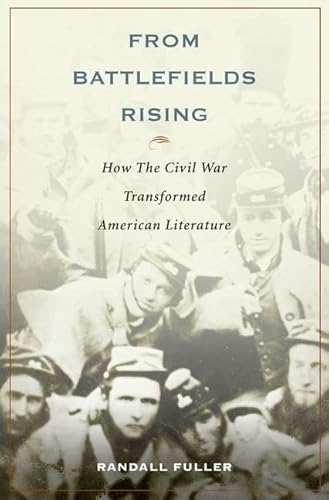
This book considers the effects of the American civil war on those writers and artists who helped their young nation imagine itself. the writers and artists of the early to mid-nineteenth century. One of the war's many traumas was the pain of witnessing the disintegration of a symbolic order they had helped construct in previous decades. If Emerson, Whitman, Hawthorne and Melville grounded their writing on a coherent national myth, aimed at a familiar audience, the civil war challenged every prior presumption and called on the writers to confront novel exigencies with a suitable new style and form. Put another way, it forced them to engage anew with the language and symbols that had shaped America's previous conception of itself. As a result, poetry became more important for Emerson and Melville, while the prose form re-emerged in Whitman's undervalued Memoranda During the War. It energized the poetry of Emily Dickinson and seemed to silence Hawthorne, who could no longer organize romance amid the wartime reports he read and the military camps he visited.
Fuller shows how the war shaped and influenced poetic language and narrative during a time of full scale national crisis. In so doing, his book takes up where very few literary historians have previously ventured. Seeking to change the way scholars and students read the late work of major writers such as Hawthorne, Emerson, and Melville, this study challenges easy conclusions and earlier notions about the differences between ante- and postbellum writing. It uncovers a host of continuities extending from the 'Romantic' to the 'Realist' periods of American writing while also revealing previously unseen ruptures and tensions within the work of individual writers. It offers a literary history from the era that forever changed America's early idealism into something rawer-and something more American-that set the stage for a new model of literary social engagement and experimentation.
"Sinopsis" puede pertenecer a otra edición de este libro.
Acerca del autor
Randell Fuller is Associate Professor of English at Drury University. He is the author of Emerson's Ghosts: Literature, Politics, and the Making of Americanists (OUP 2007).
"Sobre este título" puede pertenecer a otra edición de este libro.
Resultados de la búsqueda para From Battlefields Rising: How The Civil War Transformed...

Imagen de archivo
From Battlefields Rising: How The Civil War Transformed American Literature
Publicado por
Oxford University Press Inc, 2011
ISBN 10: 0195342305
ISBN 13: 9780195342307
Antiguo o usado
Tapa dura
Librería: World of Books (was SecondSale), Montgomery, IL, Estados Unidos de America
Calificación del vendedor: 5 de 5 estrellas

Hardback. Condición: Good. This book considers the effects of the American civil war on those who helped a young nation imagine itself, the writers and artists of the early to mid-nineteenth century. One of the war's many traumas was the pain of witnessing the disintegration of a symbolic order they had helped construct in previous decades. If Emerson, Whitman, Hawthorne and Melville grounded their writing on a coherent national myth, aimed at a familiar audience, the civil war challenged every prior presumption and called on the writers to confront novel exigencies with a suitable new style and form. Put another way, it forced them to engage anew with the language and symbols that had shaped America's previous conception of itself. As a result, poetry became more important for Emerson and Melville, while the prose form re-emerged in Whitman's undervalued Memoranda During the War. It energized the poetry of Emily Dickinson and seemed to silence Hawthorne, who could no longer organize romance amid the wartime reports he read and the military camps he visited.Fuller shows how the war shaped and influenced poetic language and narrative during a time of full scale national crisis. In so doing, his book takes up where very few literary historians have previously ventured. Seeking to change the way scholars and students read the late work of major writers such as Hawthorne, Emerson, Melville, and others, this study will challenge easy conclusions and earlier notions about the differences between ante- and postbellum writing. It uncovers a host of continuities extending from the 'Romantic' to the 'Realist' periods of American writing while also revealing previously unseen ruptures and tensions within the work of individual writers. It offers a literary history from the era that forever changed America's early idealism into something rawer - and something more American - that set the stage for a new model of literary social engagement and experimentation. Nº de ref. del artículo: 00099059368
Comprar usado
EUR 4,83
Gastos de envío gratis
Se envía dentro de Estados Unidos de America
Se envía dentro de Estados Unidos de America
Cantidad disponible: 2 disponibles
Imagen de archivo
From Battlefields Rising: How The Civil War Transformed American Literature
Publicado por
Oxford University Press Inc, 2011
ISBN 10: 0195342305
ISBN 13: 9780195342307
Antiguo o usado
Tapa dura
Librería: World of Books (was SecondSale), Montgomery, IL, Estados Unidos de America
Calificación del vendedor: 5 de 5 estrellas
Hardback. Condición: Very Good. This book considers the effects of the American civil war on those who helped a young nation imagine itself, the writers and artists of the early to mid-nineteenth century. One of the war's many traumas was the pain of witnessing the disintegration of a symbolic order they had helped construct in previous decades. If Emerson, Whitman, Hawthorne and Melville grounded their writing on a coherent national myth, aimed at a familiar audience, the civil war challenged every prior presumption and called on the writers to confront novel exigencies with a suitable new style and form. Put another way, it forced them to engage anew with the language and symbols that had shaped America's previous conception of itself. As a result, poetry became more important for Emerson and Melville, while the prose form re-emerged in Whitman's undervalued Memoranda During the War. It energized the poetry of Emily Dickinson and seemed to silence Hawthorne, who could no longer organize romance amid the wartime reports he read and the military camps he visited.Fuller shows how the war shaped and influenced poetic language and narrative during a time of full scale national crisis. In so doing, his book takes up where very few literary historians have previously ventured. Seeking to change the way scholars and students read the late work of major writers such as Hawthorne, Emerson, Melville, and others, this study will challenge easy conclusions and earlier notions about the differences between ante- and postbellum writing. It uncovers a host of continuities extending from the 'Romantic' to the 'Realist' periods of American writing while also revealing previously unseen ruptures and tensions within the work of individual writers. It offers a literary history from the era that forever changed America's early idealism into something rawer - and something more American - that set the stage for a new model of literary social engagement and experimentation. Nº de ref. del artículo: 00099060334
Comprar usado
EUR 4,83
Gastos de envío gratis
Se envía dentro de Estados Unidos de America
Se envía dentro de Estados Unidos de America
Cantidad disponible: 13 disponibles
Imagen del vendedor
From Battlefields Rising: How The Civil War Transformed American Literature
Publicado por
Oxford University Press, 2011
ISBN 10: 0195342305
ISBN 13: 9780195342307
Antiguo o usado
Tapa dura
Librería: Greenworld Books, Arlington, TX, Estados Unidos de America
Calificación del vendedor: 5 de 5 estrellas
Condición: very_good. Fast Free Shipping â" Very Good condition book with a firm cover and clean pages. Shows normal use and some light wear or limited notes markings. A solid, nice copy to enjoy. Nº de ref. del artículo: GWV.0195342305.VG
Comprar usado
EUR 4,84
Gastos de envío gratis
Se envía dentro de Estados Unidos de America
Se envía dentro de Estados Unidos de America
Cantidad disponible: 1 disponibles
Imagen de archivo
From Battlefields Rising: How The Civil War Transformed American Literature
Publicado por
Oxford University Press (edition 1), 2011
ISBN 10: 0195342305
ISBN 13: 9780195342307
Antiguo o usado
Tapa dura
Librería: BooksRun, Philadelphia, PA, Estados Unidos de America
Calificación del vendedor: 5 de 5 estrellas
Hardcover. Condición: Very Good. 1. With dust jacket. It's a well-cared-for item that has seen limited use. The item may show minor signs of wear. All the text is legible, with all pages included. It may have slight markings and/or highlighting. Nº de ref. del artículo: 0195342305-11-6-29
Comprar usado
EUR 5,50
Gastos de envío gratis
Se envía dentro de Estados Unidos de America
Se envía dentro de Estados Unidos de America
Cantidad disponible: 1 disponibles
Imagen de archivo
From Battlefields Rising: How The Civil War Transformed American Literature
Publicado por
Oxford University Press Inc, 2011
ISBN 10: 0195342305
ISBN 13: 9780195342307
Antiguo o usado
Tapa dura
Librería: World of Books Inc, Montgomery, IL, Estados Unidos de America
Calificación del vendedor: 4 de 5 estrellas

Hardback. Condición: Good. This book considers the effects of the American civil war on those who helped a young nation imagine itself, the writers and artists of the early to mid-nineteenth century. One of the war's many traumas was the pain of witnessing the disintegration of a symbolic order they had helped construct in previous decades. If Emerson, Whitman, Hawthorne and Melville grounded their writing on a coherent national myth, aimed at a familiar audience, the civil war challenged every prior presumption and called on the writers to confront novel exigencies with a suitable new style and form. Put another way, it forced them to engage anew with the language and symbols that had shaped America's previous conception of itself. As a result, poetry became more important for Emerson and Melville, while the prose form re-emerged in Whitman's undervalued Memoranda During the War. It energized the poetry of Emily Dickinson and seemed to silence Hawthorne, who could no longer organize romance amid the wartime reports he read and the military camps he visited.Fuller shows how the war shaped and influenced poetic language and narrative during a time of full scale national crisis. In so doing, his book takes up where very few literary historians have previously ventured. Seeking to change the way scholars and students read the late work of major writers such as Hawthorne, Emerson, Melville, and others, this study will challenge easy conclusions and earlier notions about the differences between ante- and postbellum writing. It uncovers a host of continuities extending from the 'Romantic' to the 'Realist' periods of American writing while also revealing previously unseen ruptures and tensions within the work of individual writers. It offers a literary history from the era that forever changed America's early idealism into something rawer - and something more American - that set the stage for a new model of literary social engagement and experimentation. Nº de ref. del artículo: CIN0195342305G
Comprar usado
EUR 6,66
Gastos de envío gratis
Se envía dentro de Estados Unidos de America
Se envía dentro de Estados Unidos de America
Cantidad disponible: 2 disponibles
Imagen de archivo
From Battlefields Rising: How The Civil War Transformed American Literature
Publicado por
Oxford University Press Inc, 2011
ISBN 10: 0195342305
ISBN 13: 9780195342307
Antiguo o usado
Tapa dura
Librería: World of Books Inc, Montgomery, IL, Estados Unidos de America
Calificación del vendedor: 4 de 5 estrellas
Hardback. Condición: Very Good. This book considers the effects of the American civil war on those who helped a young nation imagine itself, the writers and artists of the early to mid-nineteenth century. One of the war's many traumas was the pain of witnessing the disintegration of a symbolic order they had helped construct in previous decades. If Emerson, Whitman, Hawthorne and Melville grounded their writing on a coherent national myth, aimed at a familiar audience, the civil war challenged every prior presumption and called on the writers to confront novel exigencies with a suitable new style and form. Put another way, it forced them to engage anew with the language and symbols that had shaped America's previous conception of itself. As a result, poetry became more important for Emerson and Melville, while the prose form re-emerged in Whitman's undervalued Memoranda During the War. It energized the poetry of Emily Dickinson and seemed to silence Hawthorne, who could no longer organize romance amid the wartime reports he read and the military camps he visited.Fuller shows how the war shaped and influenced poetic language and narrative during a time of full scale national crisis. In so doing, his book takes up where very few literary historians have previously ventured. Seeking to change the way scholars and students read the late work of major writers such as Hawthorne, Emerson, Melville, and others, this study will challenge easy conclusions and earlier notions about the differences between ante- and postbellum writing. It uncovers a host of continuities extending from the 'Romantic' to the 'Realist' periods of American writing while also revealing previously unseen ruptures and tensions within the work of individual writers. It offers a literary history from the era that forever changed America's early idealism into something rawer - and something more American - that set the stage for a new model of literary social engagement and experimentation. Nº de ref. del artículo: CIN0195342305VG
Comprar usado
EUR 6,66
Gastos de envío gratis
Se envía dentro de Estados Unidos de America
Se envía dentro de Estados Unidos de America
Cantidad disponible: 13 disponibles
Imagen de archivo
From Battlefields Rising: How the Civil War Transformed American Literature
Publicado por
Oxford University Press, USA, 2011
ISBN 10: 0195342305
ISBN 13: 9780195342307
Antiguo o usado
Tapa dura
Librería: ThriftBooks-Dallas, Dallas, TX, Estados Unidos de America
Calificación del vendedor: 5 de 5 estrellas
Hardcover. Condición: Fair. No Jacket. Former library book; Readable copy. Pages may have considerable notes/highlighting. ~ ThriftBooks: Read More, Spend Less. Nº de ref. del artículo: G0195342305I5N10
Comprar usado
EUR 7,47
Gastos de envío gratis
Se envía dentro de Estados Unidos de America
Se envía dentro de Estados Unidos de America
Cantidad disponible: 1 disponibles
Imagen de archivo
From Battlefields Rising: How the Civil War Transformed American Literature
Publicado por
Oxford University Press, USA, 2011
ISBN 10: 0195342305
ISBN 13: 9780195342307
Antiguo o usado
Tapa dura
Librería: ThriftBooks-Atlanta, AUSTELL, GA, Estados Unidos de America
Calificación del vendedor: 5 de 5 estrellas
Hardcover. Condición: As New. No Jacket. Pages are clean and are not marred by notes or folds of any kind. ~ ThriftBooks: Read More, Spend Less. Nº de ref. del artículo: G0195342305I2N00
Comprar usado
EUR 7,47
Gastos de envío gratis
Se envía dentro de Estados Unidos de America
Se envía dentro de Estados Unidos de America
Cantidad disponible: 1 disponibles
Imagen de archivo
From Battlefields Rising : How the Civil War Transformed American Literature
Publicado por
Oxford University Press, Incorporated, 2017
ISBN 10: 0195342305
ISBN 13: 9780195342307
Antiguo o usado
Tapa dura
Librería: Better World Books, Mishawaka, IN, Estados Unidos de America
Calificación del vendedor: 5 de 5 estrellas
Condición: Good. Former library copy. Pages intact with minimal writing/highlighting. The binding may be loose and creased. Dust jackets/supplements are not included. Includes library markings. Stock photo provided. Product includes identifying sticker. Better World Books: Buy Books. Do Good. Nº de ref. del artículo: 4892369-6
Comprar usado
EUR 8,55
Gastos de envío gratis
Se envía dentro de Estados Unidos de America
Se envía dentro de Estados Unidos de America
Cantidad disponible: 1 disponibles
Imagen de archivo
From Battlefields Rising : How the Civil War Transformed American Literature
Publicado por
Oxford University Press, Incorporated, 2011
ISBN 10: 0195342305
ISBN 13: 9780195342307
Antiguo o usado
Tapa dura
Librería: Better World Books: West, Reno, NV, Estados Unidos de America
Calificación del vendedor: 5 de 5 estrellas
Condición: Very Good. Former library copy. Pages intact with possible writing/highlighting. Binding strong with minor wear. Dust jackets/supplements may not be included. Includes library markings. Stock photo provided. Product includes identifying sticker. Better World Books: Buy Books. Do Good. Nº de ref. del artículo: 325698-20
Comprar usado
EUR 8,55
Gastos de envío gratis
Se envía dentro de Estados Unidos de America
Se envía dentro de Estados Unidos de America
Cantidad disponible: 1 disponibles