
Artículos relacionados a Patterns of Software: Tales from the Software Community
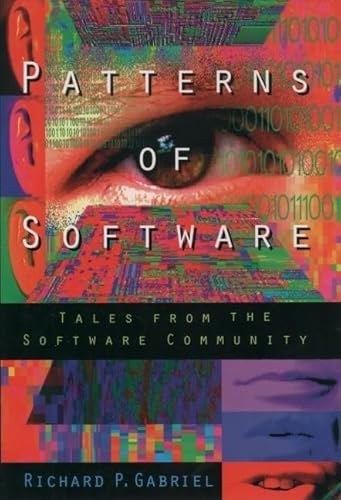
Sinopsis
In our homes, our schools, and our businesses, computers play an ever-increasing role. But while most of us today can work a computer--albeit with the help of the ever-present computer software manual--we know little about what goes on inside the box and virtually nothing about software design or the world of computer programming.
In Patterns of Software, the respected software pioneer and computer scientist, Richard Gabriel, gives us an informative inside look at the world of software design and computer programming and the business that surrounds them. In this wide-ranging volume, Gabriel discusses such topics as what makes a successful programming language, how the rest of the world looks at and responds to the work of computer scientists, how he first became involved in computer programming and software development, what makes a successful software business, and why his own company, Lucid, failed in 1994, ten years after its inception.
Perhaps the most interesting and enlightening section of the book is Gabriel's detailed look at what he believes are the lessons that can be learned from architect Christopher Alexander, whose books--including the seminalA Pattern Language--have had a profound influence on the computer programming community. Gabriel illuminates some of Alexander's key insights--"the quality without a name," pattern languages, habitability, piecemeal growth--and reveals how these influential architectural ideas apply equally well to the construction of a computer program. Gabriel explains the concept of habitability, for example, by comparing a program to a New England farmhouse and the surrounding structures which slowly grow and are modified according to the needs and desires of the people who live and work on the farm. "Programs live and grow, and their inhabitants--the programmers--need to work with that program the way the farmer works with the homestead."
Although computer scientists and software entrepreneurs will get much out of this book, the essays are accessible to everyone and will intrigue anyone curious about Silicon Valley, computer programming, or the world of high technology.
"Sinopsis" puede pertenecer a otra edición de este libro.
Acerca del autor
About the Author:
Richard P. Gabriel is Consulting Professor of Computer Science at Stanford University.
"Sobre este título" puede pertenecer a otra edición de este libro.
Resultados de la búsqueda para Patterns of Software: Tales from the Software Community

Imagen de archivo
Patterns of Software
Publicado por
Oxford University Press Inc, 1998
ISBN 10: 0195121236
ISBN 13: 9780195121230
Antiguo o usado
Paperback
Librería: World of Books (was SecondSale), Montgomery, IL, Estados Unidos de America
Calificación del vendedor: 5 de 5 estrellas

Paperback. Condición: Good. In our homes, our schools, and our businesses, computers play an ever-increasing role. But while most of us today can work a computer--albeit with the help of the ever-present computer software manual--we know little about what goes on inside the box and virtually nothing about software design or the world of computer programming. In Patterns of Software, the respected software pioneer and computer scientist, Richard Gabriel, gives us an informative inside look at the world of software design and computer programming and the business that surrounds them. In this wide-ranging volume, Gabriel discusses such topics as what makes a successful programming language, how the rest of the world looks at and responds to the work of computer scientists, how he first became involved in computer programming and software development, what makes a successful software business, and why his own company, Lucid, failed in 1994, ten years after its inception. Perhaps the most interesting and enlightening section of the book is Gabriel's detailed look at what he believes are the lessons that can be learned from architect Christopher Alexander, whose books--including the seminal A Pattern Language--have had a profound influence on the computer programming community. Gabriel illuminates some of Alexander's key insights--"the quality without a name," pattern languages, habitability, piecemeal growth--and reveals how these influential architectural ideas apply equally well to the construction of a computer program. Gabriel explains the concept of habitability, for example, by comparing a program to a New England farmhouse and the surrounding structures which slowly grow and are modified according to the needs and desires of the people who live and work on the farm. "Programs live and grow, and their inhabitants--the programmers--need to work with that program the way the farmer works with the homestead." Although computer scientists and software entrepreneurs will get much out of this book, the essays are accessible to everyone and will intrigue anyone curious about Silicon Valley, computer programming, or the world of high technology. Nº de ref. del artículo: 00110112458
Comprar usado
EUR 5,78
Gastos de envío gratis
Se envía dentro de Estados Unidos de America
Se envía dentro de Estados Unidos de America
Cantidad disponible: 1 disponibles
Imagen de archivo
Patterns of Software: Tales from the Software Community
Publicado por
Oxford University Press (edition Reprint), 1998
ISBN 10: 0195121236
ISBN 13: 9780195121230
Antiguo o usado
Paperback
Librería: BooksRun, Philadelphia, PA, Estados Unidos de America
Calificación del vendedor: 5 de 5 estrellas
Paperback. Condición: Very Good. Reprint. It's a well-cared-for item that has seen limited use. The item may show minor signs of wear. All the text is legible, with all pages included. It may have slight markings and/or highlighting. Nº de ref. del artículo: 0195121236-11-1
Comprar usado
EUR 7,41
Gastos de envío gratis
Se envía dentro de Estados Unidos de America
Se envía dentro de Estados Unidos de America
Cantidad disponible: 1 disponibles
Imagen de archivo
Patterns of Software
Publicado por
Oxford University Press Inc, 1998
ISBN 10: 0195121236
ISBN 13: 9780195121230
Antiguo o usado
Paperback
Librería: World of Books Inc, Montgomery, IL, Estados Unidos de America
Calificación del vendedor: 4 de 5 estrellas

Paperback. Condición: Good. In our homes, our schools, and our businesses, computers play an ever-increasing role. But while most of us today can work a computer--albeit with the help of the ever-present computer software manual--we know little about what goes on inside the box and virtually nothing about software design or the world of computer programming. In Patterns of Software, the respected software pioneer and computer scientist, Richard Gabriel, gives us an informative inside look at the world of software design and computer programming and the business that surrounds them. In this wide-ranging volume, Gabriel discusses such topics as what makes a successful programming language, how the rest of the world looks at and responds to the work of computer scientists, how he first became involved in computer programming and software development, what makes a successful software business, and why his own company, Lucid, failed in 1994, ten years after its inception. Perhaps the most interesting and enlightening section of the book is Gabriel's detailed look at what he believes are the lessons that can be learned from architect Christopher Alexander, whose books--including the seminal A Pattern Language--have had a profound influence on the computer programming community. Gabriel illuminates some of Alexander's key insights--"the quality without a name," pattern languages, habitability, piecemeal growth--and reveals how these influential architectural ideas apply equally well to the construction of a computer program. Gabriel explains the concept of habitability, for example, by comparing a program to a New England farmhouse and the surrounding structures which slowly grow and are modified according to the needs and desires of the people who live and work on the farm. "Programs live and grow, and their inhabitants--the programmers--need to work with that program the way the farmer works with the homestead." Although computer scientists and software entrepreneurs will get much out of this book, the essays are accessible to everyone and will intrigue anyone curious about Silicon Valley, computer programming, or the world of high technology. Nº de ref. del artículo: CIN0195121236G
Comprar usado
EUR 7,62
Gastos de envío gratis
Se envía dentro de Estados Unidos de America
Se envía dentro de Estados Unidos de America
Cantidad disponible: 1 disponibles
Imagen de archivo
Patterns of Software: Tales from the Software Community
Publicado por
Oxford University Press, 1998
ISBN 10: 0195121236
ISBN 13: 9780195121230
Antiguo o usado
Paperback
Librería: ThriftBooks-Atlanta, AUSTELL, GA, Estados Unidos de America
Calificación del vendedor: 5 de 5 estrellas
Paperback. Condición: Very Good. No Jacket. May have limited writing in cover pages. Pages are unmarked. ~ ThriftBooks: Read More, Spend Less. Nº de ref. del artículo: G0195121236I4N00
Comprar usado
EUR 9,47
Gastos de envío gratis
Se envía dentro de Estados Unidos de America
Se envía dentro de Estados Unidos de America
Cantidad disponible: 1 disponibles
Imagen de archivo
Patterns of Software: Tales from the Software Community
Publicado por
Oxford University Press, 1998
ISBN 10: 0195121236
ISBN 13: 9780195121230
Antiguo o usado
Paperback
Librería: ThriftBooks-Reno, Reno, NV, Estados Unidos de America
Calificación del vendedor: 5 de 5 estrellas
Paperback. Condición: Very Good. No Jacket. May have limited writing in cover pages. Pages are unmarked. ~ ThriftBooks: Read More, Spend Less. Nº de ref. del artículo: G0195121236I4N00
Comprar usado
EUR 9,47
Gastos de envío gratis
Se envía dentro de Estados Unidos de America
Se envía dentro de Estados Unidos de America
Cantidad disponible: 1 disponibles
Imagen de archivo
Patterns of Software: Tales from the Software Community
Publicado por
Oxford University Press, 1998
ISBN 10: 0195121236
ISBN 13: 9780195121230
Antiguo o usado
Paperback
Librería: ThriftBooks-Atlanta, AUSTELL, GA, Estados Unidos de America
Calificación del vendedor: 5 de 5 estrellas
Paperback. Condición: Fair. No Jacket. Former library book; Readable copy. Pages may have considerable notes/highlighting. ~ ThriftBooks: Read More, Spend Less. Nº de ref. del artículo: G0195121236I5N10
Comprar usado
EUR 9,47
Gastos de envío gratis
Se envía dentro de Estados Unidos de America
Se envía dentro de Estados Unidos de America
Cantidad disponible: 1 disponibles
Imagen de archivo
Patterns of Software: Tales from the Software Community
Publicado por
Oxford University Press, 1998
ISBN 10: 0195121236
ISBN 13: 9780195121230
Antiguo o usado
Paperback
Librería: ThriftBooks-Dallas, Dallas, TX, Estados Unidos de America
Calificación del vendedor: 5 de 5 estrellas
Paperback. Condición: Good. No Jacket. Pages can have notes/highlighting. Spine may show signs of wear. ~ ThriftBooks: Read More, Spend Less. Nº de ref. del artículo: G0195121236I3N00
Comprar usado
EUR 9,51
Gastos de envío gratis
Se envía dentro de Estados Unidos de America
Se envía dentro de Estados Unidos de America
Cantidad disponible: 1 disponibles
Imagen de archivo
Patterns of Software: Tales from the Software Community
Publicado por
Oxford University Press, 1998
ISBN 10: 0195121236
ISBN 13: 9780195121230
Antiguo o usado
Paperback
Librería: ThriftBooks-Dallas, Dallas, TX, Estados Unidos de America
Calificación del vendedor: 5 de 5 estrellas
Paperback. Condición: Very Good. No Jacket. May have limited writing in cover pages. Pages are unmarked. ~ ThriftBooks: Read More, Spend Less. Nº de ref. del artículo: G0195121236I4N00
Comprar usado
EUR 9,51
Gastos de envío gratis
Se envía dentro de Estados Unidos de America
Se envía dentro de Estados Unidos de America
Cantidad disponible: 1 disponibles
Imagen del vendedor
Patterns of Software: Tales from the Software Community
Publicado por
Oxford University Press, 1998
ISBN 10: 0195121236
ISBN 13: 9780195121230
Antiguo o usado
Tapa blanda
Librería: Goodwill of Silicon Valley, SAN JOSE, CA, Estados Unidos de America
Calificación del vendedor: 4 de 5 estrellas
Condición: good. Supports Goodwill of Silicon Valley job training programs. The cover and pages are in Good condition! Any other included accessories are also in Good condition showing use. Use can include some highlighting and writing, page and cover creases as well as other types visible wear. Nº de ref. del artículo: GWSVV.0195121236.G
Comprar usado
EUR 9,55
Envío por EUR 3,57
Se envía dentro de Estados Unidos de America
Se envía dentro de Estados Unidos de America
Cantidad disponible: 1 disponibles
Imagen del vendedor
Patterns of Software: Tales from the Software Community
Publicado por
Oxford University Press, 1998
ISBN 10: 0195121236
ISBN 13: 9780195121230
Antiguo o usado
Tapa blanda
Librería: MERS Goodwill, Saint Louis, MO, Estados Unidos de America
Calificación del vendedor: 5 de 5 estrellas
Condición: good. Used - Good: All pages and cover are intact including the dust cover, if applicable . Spine may show signs of wear. Pages may include limited notes and highlighting. May include From the library of labels. Shrink wrap, dust covers, or boxed set case may be missing. Item may be missing bundled media. Any access codes or passwords originally included with the book may be expired, used or no longer valid. Image is stock photo and cover art edition may be different than pictured. Nº de ref. del artículo: MERV.0195121236.G
Comprar usado
EUR 9,62
Envío por EUR 3,58
Se envía dentro de Estados Unidos de America
Se envía dentro de Estados Unidos de America
Cantidad disponible: 1 disponibles