Sinopsis
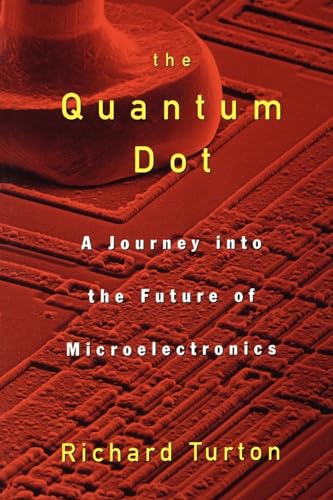
Since first developed in the early sixties, silicon chip technology has made vast leaps forward. From a rudimentary circuit with a mere handful of transistors, the chip has evolved into a technological miracle, packing millions of bits of information on a surface no larger than a human thumbnail. And most experts predict that in the near future, we will see chips with over a billion bits. At the same time, this revolution in microelectronics has sparked a dramatic change in the way we live. An integral part of the computer industry, the microchip is found in everything from lasers, fax machines, and satellites to greeting cards and children's toys. And yet few people have any idea how chips work, or how so much information can be captured in such a miniscule space.
Now, in The Quantum Dot, physicist Richard Turton provides a clear, informative look at the science that lies behind the modern revolution in microelectronics and offers an intriguing glimpse of the possible future of this rapidly evolving field. Turton illuminates the development of the microchip, in a discussion that ranges from a primer on atoms and electrons, to the properties of semiconductors (most notably, silicon), to the structure of the transistor. We learn how researchers have managed to pack the tiny silicon chip with more and more bits, and we get a state-of-the-art look at the microelectronic industry today, from the newest chip materials (such as gallium arsenide, a much faster material than silicon, used in the recently released Cray 3 supercomputer) to the exotic world of high-temperature superconductors. Perhaps most interesting, Turton offers a provocative glimpse of the future of microelectronics. Here readers enter the strange realm where quantum theory prevails
and where physical events contradict our intuitive perceptions. Turton shows how researchers are leaving the transistor far behind as they struggle to exploit quantum effects to create incredibly small and fast devices, such as "designer atoms" and the quantum dot. He concludes that the range of future possibilities are immense, including devices in which electrons behave not as particles but as waves, and computers in which there are no electrical signals, only beams of light.
Here then is an amazing scientific--and economic--success story, told with clarity and expertise. It will fascinate anyone curious about where modern technology is headed and what the world might look like when it gets there.
"Sinopsis" puede pertenecer a otra edición de este libro.
Acerca del autor
Richard Turton is Computer Officer in the Physics Department, University of Newcastle Upon Tyne.
De la contraportada
In The Quantum Dot, physicist Richard Turton reveals the science behind the microelectronic revolution and provides us with a tantalizing peek at the future of this rapidly evolving field. Turton's clear explanations and engaging style make this a book that will appeal to the armchair scientist while sacrificing nothing of the complexity that the more sophisticated reader will demand. The range of future possibilities is immense, and thanks to The Quantam Dot, we can follow the progress of modern technology and glimpse how new the world might look.
"Sobre este título" puede pertenecer a otra edición de este libro.
Otras ediciones populares con el mismo título

Resultados de la búsqueda para The Quantum Dot: A Journey Into the Future of Microelectroni...

Imagen de archivo
The Quantum Dot A Journey Into
Publicado por
Oxford University Press, 1996
ISBN 10: 0195109597
ISBN 13: 9780195109597
Antiguo o usado
Tapa blanda
Librería: World of Books (was SecondSale), Montgomery, IL, Estados Unidos de America
Calificación del vendedor: 5 de 5 estrellas

Condición: Good. Item in good condition. Textbooks may not include supplemental items i.e. CDs, access codes etc. Nº de ref. del artículo: 00086453625
Comprar usado
EUR 5,09
Gastos de envío:
GRATIS
A Estados Unidos de America
Cantidad disponible: 1 disponibles
Imagen de archivo
The Quantum Dot: A Journey into the Future of Microelectronics
Publicado por
Oxford University Press, 1996
ISBN 10: 0195109597
ISBN 13: 9780195109597
Antiguo o usado
Tapa blanda
Librería: Wonder Book, Frederick, MD, Estados Unidos de America
Calificación del vendedor: 5 de 5 estrellas
Condición: Very Good. Very Good condition. A copy that may have a few cosmetic defects. May also contain light spine creasing or a few markings such as an owner's name, short gifter's inscription or light stamp. Nº de ref. del artículo: O10A-01984
Comprar usado
EUR 5,43
Gastos de envío:
GRATIS
A Estados Unidos de America
Cantidad disponible: 1 disponibles
Imagen de archivo
The Quantum Dot : A Journey into the Future of Microelectronics
Publicado por
Oxford University Press, Incorporated, 1996
ISBN 10: 0195109597
ISBN 13: 9780195109597
Antiguo o usado
Tapa blanda
Librería: Better World Books, Mishawaka, IN, Estados Unidos de America
Calificación del vendedor: 5 de 5 estrellas
Condición: Good. Former library book; may include library markings. Used book that is in clean, average condition without any missing pages. Nº de ref. del artículo: 10458697-75
Comprar usado
EUR 5,72
Gastos de envío:
GRATIS
A Estados Unidos de America
Cantidad disponible: 1 disponibles
Imagen de archivo
The Quantum Dot : A Journey into the Future of Microelectronics
Publicado por
Oxford University Press, Incorporated, 1996
ISBN 10: 0195109597
ISBN 13: 9780195109597
Antiguo o usado
Tapa blanda
Librería: Better World Books: West, Reno, NV, Estados Unidos de America
Calificación del vendedor: 5 de 5 estrellas
Condición: Good. Used book that is in clean, average condition without any missing pages. Nº de ref. del artículo: 3142205-6
Comprar usado
EUR 5,72
Gastos de envío:
GRATIS
A Estados Unidos de America
Cantidad disponible: 1 disponibles
Imagen de archivo
The Quantum Dot: A Journey into the Future of Microelectronics
Publicado por
Oxford University Press, 1996
ISBN 10: 0195109597
ISBN 13: 9780195109597
Antiguo o usado
paperback
Librería: Books-FYI, Inc., Cadiz, KY, Estados Unidos de America
Calificación del vendedor: 5 de 5 estrellas
paperback. Condición: Good. Nº de ref. del artículo: 23MA3O00O16G_ns
Comprar usado
EUR 3,26
Gastos de envío:
EUR 3,43
A Estados Unidos de America
Cantidad disponible: 1 disponibles
Imagen de archivo
The Quantum Dot: A Journey into the Future of Microelectronics
Publicado por
Oxford University Press, 1996
ISBN 10: 0195109597
ISBN 13: 9780195109597
Antiguo o usado
Paperback
Librería: WorldofBooks, Goring-By-Sea, WS, Reino Unido
Calificación del vendedor: 5 de 5 estrellas
Paperback. Condición: Good. The book has been read but remains in clean condition. All pages are intact and the cover is intact. Some minor wear to the spine. Nº de ref. del artículo: GOR006072972
Comprar usado
EUR 3,40
Gastos de envío:
EUR 6,41
De Reino Unido a Estados Unidos de America
Cantidad disponible: 2 disponibles
Imagen del vendedor
The Quantum Dot A Journey Into the Future of Microelectronics
Publicado por
Oxford University Press, New York, NY, 1996
ISBN 10: 0195109597
ISBN 13: 9780195109597
Antiguo o usado
Paperback
Original o primera edición
Librería: True Oak Books, Highland, NY, Estados Unidos de America
Calificación del vendedor: 5 de 5 estrellas
Paperback. Condición: Very Good. First Edition Thus; First Printing. 211 pages; sticker to the back cover. Very Good condition. No noteworthy defects. No markings. ; - We offer free returns for any reason and respond promptly to all inquiries. Your order will be packaged with care and ship on the same or next business day. Buy with confidence. Nº de ref. del artículo: HVD-52095-A-0
Comprar usado
EUR 19,42
Gastos de envío:
GRATIS
A Estados Unidos de America
Cantidad disponible: 1 disponibles
Imagen de archivo
The Quantum Dot: A Journey into the Future of Microelectronics
Publicado por
Oxford University Press, 1996
ISBN 10: 0195109597
ISBN 13: 9780195109597
Nuevo
Paperback
Librería: GridFreed, North Las Vegas, NV, Estados Unidos de America
Calificación del vendedor: 5 de 5 estrellas
Paperback. Condición: New. In shrink wrap. Nº de ref. del artículo: 61-03113
Comprar nuevo
EUR 22,16
Gastos de envío:
EUR 4,68
A Estados Unidos de America
Cantidad disponible: 1 disponibles
Imagen del vendedor
The Quantum Dot A Journey into the Future of Microelectronics
Publicado por
Oxford University Press, New York, 1996
ISBN 10: 0195109597
ISBN 13: 9780195109597
Antiguo o usado
Softcover
Original o primera edición
Librería: Ainsworth Books ( IOBA), Chilliwack, BC, Canada
Calificación del vendedor: 5 de 5 estrellas
Softcover. Condición: Near Fine. First Paperback Edition. Card covers show very light shelf wear.; A bright, solid book card covers are clean and crisp, text unmarked.; 9.15 X 6.12 X 0.66 inches; 211 pages; "Since first developed in the early sixties, silicon chip technology has made vast leaps forward. From a rudimentary circuit with a mere handful of transistors, the chip has evolved into a technological miracle, packing millions of bits of information on a surface no larger than a human thumbnail. And most experts predict that in the near future, we will see chips with over a billion bits. At the same time, this revolution in microelectronics has sparked a dramatic change in the way we live. An integral part of the computer industry, the microchip is found in everything from lasers, fax machines, and satellites to greeting cards and children's toys. And yet few people have any idea how chips work, or how so much information can be captured in such a miniscule space. Now, in The Quantum Dot, physicist Richard Turt on provides a clear, informative look at the science that lies behind the modern revolution in microelectronics and offers an intriguing glimpse of the possible future of this rapidly evolving field. Turt on illuminates the development of the microchip, in a discussion that ranges from a primer on atoms and electrons, to the properties of semiconductors (most notably, silicon), to the structure of the transistor. We learn how researchers have managed to pack the tiny silicon chip with more and more bits, and we get a state-of-the-art look at the microelectronic industry today, from the newest chip materials (such as gallium arsenide, a much faster material than silicon, used in the recently released Cray 3 supercomputer) to the exotic world of high-temperature superconductors. Perhaps most interesting, Turt on offers a provocative glimpse of the future of microelectronics. Here readers enter the strange realm where quantum theory prevails and where physical events contradict our intuitive perceptions.". Nº de ref. del artículo: 17848
Comprar usado
EUR 15,49
Gastos de envío:
EUR 12,88
De Canada a Estados Unidos de America
Cantidad disponible: 1 disponibles
Imagen de archivo
The Quantum Dot: A Journey into the Future of Microelectronics
Publicado por
Oxford University Press, 1996
ISBN 10: 0195109597
ISBN 13: 9780195109597
Nuevo
Tapa blanda
Librería: Lucky's Textbooks, Dallas, TX, Estados Unidos de America
Calificación del vendedor: 5 de 5 estrellas
Condición: New. Nº de ref. del artículo: ABLIING23Feb2215580032457
Comprar nuevo
EUR 53,55
Gastos de envío:
EUR 3,43
A Estados Unidos de America
Cantidad disponible: Más de 20 disponibles