
Artículos relacionados a Shadows of the Mind: A Search for the Missing Science...
Sinopsis
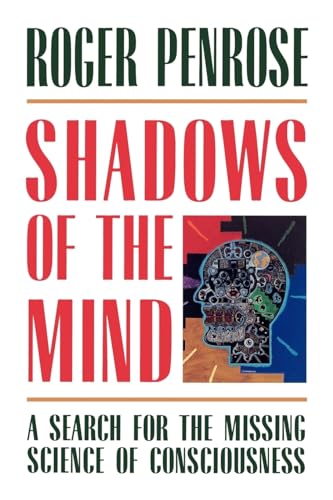
A New York Times bestseller when it appeared in 1989, Roger Penrose's The Emperor's New Mind was universally hailed as a marvelous survey of modern physics as well as a brilliant reflection on the human mind, offering a new perspective on the scientific landscape and a visionary glimpse of the possible future of science. Now, in Shadows of the Mind, Penrose offers another exhilarating look at modern science as he mounts an even more powerful attack on artificial intelligence. But perhaps more important, in this volume he points the way to a new science, one that may eventually explain the physical basis of the human mind.
Penrose contends that some aspects of the human mind lie beyond computation. This is not a religious argument (that the mind is something other than physical) nor is it based on the brain's vast complexity (the weather is immensely complex, says Penrose, but it is still a computable thing, at least in theory). Instead, he provides powerful arguments to support his conclusion that there is something in the conscious activity of the brain that transcends computation--and will find no explanation in terms of present-day science. To illuminate what he believes this "something" might be, and to suggest where a new physics must proceed so that we may understand it, Penrose cuts a wide swathe through modern science, providing penetrating looks at everything from Turing machines (computers programmed from artificial intelligence) to the implications of Godel's theorem maintaining that conscious thinking must indeed involve ingredients that cannot adequately be stimulated by mere computation. Of particular interest is Penrose's extensive examination of quantum mechanics, which introduces some new ideas that differ markedly from those advanced in The Emperor's New Mind, especially concerning the mysterious interface where classical and quantum physics meet. But perhaps the most interesting wrinkle in Shadows of the Mind is Penrose's excursion into microbiology, where he examines cytoskeletons and microtubules, minute substructures lying deep within the brain's neurons. (He argues that microtubules--not neurons--may indeed be the basic units of the brain, which, if nothing else, would dramatically increase the brain's computational power.) Furthermore, he contends that in consciousness some kind of global quantum state must take place across large areas of the brain, and that it within microtubules that these collective quantum effects are most likely to reside.
For physics to accommodate something that is as foreign to our current physical picture as is the phenomenon of consciousness, we must expect a profound change--one that alters the very underpinnings of our philosophical viewpoint as to the nature of reality. Shadows of the Mind provides an illuminating look at where these profound changes may take place and what our future understanding of the world may be.
"Sinopsis" puede pertenecer a otra edición de este libro.
Acerca del autor
Roger Penrose is the Rouse Ball Professor of Mathematic at the University of Oxford. He is the author of The Emperor's New Mind, which was a New York Times bestseller and was awarded the UK's 1990 COPUS Prize for science writing. In 1988, he received the internationally prestigious Wolf Prize for physics, shared with Stephen Hawking, for their joint contribution to our understanding of the universe.
"Sobre este título" puede pertenecer a otra edición de este libro.
Resultados de la búsqueda para Shadows of the Mind: A Search for the Missing Science...

Imagen de archivo
Shadows of the Mind: A Search for the Missing Science of Consciousness
Publicado por
Oxford University Press (edition Reprint), 1996
ISBN 10: 0195106466
ISBN 13: 9780195106466
Antiguo o usado
Paperback
Librería: BooksRun, Philadelphia, PA, Estados Unidos de America
Calificación del vendedor: 5 de 5 estrellas

Paperback. Condición: Very Good. Reprint. It's a well-cared-for item that has seen limited use. The item may show minor signs of wear. All the text is legible, with all pages included. It may have slight markings and/or highlighting. Nº de ref. del artículo: 0195106466-11-1
Comprar usado
EUR 13,72
Gastos de envío gratis
Se envía dentro de Estados Unidos de America
Se envía dentro de Estados Unidos de America
Cantidad disponible: 1 disponibles
Imagen de archivo
Shadows of the Mind : A Search for the Missing Science of Consciousness
Publicado por
Oxford University Press, Incorporated, 1996
ISBN 10: 0195106466
ISBN 13: 9780195106466
Antiguo o usado
Tapa blanda
Librería: Better World Books, Mishawaka, IN, Estados Unidos de America
Calificación del vendedor: 5 de 5 estrellas
Condición: Good. Pages intact with minimal writing/highlighting. The binding may be loose and creased. Dust jackets/supplements are not included. Stock photo provided. Product includes identifying sticker. Better World Books: Buy Books. Do Good. Nº de ref. del artículo: 2005118-6
Comprar usado
EUR 13,85
Gastos de envío gratis
Se envía dentro de Estados Unidos de America
Se envía dentro de Estados Unidos de America
Cantidad disponible: 1 disponibles
Imagen del vendedor
Shadows of the Mind: A Search for the Missing Science of Consciousness
Publicado por
Oxford University Press, 1996
ISBN 10: 0195106466
ISBN 13: 9780195106466
Antiguo o usado
paperback
Librería: Once Upon A Time Books PR, Corozal, PR, Estados Unidos de America
Calificación del vendedor: 5 de 5 estrellas
paperback. Condición: Good+. Estado de la sobrecubierta: no dustcover. The book is used and very clean and may have a minor mark or two, spine and binding tight, cover with minor wearI ship Worldwide from Puerto Rico, USA.Listing Includes Books Image . Please email me if you need to see more pictures! The orders are processed promptly, carefully packaged and shipped within 1 day of purchase. PLEASE NOTE! if you need the book quickly, please Purchase Priority Shipping. Media will not show updates in mail confirmation till reaches continental U.S. Nº de ref. del artículo: 031727
Comprar usado
EUR 9,65
Envío por EUR 5,31
Se envía dentro de Estados Unidos de America
Se envía dentro de Estados Unidos de America
Cantidad disponible: 1 disponibles
Imagen de archivo
Shadows of the Mind: A Search for the Missing Science of Consciousness
Publicado por
Oxford University Press, 1996
ISBN 10: 0195106466
ISBN 13: 9780195106466
Antiguo o usado
Paperback
Librería: ThriftBooks-Dallas, Dallas, TX, Estados Unidos de America
Calificación del vendedor: 5 de 5 estrellas
Paperback. Condición: Very Good. No Jacket. May have limited writing in cover pages. Pages are unmarked. ~ ThriftBooks: Read More, Spend Less. Nº de ref. del artículo: G0195106466I4N00
Comprar usado
EUR 15,61
Gastos de envío gratis
Se envía dentro de Estados Unidos de America
Se envía dentro de Estados Unidos de America
Cantidad disponible: 1 disponibles
Imagen de archivo
Shadows of the Mind: A Search for the Missing Science of Consciousness
Publicado por
Oxford University Press, 1996
ISBN 10: 0195106466
ISBN 13: 9780195106466
Antiguo o usado
Paperback
Librería: ThriftBooks-Atlanta, AUSTELL, GA, Estados Unidos de America
Calificación del vendedor: 5 de 5 estrellas
Paperback. Condición: Good. No Jacket. Pages can have notes/highlighting. Spine may show signs of wear. ~ ThriftBooks: Read More, Spend Less. Nº de ref. del artículo: G0195106466I3N00
Comprar usado
EUR 15,61
Gastos de envío gratis
Se envía dentro de Estados Unidos de America
Se envía dentro de Estados Unidos de America
Cantidad disponible: 1 disponibles
Imagen de archivo
Shadows of the Mind: A Search for the Missing Science of Consciousness
Publicado por
Oxford University Press, 1996
ISBN 10: 0195106466
ISBN 13: 9780195106466
Antiguo o usado
Paperback
Librería: ThriftBooks-Atlanta, AUSTELL, GA, Estados Unidos de America
Calificación del vendedor: 5 de 5 estrellas
Paperback. Condición: Very Good. No Jacket. May have limited writing in cover pages. Pages are unmarked. ~ ThriftBooks: Read More, Spend Less. Nº de ref. del artículo: G0195106466I4N00
Comprar usado
EUR 15,61
Gastos de envío gratis
Se envía dentro de Estados Unidos de America
Se envía dentro de Estados Unidos de America
Cantidad disponible: 1 disponibles
Imagen de archivo
Shadows of the Mind: A Search for the Missing Science of Consciousness
Publicado por
Oxford University Press, 1996
ISBN 10: 0195106466
ISBN 13: 9780195106466
Antiguo o usado
Paperback
Librería: ThriftBooks-Atlanta, AUSTELL, GA, Estados Unidos de America
Calificación del vendedor: 5 de 5 estrellas
Paperback. Condición: Good. No Jacket. Former library book; Pages can have notes/highlighting. Spine may show signs of wear. ~ ThriftBooks: Read More, Spend Less. Nº de ref. del artículo: G0195106466I3N10
Comprar usado
EUR 15,61
Gastos de envío gratis
Se envía dentro de Estados Unidos de America
Se envía dentro de Estados Unidos de America
Cantidad disponible: 1 disponibles
Imagen del vendedor
Shadows of the Mind: A Search for the Missing Science of Consciousness
Publicado por
Oxford University Press, 1996
ISBN 10: 0195106466
ISBN 13: 9780195106466
Antiguo o usado
Tapa blanda
Librería: Goodwill of Ventura and Santa Barbara Counties, Oxnard, CA, Estados Unidos de America
Calificación del vendedor: 5 de 5 estrellas
Condición: good. Good: The book has been read but is in good condition. It has very minimal damage to the cover, including scuff marks, but no holes or tears. The dust jacket for hard covers may not be included. The binding has minimal wear. The majority of pages are undamaged with minimal creasing or tearing, minimal pencil underlining of text, no highlighting of text, and no writing in the margins. There are no missing pages. See the seller's listing for full details and a description of any imperfections. Nº de ref. del artículo: VSBV.0195106466.G
Comprar usado
EUR 11,99
Envío por EUR 4,45
Se envía dentro de Estados Unidos de America
Se envía dentro de Estados Unidos de America
Cantidad disponible: 1 disponibles
Imagen de archivo
Shadows of the Mind: A Search for the Missing Science of Consciousness
Publicado por
Oxford University Press Inc, 1996
ISBN 10: 0195106466
ISBN 13: 9780195106466
Antiguo o usado
Paperback
Librería: World of Books (was SecondSale), Montgomery, IL, Estados Unidos de America
Calificación del vendedor: 5 de 5 estrellas
Paperback. Condición: Fair. A New York Times bestseller when it appeared in 1989, Roger Penrose's The Emperor's New Mind was universally hailed as a marvelous survey of modern physics as well as a brilliant reflection on the human mind, offering a new perspective on the scientific landscape and a visionary glimpse of the possible future of science. Now, in Shadows of the Mind, Penrose offers another exhilarating look at modern science as he mounts an even more powerful attack on artificial intelligence. But perhaps more important, in this volume he points the way to a new science, one that may eventually explain the physical basis of the human mind. Penrose contends that some aspects of the human mind lie beyond computation. This is not a religious argument (that the mind is something other than physical) nor is it based on the brain's vast complexity (the weather is immensely complex, says Penrose, but it is still a computable thing, at least in theory). Instead, he provides powerful arguments to support his conclusion that there is something in the conscious activity of the brain that transcends computation--and will find no explanation in terms of present-day science. To illuminate what he believes this "something" might be, and to suggest where a new physics must proceed so that we may understand it, Penrose cuts a wide swathe through modern science, providing penetrating looks at everything from Turing machines (computers programmed from artificial intelligence) to the implications of Godel's theorem maintaining that conscious thinking must indeed involve ingredients that cannot adequately be stimulated by mere computation. Of particular interest is Penrose's extensive examination of quantum mechanics, which introduces some new ideas that differ markedly from those advanced in The Emperor's New Mind, especially concerning the mysterious interface where classical and quantum physics meet. But perhaps the most interesting wrinkle in Shadows of the Mind is Penrose's excursion into microbiology, where he examines cytoskeletons and microtubules, minute substructures lying deep within the brain's neurons. (He argues that microtubules--not neurons--may indeed be the basic units of the brain, which, if nothing else, would dramatically increase the brain's computational power.) Furthermore, he contends that in consciousness some kind of global quantum state must take place across large areas of the brain, and that it within microtubules that these collective quantum effects are most likely to reside. For physics to accommodate something that is as foreign to our current physical picture as is the phenomenon of consciousness, we must expect a profound change--one that alters the very underpinnings of our philosophical viewpoint as to the nature of reality. Shadows of the Mind provides an illuminating look at where these profound changes may take place and what our future understanding of the world may be. Nº de ref. del artículo: CIN0195106466A
Comprar usado
EUR 17,43
Gastos de envío gratis
Se envía dentro de Estados Unidos de America
Se envía dentro de Estados Unidos de America
Cantidad disponible: 1 disponibles
Imagen de archivo
Shadows of the Mind: A Search for the Missing Science of Consciousness
Publicado por
Oxford University Press Inc, 1996
ISBN 10: 0195106466
ISBN 13: 9780195106466
Antiguo o usado
Paperback
Librería: World of Books (was SecondSale), Montgomery, IL, Estados Unidos de America
Calificación del vendedor: 5 de 5 estrellas
Paperback. Condición: Good. A New York Times bestseller when it appeared in 1989, Roger Penrose's The Emperor's New Mind was universally hailed as a marvelous survey of modern physics as well as a brilliant reflection on the human mind, offering a new perspective on the scientific landscape and a visionary glimpse of the possible future of science. Now, in Shadows of the Mind, Penrose offers another exhilarating look at modern science as he mounts an even more powerful attack on artificial intelligence. But perhaps more important, in this volume he points the way to a new science, one that may eventually explain the physical basis of the human mind. Penrose contends that some aspects of the human mind lie beyond computation. This is not a religious argument (that the mind is something other than physical) nor is it based on the brain's vast complexity (the weather is immensely complex, says Penrose, but it is still a computable thing, at least in theory). Instead, he provides powerful arguments to support his conclusion that there is something in the conscious activity of the brain that transcends computation--and will find no explanation in terms of present-day science. To illuminate what he believes this "something" might be, and to suggest where a new physics must proceed so that we may understand it, Penrose cuts a wide swathe through modern science, providing penetrating looks at everything from Turing machines (computers programmed from artificial intelligence) to the implications of Godel's theorem maintaining that conscious thinking must indeed involve ingredients that cannot adequately be stimulated by mere computation. Of particular interest is Penrose's extensive examination of quantum mechanics, which introduces some new ideas that differ markedly from those advanced in The Emperor's New Mind, especially concerning the mysterious interface where classical and quantum physics meet. But perhaps the most interesting wrinkle in Shadows of the Mind is Penrose's excursion into microbiology, where he examines cytoskeletons and microtubules, minute substructures lying deep within the brain's neurons. (He argues that microtubules--not neurons--may indeed be the basic units of the brain, which, if nothing else, would dramatically increase the brain's computational power.) Furthermore, he contends that in consciousness some kind of global quantum state must take place across large areas of the brain, and that it within microtubules that these collective quantum effects are most likely to reside. For physics to accommodate something that is as foreign to our current physical picture as is the phenomenon of consciousness, we must expect a profound change--one that alters the very underpinnings of our philosophical viewpoint as to the nature of reality. Shadows of the Mind provides an illuminating look at where these profound changes may take place and what our future understanding of the world may be. Nº de ref. del artículo: 00102165171
Comprar usado
EUR 17,43
Gastos de envío gratis
Se envía dentro de Estados Unidos de America
Se envía dentro de Estados Unidos de America
Cantidad disponible: 4 disponibles