
Sinopsis
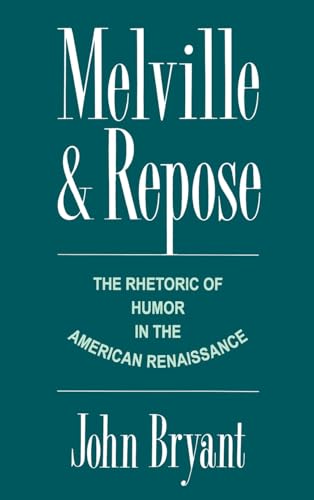
Bryant's book is a strong and significant argument for the centrality of humour in Melville's novels. The purpose of Melville and Repose is dual: to ground the uses of humour in Melville in sensitive readings of contemporaneous European and American writings, and to offer a definitive account of humour as the shaping force of Melville's narrative voice for the duration of his literary career. Bryant argues that Melville fused a "rhetoric of geniality" adopted from the British with a "rhetoric of deceit" borrowed from the American tall tale in order to create his own amiably cosmopolitan "rhetoric of aesthetic repose." Thorough research, an engaging style, and full, scholarly readings of the oeuvre combine to make this book a welcome addition to the libraries of Melville scholars and enthusiasts.
"Sinopsis" puede pertenecer a otra edición de este libro.
Acerca del autor
Charlotte y Peter Fiell son dos autoridades en historia, teoría y crítica del diseño y han escrito más de sesenta libros sobre la materia, muchos de los cuales se han convertido en éxitos de ventas. También han impartido conferencias y cursos como profesores invitados, han comisariado exposiciones y asesorado a fabricantes, museos, salas de subastas y grandes coleccionistas privados de todo el mundo. Los Fiell han escrito numerosos libros para TASCHEN, entre los que se incluyen 1000 Chairs, Diseño del siglo XX, El diseño industrial de la A a la Z, Scandinavian Design y Diseño del siglo XXI.
De la contraportada
John Bryant's book is a strong and significant argument for the centrality of humor in Melville's novels. The purpose of Melville and Repose is dual: to ground the uses of romantic humor in Melville in sensitive readings of contemporaneous European and American writings, and to offer a definitive account of the comic as the shaping force of Melville's narrative voice throughout the major phase of his literary career. Arguing that Melville saw writing as a series of attempts to reach an unreachable union of word and thought ("voicing the voiceless"), Bryant shows how Melville attempted to place the reader in an equivalent condition of "tense repose". He posits that Melville incorporated laughter into his writing as a means of teasing the reader into deeper thought. To this end, Melville fused a "rhetoric of geniality" and "picturesque sensibility" adopted from the British with a "rhetoric of deceit" borrowed from the American tall tale, thus creating his own amiably cosmopolitan "rhetoric of aesthetic repose". Looking closely at Typee, Moby Dick, and The Confidence-Man, Bryant offers unique and ground-breaking readings of Melville's work - particularly with respect to the rhetoric of humor and repose, the picturesque, and cosmopolitanism. Thorough research into American culture and recent Melville manuscript findings, an engaging style, and full, scholarly readings combine to make this historicist study a welcome addition to the libraries of Americanists and Melville scholars and enthusiasts.
"Sobre este título" puede pertenecer a otra edición de este libro.
Resultados de la búsqueda para Melville and Repose: The Rhetoric of Humor in the American...

Imagen de archivo
Melville and Repose: The Rhetoric of Humor in the American Renaissance
Publicado por
Oxford University Press, 1993
ISBN 10: 0195077822
ISBN 13: 9780195077827
Antiguo o usado
Tapa dura
Original o primera edición
Librería: Tudor Cottage Books, Atlanta, GA, Estados Unidos de America
Calificación del vendedor: 5 de 5 estrellas

Hardcover. Condición: Very Good. No Jacket. 1st Edition. Nº de ref. del artículo: 000963
Comprar usado
EUR 36,01
Envío por EUR 4,81
Se envía dentro de Estados Unidos de America
Se envía dentro de Estados Unidos de America
Cantidad disponible: 1 disponibles
Imagen de archivo
Melville and Repose: The Rhetoric of Humor in the American Renaissance
Publicado por
Oxford University Press, New York, 1993
ISBN 10: 0195077822
ISBN 13: 9780195077827
Antiguo o usado
Tapa dura
Original o primera edición
Librería: Archer's Used and Rare Books, Kent, OH, Estados Unidos de America
Calificación del vendedor: 5 de 5 estrellas
Hardcover (Original Cloth). Condición: Fine. Estado de la sobrecubierta: Fine. 1st Edition. Dust Jacket is in fine condition without tears or chips or other damage. Dust jacket in mylar guard. Quantity Available: 1. Category: Literature & Literary; ISBN: 0195077822. ISBN/EAN: 9780195077827. Pictures of this item not already displayed here available upon request. Inventory No: 25138. Nº de ref. del artículo: 25138
Comprar usado
EUR 40,52
Envío por EUR 4,81
Se envía dentro de Estados Unidos de America
Se envía dentro de Estados Unidos de America
Cantidad disponible: 1 disponibles
Imagen del vendedor
Melville and Repose: The Rhetoric of Humor in the American Renaissance
Publicado por
Oxford University Press, New York, 1993
ISBN 10: 0195077822
ISBN 13: 9780195077827
Antiguo o usado
Tapa dura
Original o primera edición
Librería: Kenneth A. Himber, Lebanon, NJ, Estados Unidos de America
Calificación del vendedor: 5 de 5 estrellas
Hardcover. Condición: As New. Estado de la sobrecubierta: As New. First Printing. Book is a clean tight unmarked copy. Nº de ref. del artículo: 008662
Comprar usado
EUR 45,47
Envío por EUR 5,24
Se envía dentro de Estados Unidos de America
Se envía dentro de Estados Unidos de America
Cantidad disponible: 1 disponibles
Imagen del vendedor
Melville and Repose: The Rhetoric of Humor in the American Renaissance
Publicado por
Oxford University Press, U.S.A., 1993
ISBN 10: 0195077822
ISBN 13: 9780195077827
Antiguo o usado
Tapa dura
Librería: The Book Exchange, Amsterdam, Holanda
Calificación del vendedor: 4 de 5 estrellas

Hardback. Condición: Very Good Plus. Estado de la sobrecubierta: Very Good. Nº de ref. del artículo: 007213
Comprar usado
EUR 29,00
Envío por EUR 24,50
Se envía de Holanda a Estados Unidos de America
Se envía de Holanda a Estados Unidos de America
Cantidad disponible: 1 disponibles
Imagen de archivo
Melville and Repose: The Rhetoric of Humor in the American Renaissance
Librería: Sell Books, Elland, YORKS, Reino Unido
Calificación del vendedor: 5 de 5 estrellas
hardcover. Condición: Acceptable. Please see the condition note after this for details, if this is missing please consider Acceptable to mean poor quality that could include major staining, water damage, writing, missing dustjacket, etc etc. Our books are dispatched from a Yorkshire former cotton mill. We list via barcode/ISBN so please note that the images are stock images and may not be the exact copy you receive, furthermore the details about edition and year might not be accurate as many publishers reuse the same ISBN for multiple editions and as we simply scan a barcode or enter an ISBN we do not check the validity of the edition data when listing. If you're looking for an exact edition please don't order (at least not without checking with us first, although we don't always have time to check). We aim to dispatch prompty, the service used will depend on order value and book size. We can ship to most countries, see our shipping policies. Payment is via Abe only. Nº de ref. del artículo: P-BHU00167-RAG-20240112-A
Comprar usado
EUR 51,41
Envío por EUR 14,29
Se envía de Reino Unido a Estados Unidos de America
Se envía de Reino Unido a Estados Unidos de America
Cantidad disponible: 1 disponibles
Imagen de archivo
Melville and Repose: The Rhetoric of Humor in the American Renaissance
Publicado por
Oxford University Press, 1993
ISBN 10: 0195077822
ISBN 13: 9780195077827
Nuevo
Tapa dura
Librería: GoldBooks, Denver, CO, Estados Unidos de America
Calificación del vendedor: 5 de 5 estrellas
Hardcover. Condición: new. New Copy. Customer Service Guaranteed. Nº de ref. del artículo: 53G60_76_0195077822
Comprar nuevo
EUR 175,89
Envío por EUR 4,81
Se envía dentro de Estados Unidos de America
Se envía dentro de Estados Unidos de America
Cantidad disponible: 1 disponibles
Imagen del vendedor
Melville and Repose : The Rhetoric of Humor in the American Renaissance
Publicado por
Oxford University Press, 1993
ISBN 10: 0195077822
ISBN 13: 9780195077827
Nuevo
Tapa dura
Librería: GreatBookPrices, Columbia, MD, Estados Unidos de America
Calificación del vendedor: 5 de 5 estrellas
Condición: New. Nº de ref. del artículo: 73664-n
Comprar nuevo
EUR 201,12
Envío por EUR 2,31
Se envía dentro de Estados Unidos de America
Se envía dentro de Estados Unidos de America
Cantidad disponible: Más de 20 disponibles
Imagen de archivo
Melville and Repose
Publicado por
Oxford University Press, 1993
ISBN 10: 0195077822
ISBN 13: 9780195077827
Nuevo
Tapa dura
Librería: PBShop.store US, Wood Dale, IL, Estados Unidos de America
Calificación del vendedor: 5 de 5 estrellas
HRD. Condición: New. New Book. Shipped from UK. THIS BOOK IS PRINTED ON DEMAND. Established seller since 2000. Nº de ref. del artículo: L1-9780195077827
Comprar nuevo
EUR 203,51
Gastos de envío gratis
Se envía dentro de Estados Unidos de America
Se envía dentro de Estados Unidos de America
Cantidad disponible: Más de 20 disponibles
Imagen de archivo
Melville and Repose
Publicado por
Oxford University Press, 1993
ISBN 10: 0195077822
ISBN 13: 9780195077827
Nuevo
Tapa dura
Librería: PBShop.store UK, Fairford, GLOS, Reino Unido
Calificación del vendedor: 5 de 5 estrellas
HRD. Condición: New. New Book. Delivered from our UK warehouse in 4 to 14 business days. THIS BOOK IS PRINTED ON DEMAND. Established seller since 2000. Nº de ref. del artículo: L1-9780195077827
Comprar nuevo
EUR 197,50
Envío por EUR 6,90
Se envía de Reino Unido a Estados Unidos de America
Se envía de Reino Unido a Estados Unidos de America
Cantidad disponible: Más de 20 disponibles
Imagen de archivo
Melville and Repose: The Rhetoric of Humor in the American Renaissance
Publicado por
Oxford University Press, 1993
ISBN 10: 0195077822
ISBN 13: 9780195077827
Nuevo
Tapa dura
Librería: Ria Christie Collections, Uxbridge, Reino Unido
Calificación del vendedor: 5 de 5 estrellas
Condición: New. In. Nº de ref. del artículo: ria9780195077827_new
Comprar nuevo
EUR 194,08
Envío por EUR 14,09
Se envía de Reino Unido a Estados Unidos de America
Se envía de Reino Unido a Estados Unidos de America
Cantidad disponible: Más de 20 disponibles