
Artículos relacionados a Refuge: Rethinking Refugee Policy in a Changing World
Sinopsis
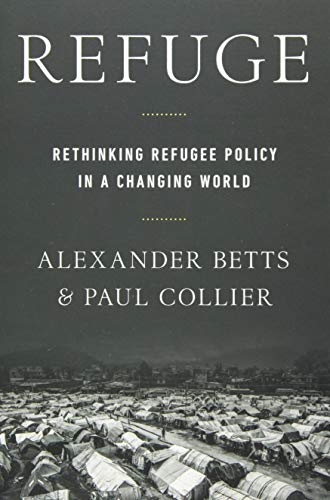
Global refugee numbers are at their highest levels since the end of World War II, but the system in place to deal with them, based upon a humanitarian list of imagined "basic needs," has changed little. In Refuge, Paul Collier and Alexander Betts argue that the system fails to provide a comprehensive solution to the fundamental problem, which is how to reintegrate displaced people into society. Western countries deliver food, clothing, and shelter to refugee camps, but these sites, usually located in remote border locations, can make things worse. The numbers are stark: the average length of stay in a refugee camp worldwide is 17 years. Into this situation comes the Syria crisis, which has dislocated countless families, bringing them to face an impossible choice: huddle in dangerous urban desolation, rot in dilapidated camps, or flee across the Mediterranean to increasingly unwelcoming governments.
Refuge seeks to restore moral purpose and clarity to refugee policy. Rather than assuming indefinite dependency, Collier-author of The Bottom Billion-and his Oxford colleague Betts propose a humanitarian approach integrated with a new economic agenda that begins with jobs, restores autonomy, and rebuilds people's ability to help themselves and their societies. Timely and urgent, the book goes beyond decrying scenes of desperation to declare what so many people, policymakers and public alike, are anxious to hear: that a long-term solution really is within reach.
"Sinopsis" puede pertenecer a otra edición de este libro.
Acerca del autor
Alexander Betts is the Leopold W. Muller Professor of Forced Migration and International Affairs at the University of Oxford, where he is also Director of the Refugee Studies Centre. He has previously worked for UNHCR and as a consultant to a range of international organizations and governments.
Paul Collier is Professor of Economics at St. Antony's College, Oxford. His book The Bottom Billion has won the Lionel Gelber Prize, the Arthur Ross Prize awarded by the Council on Foreign Relations, and the Corine Prize.
"Sobre este título" puede pertenecer a otra edición de este libro.
Resultados de la búsqueda para Refuge: Rethinking Refugee Policy in a Changing World

Imagen de archivo
Refuge: Rethinking Refugee Policy in a Changing World
Publicado por
Oxford University Press, 2017
ISBN 10: 0190659157
ISBN 13: 9780190659158
Antiguo o usado
Paperback
Librería: World of Books (was SecondSale), Montgomery, IL, Estados Unidos de America
Calificación del vendedor: 5 de 5 estrellas

Paperback. Condición: Good. A stirring and illuminating call to arms to transform how refugees are treated.Global refugee numbers are at their highest levels since the end of World War II, but the system in place to deal with them, based upon a humanitarian list of imagined "basic needs," has changed little. In Refuge, Paul Collier and Alexander Betts argue that the system fails to provide a comprehensive solution to the fundamental problem, which is how to reintegrate displaced people into society. Western countries deliver food, clothing, and shelter to refugee camps, but these sites, usually located in remote border locations, can make things worse. The numbers are stark: the average length of stay in a refugee camp worldwide is 17 years. Into this situation comes the Syria crisis, which has dislocated countless families, bringing them to face an impossible choice: huddle in dangerous urban desolation, rot in dilapidated camps, or flee across the Mediterranean to increasingly unwelcoming governments.Refuge seeks to restore moral purpose and clarity to refugee policy. Rather than assuming indefinite dependency, Collier-author of The Bottom Billion-and his Oxford colleague Betts propose a humanitarian approach integrated with a new economic agenda that begins with jobs, restores autonomy, and rebuilds people's ability to help themselves and their societies. Timely and urgent, the book goes beyond decrying scenes of desperation to declare what so many people, policymakers and public alike, are anxious to hear: that a long-term solution really is within reach. Nº de ref. del artículo: 00105517698
Comprar usado
EUR 3,99
Gastos de envío gratis
Se envía dentro de Estados Unidos de America
Se envía dentro de Estados Unidos de America
Cantidad disponible: 5 disponibles
Imagen de archivo
Refuge: Rethinking Refugee Policy in a Changing World
Publicado por
Oxford University Press, 2017
ISBN 10: 0190659157
ISBN 13: 9780190659158
Antiguo o usado
Paperback
Librería: World of Books (was SecondSale), Montgomery, IL, Estados Unidos de America
Calificación del vendedor: 5 de 5 estrellas
Paperback. Condición: Very Good. A stirring and illuminating call to arms to transform how refugees are treated.Global refugee numbers are at their highest levels since the end of World War II, but the system in place to deal with them, based upon a humanitarian list of imagined "basic needs," has changed little. In Refuge, Paul Collier and Alexander Betts argue that the system fails to provide a comprehensive solution to the fundamental problem, which is how to reintegrate displaced people into society. Western countries deliver food, clothing, and shelter to refugee camps, but these sites, usually located in remote border locations, can make things worse. The numbers are stark: the average length of stay in a refugee camp worldwide is 17 years. Into this situation comes the Syria crisis, which has dislocated countless families, bringing them to face an impossible choice: huddle in dangerous urban desolation, rot in dilapidated camps, or flee across the Mediterranean to increasingly unwelcoming governments.Refuge seeks to restore moral purpose and clarity to refugee policy. Rather than assuming indefinite dependency, Collier-author of The Bottom Billion-and his Oxford colleague Betts propose a humanitarian approach integrated with a new economic agenda that begins with jobs, restores autonomy, and rebuilds people's ability to help themselves and their societies. Timely and urgent, the book goes beyond decrying scenes of desperation to declare what so many people, policymakers and public alike, are anxious to hear: that a long-term solution really is within reach. Nº de ref. del artículo: 00106347560
Comprar usado
EUR 3,99
Gastos de envío gratis
Se envía dentro de Estados Unidos de America
Se envía dentro de Estados Unidos de America
Cantidad disponible: 2 disponibles
Imagen de archivo
Refuge: Rethinking Refugee Policy in a Changing World
Publicado por
Oxford University Press, 2017
ISBN 10: 0190659157
ISBN 13: 9780190659158
Antiguo o usado
Paperback
Librería: World of Books (was SecondSale), Montgomery, IL, Estados Unidos de America
Calificación del vendedor: 5 de 5 estrellas
Paperback. Condición: Fair. A stirring and illuminating call to arms to transform how refugees are treated.Global refugee numbers are at their highest levels since the end of World War II, but the system in place to deal with them, based upon a humanitarian list of imagined "basic needs," has changed little. In Refuge, Paul Collier and Alexander Betts argue that the system fails to provide a comprehensive solution to the fundamental problem, which is how to reintegrate displaced people into society. Western countries deliver food, clothing, and shelter to refugee camps, but these sites, usually located in remote border locations, can make things worse. The numbers are stark: the average length of stay in a refugee camp worldwide is 17 years. Into this situation comes the Syria crisis, which has dislocated countless families, bringing them to face an impossible choice: huddle in dangerous urban desolation, rot in dilapidated camps, or flee across the Mediterranean to increasingly unwelcoming governments.Refuge seeks to restore moral purpose and clarity to refugee policy. Rather than assuming indefinite dependency, Collier-author of The Bottom Billion-and his Oxford colleague Betts propose a humanitarian approach integrated with a new economic agenda that begins with jobs, restores autonomy, and rebuilds people's ability to help themselves and their societies. Timely and urgent, the book goes beyond decrying scenes of desperation to declare what so many people, policymakers and public alike, are anxious to hear: that a long-term solution really is within reach. Nº de ref. del artículo: 00095457476
Comprar usado
EUR 3,99
Gastos de envío gratis
Se envía dentro de Estados Unidos de America
Se envía dentro de Estados Unidos de America
Cantidad disponible: 3 disponibles
Imagen del vendedor
Refuge: Rethinking Refugee Policy in a Changing World
Publicado por
Oxford University Press, 2017
ISBN 10: 0190659157
ISBN 13: 9780190659158
Antiguo o usado
Tapa blanda
Librería: Zoom Books Company, Lynden, WA, Estados Unidos de America
Calificación del vendedor: 5 de 5 estrellas
Condición: very_good. Book is in very good condition and may include minimal underlining highlighting. The book can also include "From the library of" labels. May not contain miscellaneous items toys, dvds, etc. . We offer 100% money back guarantee and 24 7 customer service. Nº de ref. del artículo: ZBV.0190659157.VG
Comprar usado
EUR 4,00
Gastos de envío gratis
Se envía dentro de Estados Unidos de America
Se envía dentro de Estados Unidos de America
Cantidad disponible: 1 disponibles
Imagen del vendedor
Refuge: Rethinking Refugee Policy in a Changing World
Publicado por
Oxford University Press, 2017
ISBN 10: 0190659157
ISBN 13: 9780190659158
Antiguo o usado
Tapa blanda
Librería: Zoom Books East, Glendale Heights, IL, Estados Unidos de America
Calificación del vendedor: 5 de 5 estrellas
Condición: very_good. Book is in very good condition and may include minimal underlining highlighting. The book can also include "From the library of" labels. May not contain miscellaneous items toys, dvds, etc. . We offer 100% money back guarantee and 24 7 customer service. Nº de ref. del artículo: ZEV.0190659157.VG
Comprar usado
EUR 4,00
Gastos de envío gratis
Se envía dentro de Estados Unidos de America
Se envía dentro de Estados Unidos de America
Cantidad disponible: 1 disponibles
Imagen de archivo
Refuge: Rethinking Refugee Policy in a Changing World
Publicado por
Oxford University Press (edition 1), 2017
ISBN 10: 0190659157
ISBN 13: 9780190659158
Antiguo o usado
Paperback
Librería: BooksRun, Philadelphia, PA, Estados Unidos de America
Calificación del vendedor: 5 de 5 estrellas
Paperback. Condición: Very Good. 1. It's a well-cared-for item that has seen limited use. The item may show minor signs of wear. All the text is legible, with all pages included. It may have slight markings and/or highlighting. Nº de ref. del artículo: 0190659157-11-6
Comprar usado
EUR 4,75
Gastos de envío gratis
Se envía dentro de Estados Unidos de America
Se envía dentro de Estados Unidos de America
Cantidad disponible: 1 disponibles
Imagen del vendedor
Refuge: Rethinking Refugee Policy in a Changing World
Publicado por
Oxford University Press, 2017
ISBN 10: 0190659157
ISBN 13: 9780190659158
Antiguo o usado
Tapa blanda
Librería: Greenworld Books, Arlington, TX, Estados Unidos de America
Calificación del vendedor: 5 de 5 estrellas
Condición: very_good. Fast Free Shipping â" Very Good condition book with a firm cover and clean pages. Shows normal use and some light wear or limited notes markings. A solid, nice copy to enjoy. Nº de ref. del artículo: GWV.0190659157.VG
Comprar usado
EUR 5,04
Gastos de envío gratis
Se envía dentro de Estados Unidos de America
Se envía dentro de Estados Unidos de America
Cantidad disponible: 1 disponibles
Imagen del vendedor
Refuge: Rethinking Refugee Policy in a Changing World
Publicado por
Oxford University Press, 2017
ISBN 10: 0190659157
ISBN 13: 9780190659158
Antiguo o usado
Tapa blanda
Librería: ZBK Books, Carlstadt, NJ, Estados Unidos de America
Calificación del vendedor: 5 de 5 estrellas
Condición: good. Fast & Free Shipping â" Good condition. It may show normal signs of use, such as light writing, highlighting, or library markings, but all pages are intact and the book is fully readable. A solid, complete copy that's ready to enjoy. Nº de ref. del artículo: ZWV.0190659157.G
Comprar usado
EUR 5,70
Gastos de envío gratis
Se envía dentro de Estados Unidos de America
Se envía dentro de Estados Unidos de America
Cantidad disponible: 1 disponibles
Imagen de archivo
Refuge: Rethinking Refugee Policy in a Changing World
Publicado por
Oxford University Press, 2017
ISBN 10: 0190659157
ISBN 13: 9780190659158
Antiguo o usado
Paperback
Librería: World of Books Inc, Montgomery, IL, Estados Unidos de America
Calificación del vendedor: 4 de 5 estrellas

Paperback. Condición: Very Good. A stirring and illuminating call to arms to transform how refugees are treated.Global refugee numbers are at their highest levels since the end of World War II, but the system in place to deal with them, based upon a humanitarian list of imagined "basic needs," has changed little. In Refuge, Paul Collier and Alexander Betts argue that the system fails to provide a comprehensive solution to the fundamental problem, which is how to reintegrate displaced people into society. Western countries deliver food, clothing, and shelter to refugee camps, but these sites, usually located in remote border locations, can make things worse. The numbers are stark: the average length of stay in a refugee camp worldwide is 17 years. Into this situation comes the Syria crisis, which has dislocated countless families, bringing them to face an impossible choice: huddle in dangerous urban desolation, rot in dilapidated camps, or flee across the Mediterranean to increasingly unwelcoming governments.Refuge seeks to restore moral purpose and clarity to refugee policy. Rather than assuming indefinite dependency, Collier-author of The Bottom Billion-and his Oxford colleague Betts propose a humanitarian approach integrated with a new economic agenda that begins with jobs, restores autonomy, and rebuilds people's ability to help themselves and their societies. Timely and urgent, the book goes beyond decrying scenes of desperation to declare what so many people, policymakers and public alike, are anxious to hear: that a long-term solution really is within reach. Nº de ref. del artículo: CIN0190659157VG
Comprar usado
EUR 5,80
Gastos de envío gratis
Se envía dentro de Estados Unidos de America
Se envía dentro de Estados Unidos de America
Cantidad disponible: 2 disponibles
Imagen de archivo
Refuge: Rethinking Refugee Policy in a Changing World
Publicado por
Oxford University Press, 2017
ISBN 10: 0190659157
ISBN 13: 9780190659158
Antiguo o usado
Paperback
Librería: World of Books Inc, Montgomery, IL, Estados Unidos de America
Calificación del vendedor: 4 de 5 estrellas
Paperback. Condición: Fair. A stirring and illuminating call to arms to transform how refugees are treated.Global refugee numbers are at their highest levels since the end of World War II, but the system in place to deal with them, based upon a humanitarian list of imagined "basic needs," has changed little. In Refuge, Paul Collier and Alexander Betts argue that the system fails to provide a comprehensive solution to the fundamental problem, which is how to reintegrate displaced people into society. Western countries deliver food, clothing, and shelter to refugee camps, but these sites, usually located in remote border locations, can make things worse. The numbers are stark: the average length of stay in a refugee camp worldwide is 17 years. Into this situation comes the Syria crisis, which has dislocated countless families, bringing them to face an impossible choice: huddle in dangerous urban desolation, rot in dilapidated camps, or flee across the Mediterranean to increasingly unwelcoming governments.Refuge seeks to restore moral purpose and clarity to refugee policy. Rather than assuming indefinite dependency, Collier-author of The Bottom Billion-and his Oxford colleague Betts propose a humanitarian approach integrated with a new economic agenda that begins with jobs, restores autonomy, and rebuilds people's ability to help themselves and their societies. Timely and urgent, the book goes beyond decrying scenes of desperation to declare what so many people, policymakers and public alike, are anxious to hear: that a long-term solution really is within reach. Nº de ref. del artículo: CIN0190659157A
Comprar usado
EUR 5,80
Gastos de envío gratis
Se envía dentro de Estados Unidos de America
Se envía dentro de Estados Unidos de America
Cantidad disponible: 3 disponibles