
Artículos relacionados a Super Immunity Foods: A Complete Program To Boost Wellness,...
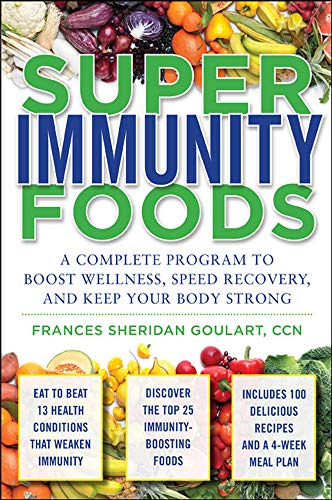
Super Immunity Foods: A Complete Program To Boost Wellness, Speed Recovery, And Keep Your Body Strong (ALL OTHER HEALTH) - Tapa blanda
Sinopsis
Achieve Optimal Health with the Top 25 Immunity-Boosting FoodsBuild immunity that beats disease and slows down aging while increasing your energy
Who doesn't want fewer colds, softer skin, or youthful vitality? Frances Sheridan Goulart, author of the ever-popular Super Healing Foods, now brings you a program for the 25 foods that strengthen the body's six immune centers and help heal and reverse the most common ailments.
Focusing on the top 25 foods provides a simple plan that you can easily incorporate into your lifestyle. With delicious recipes and complete menus, a newer, healthier you is now within reach.
Did you know these food facts?:
"Sinopsis" puede pertenecer a otra edición de este libro.
Acerca del autor
Frances Sheridan Goulart, CCN, is a certified clinical nutritionist, yoga instructor, and author of 16 books on health, nutrition, cooking, and wellness. She cofounded Potsanjammer, one of the first natural foods cooking schools in the country.
Fragmento. © Reproducción autorizada. Todos los derechos reservados.
SUPER IMMUNITY FOODS
A COMPLETE PROGRAM TO BOOST WELLNESS, SPEED RECOVERY, AND KEEP YOUR BODY STRONGBy FRANCES SHERIDAN GOULARTThe McGraw-Hill Companies, Inc.
Copyright © 2009 Frances Sheridan GoulartAll right reserved.
ISBN: 978-0-07-159882-8
Contents
Chapter One
The Body's Six Immune Centers
Our own physical body possesses a wisdom which we who inhabit it lack," observed author Henry Miller. The immune system, in its own wisdom, is, functionally speaking, not one system but several—six, in fact.
Immune cells defending us from harm keep company with one another in an interlocking round-the-clock system of biotelepathy throughout the body. It's the equivalent of having a squad of bodyguards always on call but positioned according to purpose. Thus your heart and arteries are protected by the defensive cellular team in your cardiovascular center, while the liver, kidney, and bladder, more concerned with detoxification and cleansing, call up a different but equally vigilant squad of cells and cellular defenses as needed.
Different organs, structures, and substances are all involved. In general, what causes immunity to stumble and leave us vulnerable to disease is the overactivity of one or more of the body's six immune centers. In response to exposure to toxins, your overactive white blood cells begin to attack neurons in the brain (causing aging, Alzheimer's, or dementia, for example), or the lining of the arteries (causing coronary or arterial disease), or the cartilage in the joints (causing osteoarthritis). And we all have our combinations of strengths and weaknesses that make us unique—strong heart, weak knees; bad bones, good digestion; bad back, good mind—so we are defended and fight back in uniquely different ways.
Weakening of the immune centers or, equally imbalancing, over-activity of the immune centers (autoimmunity) makes us susceptible to any and every type of illness. A few red flags telling you your immunity is out of whack include fatigue (cardiovascular and nervous centers), poor wound healing (all six centers), diarrhea (digestive center), allergies (respiratory center), and cancer (any of the six centers).
And what does your good, bad, or indifferent diet have to do with the high, low, or just fair functioning of each of these six centers that determine your well-being? Plenty. Read on.
Center One: Cardiovascular Center
This center includes the heart (no bigger than a clenched fist, it beats 3 million times a year), blood and blood vessels (60,000 miles of them), and the circulatory system. Blood moves from the heart to the lungs, mixes with oxygen, and then circulates along with nutrients (e.g., those anthocyanins from your blueberry breakfast, that fiber from your lunchtime wrap) to wherever it's needed. What goes around comes around: that same oxygenated blood makes a return trip to pick up and dispose of toxins in your system. The blood vessels or arteries (which could circle the globe two and a half times if strung together) connect with smaller capillaries and veins to bring blood back to the heart. It should all work like clockwork if the specialized immune cells in this center—the white blood cells that defend against invaders and the platelets that help the system self-repair—are up to steam.
Center Two: Nervous Center
The brain has a mind of its own, and indeed, this center comprising brain, spinal cord, and complex network of nerves is telecommunications and intelligent design in action. The central nervous system is central to tasting, seeing, thinking, hearing, dreaming, breathing, and feeling pain and pleasure. Thin threads of nerves called neurons are bundled together and carry information back and forth like wires gathered on a telephone pole. Sensory nerves send messages to the brain by way of the spinal cord, and motor nerves carry messages back from the brain to all the muscles and glands. When a neuron is stimulated by heat, cold, touch, or sound vibrations, it generates an electrical pulse that travels the length of the neuron and then is carried by chemicals to the next cell, hot- potato style. Plenty of events from the outer and inner environments can interfere with this interplay—and plenty of foods can keep this center strong!
Center Three: Glandular Center
The lymphatic system includes important organs: the spleen, thymus, tonsils, and lymph nodes, which continuously cleanse the body at the cellular level, eliminating toxins and debris and destroying depleted cells. Lymph nodes (carrying T and B cells) that fight infections are located in the neck, armpits, chest, pelvis, and groin.
Center Four: Digestive/Detoxification Center
Think before you munch. Digestion begins in the mouth with the salivary glands and wraps up in the small intestine. But it is a long, complex journey. Immune cells in the mucosa of the digestive tract in the mouth, esophagus, stomach, small and large intestines, and gallbladder must all be well fed and functioning to keep you protected. The liver and pancreas are also digestive organs, as is the gallbladder. Even the nervous and circulatory systems interact with this immune center. Most digested molecules of food, for example, are absorbed through the small intestine. The viability of the specific cells involved in this process is essential to the next step: passage into the bloodstream and distribution to the rest of the body for storage or further chemical transformation.
The many steps in the digestion of carbohydrates, fats, protein, vitamins, water, and salts depend on how well immune cells in the eight organs of this system are working. The well- being of the immune cells in turn ensures that the hormones controlling digestion from the mouth to the pancreas and the hormones stimulating and inhibiting the appetite are in good working order.
In the liver, Phase I and Phase II enzymes defend the body against toxins. These two enzyme systems are central to your body's ability to defend itself against bacteria, viruses, parasites, and toxic chemicals. Because of the wide variety of chemical reactions these enzymes undertake, they are major players in the fight against disease and illness. Nutrition has a significant role in the activation of these enzymes, says Dr. Paul Talalay, John Jacob Abel Distinguished Service Professor of Pharmacology and Director of the Laboratory for Molecular Sciences at Johns Hopkins University School of Medicine in Baltimore. According to Dr. Talalay, when Phase I enzymes are activated, they seek out toxic substances to make them water soluble and easier to usher out of the body. When Phase II enzymes are activated, they detoxify the toxins produced by Phase I enzymes, render them inert, and remove them from the body. Highly reactive molecules called free radicals are sometimes produced by this drama and can be tamed by antioxidants in your system. Many foods can tamp down oxidative damage, including cruciferous vegetables such as broccoli and cauliflower, as well as foods high in antioxidant vitamins A and C.
Center Five: Musculoskeletal Center
The body has 206 bones, including the skull, which protects the brain; the spinal column, which protects the spinal cord; the ribs, which protect the heart, lungs, liver, and spleen; and the pelvis, which protects the bladder, intestines, and (in women) the reproductive organs. In addition, joints make the skeleton flexible. Bones contain three types of cells: osteoblasts, which make new bone and repair old; osteoclasts, which break down, sculpt, and shape bone; and osteocytes, which carry nutrients to and waste products away from bones. To both store and release nutrients into the bloodstream, strong bones need calcium, sodium, phosphorus, vitamin D, collagen, and dozens of trace minerals and phytonutrients. The musculoskeletal center also includes bone marrow, in which stem cells produce red blood cells and platelets to help with clotting and wound healing and to carry much-needed oxygen to the body's tissues.
This center also includes 650 muscles (which account for about half of your weight) that are connected to bones by tendons. All of your voluntary muscle movements are coordinated and controlled by the cerebral cortex and cerebellum in the brain and nervous system, while the involuntary muscles are controlled by structures in the brain stem.
Plenty of things big and small can go wrong with this center when diet and lifestyle go awry. But you can do plenty of things big and small to keep your bones and muscles immune from harm.
Center Six: Respiratory Center
Without oxygen, you would expire. We are all here because our respiratory centers are in good, if not excellent, working condition. The air that we breathe with the help of the diaphragm and other muscles in the chest and abdomen circulates via the blood to all parts of the body. We breathe in some twenty times a minute, inhaling air that passes through the nasal passages; is filtered, heated, and moistened; and then is sent to the back of the throat. That breath has a long journey to the lungs through the windpipe, past the vocal cords, and to the juncture of the ribs at the center of the chest.
Inside each lung are bronchial tubes, which branch into even smaller tubes, which end in millions (i.e., 300 million) of alveoli. The air in these alveoli sacs is so extensive that the filled sacs, if laid out flat, would cover an area one-third the size of a tennis court. These sacs bring in new oxygen and exchange it for waste products like carbon dioxide. The red blood cells help exchange old carbon dioxide for new oxygen and carry the fresh oxygen to all the cells throughout the body. Carbon dioxide meanwhile travels through the lungs, back up the windpipe, and out of the body. This amazing process works best if all the players are equipped—through super immunity nutrition—to do their job effectively and keep you oxygenated.
From apples to zucchini, the next chapter covers all you need to know to transform your diet for super immunity—one food at a time.
Chapter Two
Immunity Boosters
The Top Twenty-Five Super Immunity Foods
Now that you've met the body's six immune centers, meet the twenty-five foods that feed them best to keep your immunity at full throttle. Food, not pharmaceuticals, is still your best medicine. Indeed, yesterday's little black bag is today's big brown grocery bag filled with apples, oranges, peas, and the twenty-two other foods that have been selected for their powerful blend of immunity-boosting vitamins, minerals, antioxidants, and phytonutrients. After learning about each immunity-boosting food, discover the immunity-busting conditions (Chapter 3) and then try the easy recipes and menus in Chapter 4, and you may fend off your next cold or flu, keep migraines and fatigue at bay, or even help prevent one or more of today's major diseases such as cancer, heart disease, or diabetes.
Apples
A symbol of fertility, temptation, and immortality, the apple appears in many religious traditions as a forbidden fruit. But nutritionally it is prescriptive not forbidden. The Malus domestica, a member of the rose family, was born in Central Asia and is now the most cultivated tree fruit in the world. Today there are 2,500 varieties of the domestic apple's wild ancestors grown experimentally, although few reach us. The ones that do—from the crisp Gala, to the aromatic Braeburn, to the tart Granny Smith, to the old-fashioned Winesap—provide plenty of variety. Farther afield, at farmers' markets and through family farms, there are hundreds more unusual heirloom apples for sale. (See Resources for more information.)
Super Immunity Strengths
According to folklore, the male larynx is called an Adam's apple because it resulted when the forbidden fruit got stuck in Adam's throat. And what better fruit to stick in your craw: apples should be the apple of your eye if you're working on nutritional self-defense, and they probably are if you're the typical McIntosh-eating American. Individually, we each eat twenty pounds of Malus domesticus apiece each year—that's roughly one Delicious, Ida Red, or Granny Smith (or other variety) every four days. Paltry compared to the European average of almost two a day, but a munch in the right direction.
Big McIntosh—Big Medicine. Apples supply dozens of phytochemicals, including the ocular and antiallergy flavonoid quercetin, and more potassium than fresh oranges. Eating an apple a day is the same as taking a megadose of natural vitamin C in terms of antioxidants and flavonoids. Apples rank sixteenth on the U.S. Department of Agriculture's Oxygen Radical Absorbance Capacity (ORAC) values chart, a ranking that reflects a fruit's antioxidant density—or the food's capacity to destroy or subdue free radicals and block oxidative damage to cells. Apples are even more "fruitful" if you eat the peel, which contains triterpenoids—compounds that have anticancer activity, according to Cornell University researchers. Triterpenoids appear to halt the growth of cancer cells, especially breast, colon, and liver. The flavonoids and phenols also inhibit other chronic diseases; flavonoids like quercetin are also responsible for raising neurotransmitters and protecting the brain against Alzheimer's and dementia.
Apples even strengthen the gallbladder. These juicy fruit foods help you satisfy your daily requirement for water. One medium apple is 84 percent water and supplies almost 4 ounces of water. Better yet, apples are "negative calorie" foods (along with watermelon, berries, and zucchini). This means that at 80 calories per average fruit, they burn more calories than they add and provide a lot of don't-need-a-second-helping satiety.
A Top Fruit Food for Fiber. Every part of any apple is good medicine. Apples rank as one of the top fifteen fruits and vegetables, providing four kinds of fiber. The fiber called pectin in apples helps the body's hormone disposal system work more efficiently, stabilizing blood pressure. Apples cleanse and rejuvenate the intestinal tract (for super cleansing, juice your apple with some parsley) and provide 3 grams of fiber (as much as a slice of whole-grain bread) to help prevent constipation and encourage a healthy bowel environment.
Buying, Storing, and Preparing
* The only downside of an apple a day? If it's not organic, it could be lowering, not raising, your immunity—so buy organic whenever possible.
* Apples are characterized (along with apricots, nectarines, and pears) as climacteric fruits, which ripen on their own, although they don't become sweeter in the process.
* Refrigerate apples to shut off flavor production in the skin. Letting the fruit sit at room temperature before eating will reactivate skin aromatics. Most apples will keep two weeks refrigerated. (Fujis and Granny Smiths have a longer life.)
* Buy with purpose in mind. Rome apples are best for baking and applesauce, Jonagolds and Ida Reds are best for pies, and all-purpose reds include Cortland and the McIntosh.
* If sliced or cut apples have to wait to be served, squirt them with lemon or other citrus juice to retard oxidation and browning.
* Go to the source. Visit a local orchard in harvesting time and pick your own. (This makes for a fun family outing, so take the kids!)
Berries
"Doubtless God could have made a better berry," observed William Butler about the strawberry in the seventeenth century, "but doubtless he never did." But he has given us a lot to choose from when the strawberries run out.
What do berries, the quintessential fruit of summer, bring to the summer, winter, fall, or spring table and to our overall immunity? Nearly everything, since blueberries, cranberries, raspberries, blackberries, and strawberries are among the top twenty foods with the most antioxidants (wild blueberries top the list).
Super Immunity Strengths
Fruits contain flavonoids, and the more the flavonoids, the sharper your brain. Also, anthocyanins—phytochemicals that give fruits and flowers their vibrant colors—are the top-gun nutrients in berries.
Berry Benefits. Berries, especially blueberries, have manganese to keep bones strong and vitamin C to strengthen all six immune centers. And the list goes on. Thanks to their ellagic acid plus vitamin C content, cranberries, raspberries, and strawberries all suppress the growth of several cancers and provide cardiovascular protection. Eating more berries can reduce your risk of arthritis, specifically of the knee (where arthritis is most common), thanks to increased vitamin C. In a ten-year study by Yuanyuan Wang, Ph.D., of Monash University in Australia, those with higher intake of fruit had the lowest arthritis risk.
And don't worry about the caloric damage. Most berries, eaten fresh, deliver between only 50 and 70 calories per cup along with moderate amounts of fiber. What to reach for? Eat raspberries for the most fiber, blueberries for the highest antioxidant content, strawberries for the most vitamin C and fewest calories, and currants and blackberries for the most potassium, a nutrient essential in preventing stroke, high blood pressure, and osteoporosis. Read on for more specific benefits of different berries, and pile them all on your plate for a super immunity defense.
Boost Night Vision with Bilberries. Bilberries (also called European bilberries) are at the top of the list, enhancing microcirculation in the capillaries, which in turn strengthens the retina, improving everything from macular degeneration to glaucoma, night vision, and cataracts. The therapeutic dose to affect change in the visual field is between 400 and 2,000 milligrams daily of standardized bilberry extract. (It takes 100 pounds of bilberries to extract l pound of extract.) After bilberries come blueberries, their American cousin.
(Continues...)
Excerpted from SUPER IMMUNITY FOODSby FRANCES SHERIDAN GOULART Copyright © 2009 by Frances Sheridan Goulart. Excerpted by permission of The McGraw-Hill Companies, Inc.. All rights reserved. No part of this excerpt may be reproduced or reprinted without permission in writing from the publisher.
Excerpts are provided by Dial-A-Book Inc. solely for the personal use of visitors to this web site.
"Sobre este título" puede pertenecer a otra edición de este libro.
Resultados de la búsqueda para Super Immunity Foods: A Complete Program To Boost Wellness,...

Imagen de archivo
Super Immunity Foods: A Complete Program to Boost Wellness, Speed Recovery, and Keep Your Body Strong
Publicado por
McGraw Hill, 2009
ISBN 10: 0071598820
ISBN 13: 9780071598828
Antiguo o usado
Tapa blanda
Librería: World of Books (was SecondSale), Montgomery, IL, Estados Unidos de America
Calificación del vendedor: 5 de 5 estrellas

Condición: Acceptable. Item in acceptable condition! Textbooks may not include supplemental items i.e. CDs, access codes etc. Nº de ref. del artículo: 00095601385
Comprar usado
EUR 4,01
Gastos de envío gratis
Se envía dentro de Estados Unidos de America
Se envía dentro de Estados Unidos de America
Cantidad disponible: 1 disponibles
Imagen de archivo
Super Immunity Foods: A Complete Program to Boost Wellness, Speed Recovery, and Keep Your Body Strong
Publicado por
McGraw Hill, 2009
ISBN 10: 0071598820
ISBN 13: 9780071598828
Antiguo o usado
Tapa blanda
Librería: World of Books (was SecondSale), Montgomery, IL, Estados Unidos de America
Calificación del vendedor: 5 de 5 estrellas
Condición: Good. Item in good condition. Textbooks may not include supplemental items i.e. CDs, access codes etc. Nº de ref. del artículo: 00091715044
Comprar usado
EUR 4,01
Gastos de envío gratis
Se envía dentro de Estados Unidos de America
Se envía dentro de Estados Unidos de America
Cantidad disponible: 1 disponibles
Imagen de archivo
Super Immunity Foods: A Complete Program to Boost Wellness, Speed Recovery, and Keep Your Body Strong
Publicado por
McGraw-Hill Companies, 2009
ISBN 10: 0071598820
ISBN 13: 9780071598828
Antiguo o usado
Paperback
Librería: ThriftBooks-Reno, Reno, NV, Estados Unidos de America
Calificación del vendedor: 5 de 5 estrellas
Paperback. Condición: Very Good. No Jacket. May have limited writing in cover pages. Pages are unmarked. ~ ThriftBooks: Read More, Spend Less. Nº de ref. del artículo: G0071598820I4N00
Comprar usado
EUR 6,48
Gastos de envío gratis
Se envía dentro de Estados Unidos de America
Se envía dentro de Estados Unidos de America
Cantidad disponible: 1 disponibles
Imagen de archivo
Super Immunity Foods: A Complete Program to Boost Wellness, Speed Recovery, and Keep Your Body Strong
Publicado por
McGraw Hill, 2009
ISBN 10: 0071598820
ISBN 13: 9780071598828
Antiguo o usado
Tapa blanda
Librería: Idaho Youth Ranch Books, Boise, ID, Estados Unidos de America
Calificación del vendedor: 5 de 5 estrellas
Condición: Good. A copy that has been read, but remains in clean condition. All pages are intact, and the cover is intact (including dust cover, if applicable). The spine may show signs of wear. Pages can include limited notes and highlighting, and the copy can include "From the library of" labels or limited small stickers. Book may have a remainder mark or be a price cutter. Nº de ref. del artículo: D-05-01-05-0592
Comprar usado
EUR 3,31
Envío por EUR 3,43
Se envía dentro de Estados Unidos de America
Se envía dentro de Estados Unidos de America
Cantidad disponible: 1 disponibles
Imagen de archivo
Super Immunity Foods: a Complete Program to Boost Wellness, Speed Recovery, and Keep Your Body Strong
Publicado por
McGraw-Hill Education, 2009
ISBN 10: 0071598820
ISBN 13: 9780071598828
Antiguo o usado
Tapa blanda
Original o primera edición
Librería: Better World Books, Mishawaka, IN, Estados Unidos de America
Calificación del vendedor: 5 de 5 estrellas
Condición: Good. 1st Edition. Former library copy. Pages intact with minimal writing/highlighting. The binding may be loose and creased. Dust jackets/supplements are not included. Includes library markings. Stock photo provided. Product includes identifying sticker. Better World Books: Buy Books. Do Good. Nº de ref. del artículo: GRP95806672
Comprar usado
EUR 6,95
Gastos de envío gratis
Se envía dentro de Estados Unidos de America
Se envía dentro de Estados Unidos de America
Cantidad disponible: 1 disponibles
Imagen de archivo
Super Immunity Foods: A Complete Program to Boost Wellness, Speed Recovery, and Keep Your Body Strong
Publicado por
McGraw-Hill Companies, 2009
ISBN 10: 0071598820
ISBN 13: 9780071598828
Antiguo o usado
Paperback
Librería: ThriftBooks-Dallas, Dallas, TX, Estados Unidos de America
Calificación del vendedor: 5 de 5 estrellas
Paperback. Condición: Very Good. No Jacket. May have limited writing in cover pages. Pages are unmarked. ~ ThriftBooks: Read More, Spend Less. Nº de ref. del artículo: G0071598820I4N00
Comprar usado
EUR 7,20
Gastos de envío gratis
Se envía dentro de Estados Unidos de America
Se envía dentro de Estados Unidos de America
Cantidad disponible: 1 disponibles
Imagen de archivo
Super Immunity Foods: A Complete Program to Boost Wellness, Speed Recovery, and Keep Your Body Strong
Publicado por
McGraw-Hill Companies, 2009
ISBN 10: 0071598820
ISBN 13: 9780071598828
Antiguo o usado
Paperback
Librería: ThriftBooks-Dallas, Dallas, TX, Estados Unidos de America
Calificación del vendedor: 5 de 5 estrellas
Paperback. Condición: Good. No Jacket. Pages can have notes/highlighting. Spine may show signs of wear. ~ ThriftBooks: Read More, Spend Less. Nº de ref. del artículo: G0071598820I3N00
Comprar usado
EUR 7,20
Gastos de envío gratis
Se envía dentro de Estados Unidos de America
Se envía dentro de Estados Unidos de America
Cantidad disponible: 1 disponibles
Imagen de archivo
Super Immunity Foods: A Complete Program to Boost Wellness, Speed Recovery, and Keep Your Body Strong
Publicado por
McGraw-Hill Companies, 2009
ISBN 10: 0071598820
ISBN 13: 9780071598828
Antiguo o usado
Paperback
Librería: ThriftBooks-Atlanta, AUSTELL, GA, Estados Unidos de America
Calificación del vendedor: 5 de 5 estrellas
Paperback. Condición: Good. No Jacket. Pages can have notes/highlighting. Spine may show signs of wear. ~ ThriftBooks: Read More, Spend Less. Nº de ref. del artículo: G0071598820I3N00
Comprar usado
EUR 7,20
Gastos de envío gratis
Se envía dentro de Estados Unidos de America
Se envía dentro de Estados Unidos de America
Cantidad disponible: 1 disponibles
Imagen de archivo
Super Immunity Foods: A Complete Program to Boost Wellness, Speed Recovery, and Keep Your Body Strong
Publicado por
McGraw-Hill Companies, 2009
ISBN 10: 0071598820
ISBN 13: 9780071598828
Antiguo o usado
Paperback
Librería: ThriftBooks-Dallas, Dallas, TX, Estados Unidos de America
Calificación del vendedor: 5 de 5 estrellas
Paperback. Condición: Very Good. No Jacket. Former library book; May have limited writing in cover pages. Pages are unmarked. ~ ThriftBooks: Read More, Spend Less. Nº de ref. del artículo: G0071598820I4N10
Comprar usado
EUR 7,20
Gastos de envío gratis
Se envía dentro de Estados Unidos de America
Se envía dentro de Estados Unidos de America
Cantidad disponible: 1 disponibles
Imagen del vendedor
Super Immunity Foods: A Complete Program To Boost Wellness, Speed Recovery, And Keep Your Body Strong (ALL OTHER HEALTH)
Publicado por
McGraw-Hill, 2009
ISBN 10: 0071598820
ISBN 13: 9780071598828
Antiguo o usado
paperback
Librería: WeBuyBooks, Rossendale, LANCS, Reino Unido
Calificación del vendedor: 5 de 5 estrellas
paperback. Condición: Very Good. Most items will be dispatched the same or the next working day. A copy that has been read, but is in excellent condition. Pages are intact and not marred by notes or highlighting. The spine remains undamaged. Nº de ref. del artículo: rev4968631500
Comprar usado
EUR 2,03
Envío por EUR 7,17
Se envía de Reino Unido a Estados Unidos de America
Se envía de Reino Unido a Estados Unidos de America
Cantidad disponible: 1 disponibles