
Sinopsis
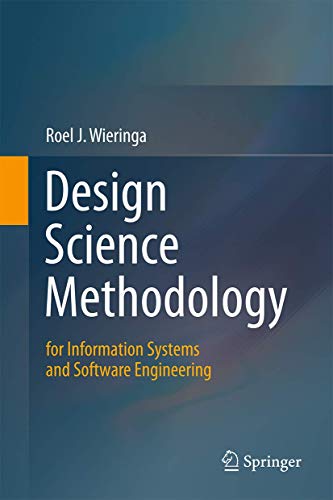
This book provides guidelines for practicing design science in the fields of information systems and software engineering research. A design process usually iterates over two activities: first designing an artifact that improves something for stakeholders and subsequently empirically investigating the performance of that artifact in its context. This "validation in context" is a key feature of the book - since an artifact is designed for a context, it should also be validated in this context.
The book is divided into five parts. Part I discusses the fundamental nature of design science and its artifacts, as well as related design research questions and goals. Part II deals with the design cycle, i.e. the creation, design and validation of artifacts based on requirements and stakeholder goals. To elaborate this further, Part III presents the role of conceptual frameworks and theories in design science. Part IV continues with the empirical cycle to investigate artifacts in context, and presents the different elements of research problem analysis, research setup and data analysis. Finally, Part V deals with the practical application of the empirical cycle by presenting in detail various research methods, including observational case studies, case-based and sample-based experiments and technical action research. These main sections are complemented by two generic checklists, one for the design cycle and one for the empirical cycle.
The book is written for students as well as academic and industrial researchers in software engineering or information systems. It provides guidelines on how to effectively structure research goals, how to analyze research problems concerning design goals and knowledge questions, how to validate artifact designs and how to empirically investigate artifacts in context - and finally how to present the results of the design cycle as a whole.
"Sinopsis" puede pertenecer a otra edición de este libro.
Acerca del autor
Roel Wieringa is Chair of Information Systems at the University of Twente, the Netherlands. His research interests include modelling and design of e-business networks, requirements engineering and research methodology for software engineering and information systems.
De la contraportada
<p>This book provides guidelines for practicing design science in the fields of information systems and software engineering research. A design process usually iterates over two activities: first designing an artifact that improves something for stakeholders, and subsequently empirically investigating the performance of that artifact in its context. This “validation in context” is a key feature of the book - since an artifact is designed for a context, it should also be validated in this context. </p><p>The book is divided into five parts. Part I discusses the fundamental nature of design science and its artifacts, as well as related design research questions and goals. Part II deals with the design cycle, i.e. the creation, design and validation of artifacts based on requirements and stakeholder goals. To elaborate this further, Part III presents the role of conceptual frameworks and theories in design science. Part IV continues with the empirical cycle to investigate artifacts in context, and presents the different elements of research problem analysis, research setup, and data analysis. Finally, Part V deals with the practical application of the empirical cycle by presenting in detail various research methods, including observational case studies, case-based and sample-based experiments, and technical action research. These main sections are complemented by two generic checklists, one for the design cycle and one for the empirical cycle.</p><p>The book is written for students as well as academic and industrial researchers in software engineering or information systems. It provides guidelines on how to effectively structure research goals, how to analyze research problems concerning design goals and knowledge questions, how to validate artifact designs, and how to empirically investigate artifacts in context – and finally how to present the results of the design cycle as a whole.</p>
"Sobre este título" puede pertenecer a otra edición de este libro.
Otras ediciones populares con el mismo título

Resultados de la búsqueda para Design Science Methodology for Information Systems...

Imagen de archivo
Design Science Methodology for Information Systems and Software Engineering
Librería: Basi6 International, Irving, TX, Estados Unidos de America
Calificación del vendedor: 5 de 5 estrellas

Condición: Brand New. New. US edition. Expediting shipping for all USA and Europe orders excluding PO Box. Excellent Customer Service. Nº de ref. del artículo: ABEOCT25-16125
Comprar nuevo
EUR 76,71
Gastos de envío gratis
Se envía dentro de Estados Unidos de America
Se envía dentro de Estados Unidos de America
Cantidad disponible: 1 disponibles
Imagen del vendedor
Design Science Methodology for Information Systems and Software Engineering
Librería: GreatBookPrices, Columbia, MD, Estados Unidos de America
Calificación del vendedor: 5 de 5 estrellas
Condición: New. Nº de ref. del artículo: 21652700-n
Comprar nuevo
EUR 86,64
Envío por EUR 2,32
Se envía dentro de Estados Unidos de America
Se envía dentro de Estados Unidos de America
Cantidad disponible: Más de 20 disponibles
Imagen de archivo
Design Science Methodology for Information Systems
Impresión bajo demandaLibrería: Basi6 International, Irving, TX, Estados Unidos de America
Calificación del vendedor: 5 de 5 estrellas
Condición: Brand New. New. US edition. Print on demand title. Delivery takes 20-25 days. Excellent Customer Service. Nº de ref. del artículo: POD-164179
Comprar nuevo
EUR 89,04
Gastos de envío gratis
Se envía dentro de Estados Unidos de America
Se envía dentro de Estados Unidos de America
Cantidad disponible: 10 disponibles
Imagen de archivo
Design Science Methodology for Information Systems and Software Engineering
Librería: Ria Christie Collections, Uxbridge, Reino Unido
Calificación del vendedor: 5 de 5 estrellas
Condición: New. In. Nº de ref. del artículo: ria9783662438381_new
Comprar nuevo
EUR 92,08
Envío por EUR 14,02
Se envía de Reino Unido a Estados Unidos de America
Se envía de Reino Unido a Estados Unidos de America
Cantidad disponible: Más de 20 disponibles
Imagen de archivo
Design Science Methodology for Information Systems and Software Engineering
Librería: California Books, Miami, FL, Estados Unidos de America
Calificación del vendedor: 4 de 5 estrellas

Condición: New. Nº de ref. del artículo: I-9783662438381
Comprar nuevo
EUR 108,64
Gastos de envío gratis
Se envía dentro de Estados Unidos de America
Se envía dentro de Estados Unidos de America
Cantidad disponible: Más de 20 disponibles
Imagen de archivo
Design Science Methodology for Information Systems and Software Engineering
Librería: GreatBookPricesUK, Woodford Green, Reino Unido
Calificación del vendedor: 5 de 5 estrellas
Condición: New. Nº de ref. del artículo: 21652700-n
Comprar nuevo
EUR 92,07
Envío por EUR 17,55
Se envía de Reino Unido a Estados Unidos de America
Se envía de Reino Unido a Estados Unidos de America
Cantidad disponible: Más de 20 disponibles
Imagen del vendedor
Design Science Methodology for Information Systems and Software Engineering
Publicado por
Springer Berlin Heidelberg Dez 2014, 2014
ISBN 10: 3662438380
ISBN 13: 9783662438381
Nuevo
Tapa dura
Librería: BuchWeltWeit Ludwig Meier e.K., Bergisch Gladbach, Alemania
Calificación del vendedor: 5 de 5 estrellas
Buch. Condición: Neu. This item is printed on demand - it takes 3-4 days longer - Neuware -This book provides guidelines for practicing design science in the fields of information systems and software engineering research. A design process usually iterates over two activities: first designing an artifact that improves something for stakeholders and subsequently empirically investigating the performance of that artifact in its context. This 'validation in context' is a key feature of the book - since an artifact is designed for a context, it should also be validated in this context.The book is divided into five parts. Part I discusses the fundamental nature of design science and its artifacts, as well as related design research questions and goals. Part II deals with the design cycle, i.e. the creation, design and validation of artifacts based on requirements and stakeholder goals. To elaborate this further, Part III presents the role of conceptual frameworks and theories in design science. Part IV continues with the empirical cycle to investigate artifacts in context, and presents the different elements of research problem analysis, research setup and data analysis. Finally, Part V deals with the practical application of the empirical cycle by presenting in detail various research methods, including observational case studies, case-based and sample-based experiments and technical action research. These main sections are complemented by two generic checklists, one for the design cycle and one for the empirical cycle.The book is written for students as well as academic and industrial researchers in software engineering or information systems. It provides guidelines on how to effectively structure research goals, how to analyze research problems concerning design goals and knowledge questions, how to validate artifact designs and how to empirically investigate artifacts in context - and finally how to present the results of the design cycle as a whole. 348 pp. Englisch. Nº de ref. del artículo: 9783662438381
Comprar nuevo
EUR 90,94
Envío por EUR 23,00
Se envía de Alemania a Estados Unidos de America
Se envía de Alemania a Estados Unidos de America
Cantidad disponible: 2 disponibles
Imagen de archivo
Design Science Methodology for Information Systems and Software Engineering (eng)
Impresión bajo demandaLibrería: Brook Bookstore On Demand, Napoli, NA, Italia
Calificación del vendedor: 5 de 5 estrellas
Condición: new. Questo è un articolo print on demand. Nº de ref. del artículo: 6b759d0b4b85afd795640b4b0d3addbe
Comprar nuevo
EUR 74,24
Envío por EUR 42,00
Se envía de Italia a Estados Unidos de America
Se envía de Italia a Estados Unidos de America
Cantidad disponible: Más de 20 disponibles
Imagen del vendedor
Design Science Methodology for Information Systems and Software Engineering
Publicado por
Springer Berlin Heidelberg, 2014
ISBN 10: 3662438380
ISBN 13: 9783662438381
Nuevo
Tapa dura
Librería: moluna, Greven, Alemania
Calificación del vendedor: 5 de 5 estrellas
Gebunden. Condición: New. Dieser Artikel ist ein Print on Demand Artikel und wird nach Ihrer Bestellung fuer Sie gedruckt. Describes research methodologies for design science research in information systems and software engineeringProvides guidelines for how to structure your research goals and analyse your research problem into design goals and knowledge questions. Nº de ref. del artículo: 5227521
Comprar nuevo
EUR 77,17
Envío por EUR 48,99
Se envía de Alemania a Estados Unidos de America
Se envía de Alemania a Estados Unidos de America
Cantidad disponible: Más de 20 disponibles
Imagen del vendedor
Design Science Methodology for Information Systems and Software Engineering
Publicado por
Springer, Springer Dez 2014, 2014
ISBN 10: 3662438380
ISBN 13: 9783662438381
Nuevo
Tapa dura
Librería: buchversandmimpf2000, Emtmannsberg, BAYE, Alemania
Calificación del vendedor: 5 de 5 estrellas
Buch. Condición: Neu. This item is printed on demand - Print on Demand Titel. Neuware -This book provides guidelines for practicing design science in the fields of information systems and software engineering research. A design process usually iterates over two activities: first designing an artifact that improves something for stakeholders and subsequently empirically investigating the performance of that artifact in its context. This ¿validation in context¿ is a key feature of the book - since an artifact is designed for a context, it should also be validated in this context.The book is divided into five parts. Part I discusses the fundamental nature of design science and its artifacts, as well as related design research questions and goals. Part II deals with the design cycle, i.e. the creation, design and validation of artifacts based on requirements and stakeholder goals. To elaborate this further, Part III presents the role of conceptual frameworks and theories in design science. Part IV continues with the empirical cycle to investigate artifacts in context, and presents the different elements of research problem analysis, research setup and data analysis. Finally, Part V deals with the practical application of the empirical cycle by presenting in detail various research methods, including observational case studies, case-based and sample-based experiments and technical action research. These main sections are complemented by two generic checklists, one for the design cycle and one for the empirical cycle.The book is written for students as well as academic and industrial researchers in software engineering or information systems. It provides guidelines on how to effectively structure research goals, how to analyze research problems concerning design goals and knowledge questions, how to validate artifact designs and how to empirically investigate artifacts in context ¿ and finally how to present the results of the design cycle as a whole.Springer-Verlag GmbH, Tiergartenstr. 17, 69121 Heidelberg 348 pp. Englisch. Nº de ref. del artículo: 9783662438381
Comprar nuevo
EUR 90,94
Envío por EUR 60,00
Se envía de Alemania a Estados Unidos de America
Se envía de Alemania a Estados Unidos de America
Cantidad disponible: 1 disponibles