
Artículos relacionados a Prohibition, Religious Freedom, and Human Rights: Regulating...
Sinopsis
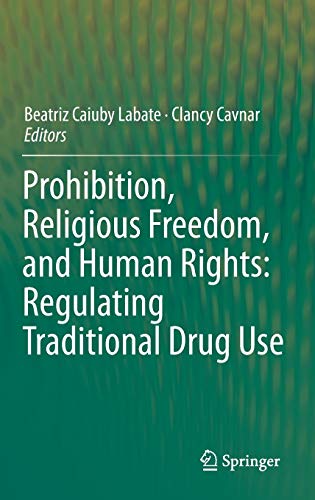
This book addresses the use and regulation of traditional drugs such as peyote, ayahuasca, coca leaf, cannabis, khat and Salvia divinorum. The uses of these substances can often be found at the intersection of diverse areas of life, including politics, medicine, shamanism, religion, aesthetics, knowledge transmission, socialization, and celebration. The collection analyzes how some of these psychoactive plants have been progressively incorporated and regulated in developed Western societies by both national legislation and by the United Nations Drug Conventions. It focuses mainly, but not only, on the debates in court cases around the world involving the claim of religious use and the legal definitions of "religion." It further touches upon issues of human rights and cognitive liberty as they relate to the consumption of drugs. While this collection emphasizes certain uses of psychoactive substances in different cultures and historical periods, it is also useful for thinking about the consumption of drugs in general in contemporary societies. The cultural and informal controls discussed here represent alternatives to the current merely prohibitionist policies, which are linked to the spread of illicit and violent markets. By addressing the disputes involved in the regulation of traditional drug use, this volume reflects on notions such as origin, place, authenticity, and tradition, thereby relating drug policy to broader social science debates.
"Sinopsis" puede pertenecer a otra edición de este libro.
Acerca del autor
Beatriz Caiuby Labate has a Ph.D. in Social Anthropology from the State University of Campinas (UNICAMP), Brazil. Her main areas of interest are the study of psychoactive substances, drug policy, shamanism, ritual, and religion. She is Visiting Professor at the Drug Policy Program of the Center for Economic Research and Education (CIDE) in Aguascalientes, Mexico. She is also Research Associate at the Institute of Medical Psychology, Heidelberg University, co-founder of the Nucleus for Interdisciplinary Studies of Psychoactives (NEIP), and editor of NEIP’s website (http://www.neip.info). She is author, co-author, and co-editor of twelve books, one special-edition journal, and several peer-reviewed articles. For more information, see: http://bialabate.net/
Clancy Cavnar, Psy.D., is currently completing her postdoctoral hours in clinical psychology at the Marin Treatment Center, a methadone clinic in San Rafael, California. In 2011, she received a doctorate in clinical psychology (PsyD) from John F. Kennedy University in Pleasant Hill, California, with a dissertation on gay and lesbian people's experiences with ayahuasca. She attended New College of the University of South Florida and completed an undergraduate degree in liberal arts in 1982. She attended the San Francisco Art Institute and graduated with a Master of Fine Art in painting in 1985. In 1993, she received a certificate in substance abuse counseling from the extension program of the University of California at Berkeley and, in 1997, she graduated with a master's in counseling from San Francisco State University. In that same year, she got in touch with the Santo Daime in the USA, and has traveled several times to Brazil since then. She is Research Associate of the Nucleus for Interdisciplinary Studies of Psychoactives (NEIP), and co-editor, with Beatriz Caiuby Labate, of three books: The Therapeutic Use of Ayahuasca (Springer,2014); Prohibition, Religious Freedom, and Human Rights: Regulating Traditional Drug Use (Springer, 2014) and Ayahuasca Shamanism in the Amazon and Beyond (Oxford University Press, 2014).
De la contraportada
This book addresses the use and regulation of traditional drugs such as peyote, ayahuasca, coca leaf, cannabis, khat and Salvia divinorum. The uses of these substances can often be found at the intersection of diverse areas of life, including politics, medicine, shamanism, religion, aesthetics, knowledge transmission, socialization, and celebration. The collection analyzes how some of these psychoactive plants have been progressively incorporated and regulated in developed Western societies by both national legislation and by the United Nations Drug Conventions. It focuses mainly, but not only, on the debates in court cases around the world involving the claim of religious use and the legal definitions of "religion." It further touches upon issues of human rights and cognitive liberty as they relate to the consumption of drugs. While this collection emphasizes certain uses of psychoactive substances in different cultures and historical periods, it is also useful for thinking about the consumption of drugs in general in contemporary societies. The cultural and informal controls discussed here represent alternatives to the current merely prohibitionist policies, which are linked to the spread of illicit and violent markets. By addressing the disputes involved in the regulation of traditional drug use, this volume reflects on notions such as origin, place, authenticity, and tradition, thereby relating drug policy to broader social science debates.
"Sobre este título" puede pertenecer a otra edición de este libro.
Resultados de la búsqueda para Prohibition, Religious Freedom, and Human Rights: Regulating...

Imagen de archivo
Prohibition, Religious Freedom, and Human Rights: Regulating Traditional Drug Use (eng)
Impresión bajo demandaLibrería: Brook Bookstore On Demand, Napoli, NA, Italia
Calificación del vendedor: 5 de 5 estrellas

Condición: new. Questo è un articolo print on demand. Nº de ref. del artículo: 17b7cbf4a16a915087e9672d8a106a4d
Comprar nuevo
EUR 126,26
Envío por EUR 6,80
Se envía de Italia a Estados Unidos de America
Se envía de Italia a Estados Unidos de America
Cantidad disponible: Más de 20 disponibles
Imagen del vendedor
Prohibition, Religious Freedom, and Human Rights: Regulating Traditional Drug Use
Publicado por
Springer Berlin Heidelberg Apr 2014, 2014
ISBN 10: 3642409563
ISBN 13: 9783642409561
Nuevo
Tapa dura
Librería: BuchWeltWeit Ludwig Meier e.K., Bergisch Gladbach, Alemania
Calificación del vendedor: 5 de 5 estrellas
Buch. Condición: Neu. This item is printed on demand - it takes 3-4 days longer - Neuware -This book addresses the use and regulation of traditional drugs such as peyote, ayahuasca, coca leaf, cannabis, khat and Salvia divinorum . The uses of these substances can often be found at the intersection of diverse areas of life, including politics, medicine, shamanism, religion, aesthetics, knowledge transmission, socialization, and celebration. The collection analyzes how some of these psychoactive plants have been progressively incorporated and regulated in developed Western societies by both national legislation and by the United Nations Drug Conventions. It focuses mainly, but not only, on the debates in court cases around the world involving the claim of religious use and the legal definitions of 'religion.' It further touches upon issues of human rights and cognitive liberty as they relate to the consumption of drugs. While this collection emphasizes certain uses of psychoactive substances in different cultures and historical periods, it is also useful for thinking about the consumption of drugs in general in contemporary societies. The cultural and informal controls discussed here represent alternatives to the current merely prohibitionist policies, which are linked to the spread of illicit and violent markets. By addressing the disputes involved in the regulation of traditional drug use, this volume reflects on notions such as origin, place, authenticity, and tradition, thereby relating drug policy to broader social science debates. 280 pp. Englisch. Nº de ref. del artículo: 9783642409561
Comprar nuevo
EUR 160,49
Envío por EUR 23,00
Se envía de Alemania a Estados Unidos de America
Se envía de Alemania a Estados Unidos de America
Cantidad disponible: 2 disponibles
Imagen del vendedor
Prohibition, Religious Freedom, and Human Rights: Regulating Traditional Drug Use
Publicado por
Springer Berlin Heidelberg, 2014
ISBN 10: 3642409563
ISBN 13: 9783642409561
Nuevo
Tapa dura
Librería: moluna, Greven, Alemania
Calificación del vendedor: 5 de 5 estrellas
Condición: New. Nº de ref. del artículo: 5059807
Comprar nuevo
EUR 136,16
Envío por EUR 48,99
Se envía de Alemania a Estados Unidos de America
Se envía de Alemania a Estados Unidos de America
Cantidad disponible: Más de 20 disponibles
Imagen de archivo
Prohibition, Religious Freedom, and Human Rights: Regulating Traditional Drug Use
Librería: Ria Christie Collections, Uxbridge, Reino Unido
Calificación del vendedor: 5 de 5 estrellas
Condición: New. In English. Nº de ref. del artículo: ria9783642409561_new
Comprar nuevo
EUR 181,62
Envío por EUR 13,11
Se envía de Reino Unido a Estados Unidos de America
Se envía de Reino Unido a Estados Unidos de America
Cantidad disponible: Más de 20 disponibles
Imagen del vendedor
Prohibition, Religious Freedom, and Human Rights: Regulating Traditional Drug Use
Librería: AHA-BUCH GmbH, Einbeck, Alemania
Calificación del vendedor: 5 de 5 estrellas
Buch. Condición: Neu. Druck auf Anfrage Neuware - Printed after ordering - This book addresses the use and regulation of traditional drugs such as peyote, ayahuasca, coca leaf, cannabis, khat and Salvia divinorum . The uses of these substances can often be found at the intersection of diverse areas of life, including politics, medicine, shamanism, religion, aesthetics, knowledge transmission, socialization, and celebration. The collection analyzes how some of these psychoactive plants have been progressively incorporated and regulated in developed Western societies by both national legislation and by the United Nations Drug Conventions. It focuses mainly, but not only, on the debates in court cases around the world involving the claim of religious use and the legal definitions of 'religion.' It further touches upon issues of human rights and cognitive liberty as they relate to the consumption of drugs. While this collection emphasizes certain uses of psychoactive substances in different cultures and historical periods, it is also useful for thinking about the consumption of drugs in general in contemporary societies. The cultural and informal controls discussed here represent alternatives to the current merely prohibitionist policies, which are linked to the spread of illicit and violent markets. By addressing the disputes involved in the regulation of traditional drug use, this volume reflects on notions such as origin, place, authenticity, and tradition, thereby relating drug policy to broader social science debates. Nº de ref. del artículo: 9783642409561
Comprar nuevo
EUR 174,36
Envío por EUR 35,00
Se envía de Alemania a Estados Unidos de America
Se envía de Alemania a Estados Unidos de America
Cantidad disponible: 1 disponibles
Imagen de archivo
Prohibition, Religious Freedom, and Human Rights
Librería: Books Puddle, Woodside, NY, Estados Unidos de America
Calificación del vendedor: 4 de 5 estrellas

Condición: New. pp. 282. Nº de ref. del artículo: 2698177743
Comprar nuevo
EUR 214,92
Envío por EUR 3,51
Se envía dentro de Estados Unidos de America
Se envía dentro de Estados Unidos de America
Cantidad disponible: 4 disponibles
Imagen del vendedor
Prohibition, Religious Freedom, and Human Rights: Regulating Traditional Drug Use
Publicado por
Springer Berlin Heidelberg, Springer Berlin Heidelberg Apr 2014, 2014
ISBN 10: 3642409563
ISBN 13: 9783642409561
Nuevo
Tapa dura
Librería: buchversandmimpf2000, Emtmannsberg, BAYE, Alemania
Calificación del vendedor: 5 de 5 estrellas
Buch. Condición: Neu. This item is printed on demand - Print on Demand Titel. Neuware -This book addresses the use and regulation of traditional drugs such as peyote, ayahuasca, coca leaf, cannabis, khat and Salvia divinorum. The uses of these substances can often be found at the intersection of diverse areas of life, including politics, medicine, shamanism, religion, aesthetics, knowledge transmission, socialization, and celebration. The collection analyzes how some of these psychoactive plants have been progressively incorporated and regulated in developed Western societies by both national legislation and by the United Nations Drug Conventions. It focuses mainly, but not only, on the debates in court cases around the world involving the claim of religious use and the legal definitions of ¿religion.¿ It further touches upon issues of human rights and cognitive liberty as they relate to the consumption of drugs. While this collection emphasizes certain uses of psychoactive substances in different cultures and historical periods, it is also useful for thinking about the consumption of drugs in general in contemporary societies. The cultural and informal controls discussed here represent alternatives to the current merely prohibitionist policies, which are linked to the spread of illicit and violent markets. By addressing the disputes involved in the regulation of traditional drug use, this volume reflects on notions such as origin, place, authenticity, and tradition, thereby relating drug policy to broader social science debates.Springer-Verlag GmbH, Tiergartenstr. 17, 69121 Heidelberg 280 pp. Englisch. Nº de ref. del artículo: 9783642409561
Comprar nuevo
EUR 160,49
Envío por EUR 60,00
Se envía de Alemania a Estados Unidos de America
Se envía de Alemania a Estados Unidos de America
Cantidad disponible: 1 disponibles
Imagen de archivo
Prohibition, Religious Freedom, and Human Rights
Impresión bajo demandaLibrería: Majestic Books, Hounslow, Reino Unido
Calificación del vendedor: 4 de 5 estrellas
Condición: New. Print on Demand pp. 282 Illus. (Col.). Nº de ref. del artículo: 95268112
Comprar nuevo
EUR 224,81
Envío por EUR 7,55
Se envía de Reino Unido a Estados Unidos de America
Se envía de Reino Unido a Estados Unidos de America
Cantidad disponible: 4 disponibles
Imagen de archivo
Prohibition, Religious Freedom, and Human Rights: Regulating Traditional Drug Use
Librería: Revaluation Books, Exeter, Reino Unido
Calificación del vendedor: 5 de 5 estrellas
Hardcover. Condición: Brand New. 2014 edition. 300 pages. 9.25x6.25x0.75 inches. In Stock. Nº de ref. del artículo: x-3642409563
Comprar nuevo
EUR 238,79
Envío por EUR 14,52
Se envía de Reino Unido a Estados Unidos de America
Se envía de Reino Unido a Estados Unidos de America
Cantidad disponible: 2 disponibles
Imagen de archivo
Prohibition, Religious Freedom, and Human Rights: Regulating Traditional Drug Use
Librería: Mispah books, Redhill, SURRE, Reino Unido
Calificación del vendedor: 4 de 5 estrellas
Hardcover. Condición: Like New. LIKE NEW. SHIPS FROM MULTIPLE LOCATIONS. book. Nº de ref. del artículo: ERICA79036424095636
Comprar usado
EUR 257,19
Envío por EUR 29,04
Se envía de Reino Unido a Estados Unidos de America
Se envía de Reino Unido a Estados Unidos de America
Cantidad disponible: 1 disponibles