
Artículos relacionados a Structuring the Thesis: Matching Method, Paradigm,...
Sinopsis
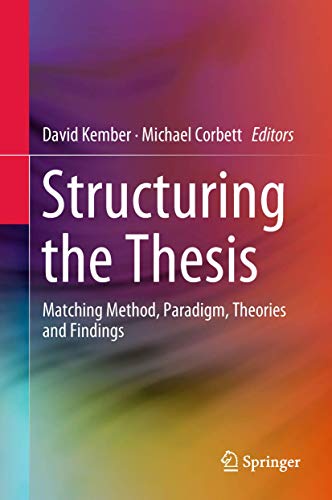
The book is a collective investigation of the structuring of theses in education, the social sciences and other disciplines that commonly do not follow the standard procedures of the scientific method. To help research students design a structure for their own thesis and liberate their investigations from the constraints associated with the use of the conventional structure, it explains how the structures adopted were designed to suit the topic, methodology and paradigm. It also provides a wide range of examples to draw upon, which suit a broad spectrum of theory, methodological approaches, research methods and paradigms. Additionally, by analyzing the methodologies and paradigms, and reviewing the methodological and paradigmatic spectrum, it offers a significant contribution to the way research is conceptualized.
The book addresses a number of key questions faced by students, supervisors and examiners:
•Why do examiners often find it difficult to read work in non-scientific disciplines when theses are structured in accordance with the conventional scientific method?
•Why do students in non-scientific disciplines struggle to write up the outcomes of their research in the conventional structure?
•What alternative thesis structures can be devised to better suit the wide range of methods?
•Which theories and paradigms are commonly followed in education and the social sciences and how do these perspectives influence the research process?
•What methods, theories and paradigms are commonly adopted by education and social science students and what problems do these pose when students write their theses?
"Sinopsis" puede pertenecer a otra edición de este libro.
Acerca del autor
David Kember is Professor in Education: Curriculum Methods and Pedagogy in the Faculty of Education at the University of Tasmania. Prior to that he worked in Hong Kong for 25 years, first at the Polytechnic University, then the Chinese University and finally as a Professor in Higher Education at the University of Hong Kong. He spent six years running an inter-institutional initiative operating across the eight universities in Hong Kong, known as the Action Learning Project, which supported 90 action research projects in which teachers introduced a wide variety of initiatives aiming to improve the quality of student learning. His research in the following areas has been particularly highly cited: student approaches to learning and the influence of teaching and assessment on them; the Chinese and Asian learner; motivation; reflective thinking; teachers’ beliefs about and approaches to teaching; action learning and research for teaching quality improvement; distance and online learning.
Michael Corbett is an educational sociologist whose work draws on social theory, as well as historical and geographic traditions. He has worked at the School of Education at Acadia University in Canada since 2002 with a three-year sojourn at the University of Tasmania (2015-17), where he held a research professorship in rural and regional education, and where he continues to hold an adjunct professorship. Corbett’s work focuses principally on rural education and he is a global leader in this field. He has studied youth educational decision-making, mobilities and education, the politics of educational assessment, literacies in rural contexts, improvisation and the arts in education, the position of rural identities and experience in education, conceptions of space and place, the viability of small rural schools, and "wicked" policy problems and controversies in education.
De la contraportada
The book is a collective investigation of the structuring of theses in education, the social sciences and other disciplines that commonly do not follow the standard procedures of the scientific method. To help research students design a structure for their own thesis and liberate their investigations from the constraints associated with the use of the conventional structure, it explains how the structures adopted were designed to suit the topic, methodology and paradigm. It also provides a wide range of examples to draw upon, which suit a broad spectrum of theory, methodological approaches, research methods and paradigms. Additionally, by analyzing the methodologies and paradigms, and reviewing the methodological and paradigmatic spectrum, it offers a significant contribution to the way research is conceptualized.
The book addresses a number of key questions faced by students, supervisors and examiners:
•Why do examiners often find it difficult to read work in non-scientific disciplines when theses are structured in accordance with the conventional scientific method?
•Why do students in non-scientific disciplines struggle to write up the outcomes of their research in the conventional structure?
•What alternative thesis structures can be devised to better suit the wide range of methods?
•Which theories and paradigms are commonly followed in education and the social sciences and how do these perspectives influence the research process?
•What methods, theories and paradigms are commonly adopted by education and social science students and what problems do these pose when students write their theses?
"Sobre este título" puede pertenecer a otra edición de este libro.
Resultados de la búsqueda para Structuring the Thesis: Matching Method, Paradigm,...

Imagen de archivo
Structuring the Thesis (eng)
Impresión bajo demandaLibrería: Brook Bookstore On Demand, Napoli, NA, Italia
Calificación del vendedor: 5 de 5 estrellas

Condición: new. Questo è un articolo print on demand. Nº de ref. del artículo: 587f20958095d8eb7e6a332bd20154eb
Comprar nuevo
EUR 110,26
Envío por EUR 8,00
Se envía de Italia a Estados Unidos de America
Se envía de Italia a Estados Unidos de America
Cantidad disponible: Más de 20 disponibles
Imagen de archivo
Structuring the Thesis: Matching Method, Paradigm, Theories and Findings
Librería: Ria Christie Collections, Uxbridge, Reino Unido
Calificación del vendedor: 5 de 5 estrellas
Condición: New. In. Nº de ref. del artículo: ria9789811305108_new
Comprar nuevo
EUR 141,32
Envío por EUR 13,20
Se envía de Reino Unido a Estados Unidos de America
Se envía de Reino Unido a Estados Unidos de America
Cantidad disponible: Más de 20 disponibles
Imagen del vendedor
Structuring the Thesis
Publicado por
Springer Nature Singapore Aug 2018, 2018
ISBN 10: 9811305102
ISBN 13: 9789811305108
Nuevo
Tapa dura
Librería: BuchWeltWeit Ludwig Meier e.K., Bergisch Gladbach, Alemania
Calificación del vendedor: 5 de 5 estrellas
Buch. Condición: Neu. This item is printed on demand - it takes 3-4 days longer - Neuware -The book is a collective investigation of the structuring of theses in education, the social sciences and other disciplines that commonly do not follow the standard procedures of the scientific method. To help research students design a structure for their own thesis and liberate their investigations from the constraints associated with the use of the conventional structure, it explains how the structures adopted were designed to suit the topic, methodology and paradigm. It also provides a wide range of examples to draw upon, which suit a broad spectrum of theory, methodological approaches, research methods and paradigms. Additionally, by analyzing the methodologies and paradigms, and reviewing the methodological and paradigmatic spectrum, it offers a significant contribution to the way research is conceptualized.The book addresses a number of key questions faced by students, supervisors and examiners:-Why do examiners often find it difficult to read work in non-scientific disciplines when theses are structured in accordance with the conventional scientific method -Why do students in non-scientific disciplines struggle to write up the outcomes of their research in the conventional structure -What alternative thesis structures can be devised to better suit the wide range of methods -Which theories and paradigms are commonly followed in education and the social sciences and how do these perspectives influence the research process -What methods, theories and paradigms are commonly adopted by education and social science students and what problems do these pose when students write their theses 448 pp. Englisch. Nº de ref. del artículo: 9789811305108
Comprar nuevo
EUR 139,09
Envío por EUR 23,00
Se envía de Alemania a Estados Unidos de America
Se envía de Alemania a Estados Unidos de America
Cantidad disponible: 2 disponibles
Imagen del vendedor
Structuring the Thesis
Impresión bajo demandaLibrería: moluna, Greven, Alemania
Calificación del vendedor: 5 de 5 estrellas
Gebunden. Condición: New. Dieser Artikel ist ein Print on Demand Artikel und wird nach Ihrer Bestellung fuer Sie gedruckt. Challenges the conventional thesis structure designed for the scientific methodOffers examples of thesis structures suited to the methods, theories and paradigms employed by the social sciences and humanities. Nº de ref. del artículo: 220289426
Comprar nuevo
EUR 118,61
Envío por EUR 48,99
Se envía de Alemania a Estados Unidos de America
Se envía de Alemania a Estados Unidos de America
Cantidad disponible: Más de 20 disponibles
Imagen de archivo
Structuring the Thesis : Matching Method, Paradigm, Theories and Findings
Librería: Books Puddle, New York, NY, Estados Unidos de America
Calificación del vendedor: 4 de 5 estrellas

Condición: New. Nº de ref. del artículo: 26376479382
Comprar nuevo
EUR 190,07
Envío por EUR 3,46
Se envía dentro de Estados Unidos de America
Se envía dentro de Estados Unidos de America
Cantidad disponible: 4 disponibles
Imagen del vendedor
Structuring the Thesis
Publicado por
Springer, Springer Aug 2018, 2018
ISBN 10: 9811305102
ISBN 13: 9789811305108
Nuevo
Tapa dura
Librería: buchversandmimpf2000, Emtmannsberg, BAYE, Alemania
Calificación del vendedor: 5 de 5 estrellas
Buch. Condición: Neu. This item is printed on demand - Print on Demand Titel. Neuware -The book is a collective investigation of the structuring of theses in education, the social sciences and other disciplines that commonly do not follow the standard procedures of the scientific method. To help research students design a structure for their own thesis and liberate their investigations from the constraints associated with the use of the conventional structure, it explains how the structures adopted were designed to suit the topic, methodology and paradigm. It also provides a wide range of examples to draw upon, which suit a broad spectrum of theory, methodological approaches, research methods and paradigms. Additionally, by analyzing the methodologies and paradigms, and reviewing the methodological and paradigmatic spectrum, it offers a significant contribution to the way research is conceptualized.The book addresses a number of key questions faced by students, supervisors and examiners:¿Why do examiners often find it difficult to read work in non-scientific disciplines when theses are structured in accordance with the conventional scientific method ¿Why do students in non-scientific disciplines struggle to write up the outcomes of their research in the conventional structure ¿What alternative thesis structures can be devised to better suit the wide range of methods ¿Which theories and paradigms are commonly followed in education and the social sciences and how do these perspectives influence the research process ¿What methods, theories and paradigms are commonly adopted by education and social science students and what problems do these pose when students write their theses Springer-Verlag KG, Sachsenplatz 4-6, 1201 Wien 448 pp. Englisch. Nº de ref. del artículo: 9789811305108
Comprar nuevo
EUR 139,09
Envío por EUR 60,00
Se envía de Alemania a Estados Unidos de America
Se envía de Alemania a Estados Unidos de America
Cantidad disponible: 1 disponibles
Imagen de archivo
Structuring the Thesis : Matching Method, Paradigm, Theories and Findings
Impresión bajo demandaLibrería: Majestic Books, Hounslow, Reino Unido
Calificación del vendedor: 4 de 5 estrellas
Condición: New. Print on Demand. Nº de ref. del artículo: 369566025
Comprar nuevo
EUR 195,54
Envío por EUR 7,60
Se envía de Reino Unido a Estados Unidos de America
Se envía de Reino Unido a Estados Unidos de America
Cantidad disponible: 4 disponibles
Imagen de archivo
Structuring the Thesis : Matching Method, Paradigm, Theories and Findings
Impresión bajo demandaLibrería: Biblios, Frankfurt am main, HESSE, Alemania
Calificación del vendedor: 4 de 5 estrellas
Condición: New. PRINT ON DEMAND. Nº de ref. del artículo: 18376479388
Comprar nuevo
EUR 197,76
Envío por EUR 9,95
Se envía de Alemania a Estados Unidos de America
Se envía de Alemania a Estados Unidos de America
Cantidad disponible: 4 disponibles
Imagen de archivo
Structuring the Thesis: Matching Method, Paradigm, Theories and Findings
Librería: Revaluation Books, Exeter, Reino Unido
Calificación del vendedor: 5 de 5 estrellas
Hardcover. Condición: Brand New. 427 pages. 9.25x6.50x1.25 inches. In Stock. Nº de ref. del artículo: x-9811305102
Comprar nuevo
EUR 198,45
Envío por EUR 14,61
Se envía de Reino Unido a Estados Unidos de America
Se envía de Reino Unido a Estados Unidos de America
Cantidad disponible: 2 disponibles
Imagen del vendedor
Structuring the Thesis : Matching Method, Paradigm, Theories and Findings
Librería: AHA-BUCH GmbH, Einbeck, Alemania
Calificación del vendedor: 5 de 5 estrellas
Buch. Condición: Neu. Druck auf Anfrage Neuware - Printed after ordering - The book is a collective investigation of the structuring of theses in education, the social sciences and other disciplines that commonly do not follow the standard procedures of the scientific method. To help research students design a structure for their own thesis and liberate their investigations from the constraints associated with the use of the conventional structure, it explains how the structures adopted were designed to suit the topic, methodology and paradigm. It also provides a wide range of examples to draw upon, which suit a broad spectrum of theory, methodological approaches, research methods and paradigms. Additionally, by analyzing the methodologies and paradigms, and reviewing the methodological and paradigmatic spectrum, it offers a significant contribution to the way research is conceptualized.The book addresses a number of key questions faced by students, supervisors and examiners:-Why do examiners often find it difficult to read work in non-scientific disciplines when theses are structured in accordance with the conventional scientific method -Why do students in non-scientific disciplines struggle to write up the outcomes of their research in the conventional structure -What alternative thesis structures can be devised to better suit the wide range of methods -Which theories and paradigms are commonly followed in education and the social sciences and how do these perspectives influence the research process -What methods, theories and paradigms are commonly adopted by education and social science students and what problems do these pose when students write their theses. Nº de ref. del artículo: 9789811305108
Comprar nuevo
EUR 195,51
Envío por EUR 30,50
Se envía de Alemania a Estados Unidos de America
Se envía de Alemania a Estados Unidos de America
Cantidad disponible: 1 disponibles