

Importe total (1 artículo artículos):
Destino del pedido:

9780190239732 - Only One Chance: How Environmental Pollution Impairs Brain Development -- And How To Protect The Brains Of The Next Generation (Environmental Ethics And Science Pol... (31 resultados)
Ir a los resultados principales
Filtros de búsqueda
Tipo de artículo
- Todos los tipos de productos
- Libros (31)
- Revistas y publicaciones (No hay ningún otro resultado que coincida con este filtro.)
- Cómics (No hay ningún otro resultado que coincida con este filtro.)
- Partituras (No hay ningún otro resultado que coincida con este filtro.)
- Arte, grabados y pósters (No hay ningún otro resultado que coincida con este filtro.)
- Fotografías (No hay ningún otro resultado que coincida con este filtro.)
- Mapas (No hay ningún otro resultado que coincida con este filtro.)
- Manuscritos y coleccionismo de papel (No hay ningún otro resultado que coincida con este filtro.)
Condición Más información
- Nuevo (22)
- Como nuevo, Excelente o Muy bueno (2)
- Bueno o Aceptable (7)
- Regular o Pobre (No hay ningún otro resultado que coincida con este filtro.)
- Tal como se indica (No hay ningún otro resultado que coincida con este filtro.)
Encuadernación
- Todas
- Tapa dura (No hay ningún otro resultado que coincida con este filtro.)
- Tapa blanda (31)
Más atributos
- Primera edición (No hay ningún otro resultado que coincida con este filtro.)
- Firmado (No hay ningún otro resultado que coincida con este filtro.)
- Sobrecubierta (No hay ningún otro resultado que coincida con este filtro.)
- Con imágenes (7)
- No impresión bajo demanda (21)
Idioma (1)
Gastos de envío gratis
Ubicación del vendedor
Valoración de los vendedores
-
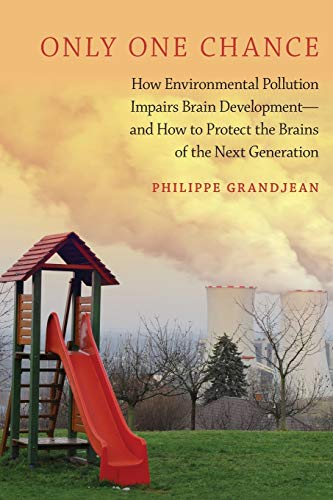
Only One Chance: How Environmental Pollution Impairs Brain Development -- and How to Protect the Brains of the Next Generation (Environmental Ethics and Science Policy Series)
Idioma: Inglés
Publicado por Oxford University Press, 2015
ISBN 10: 0190239735 ISBN 13: 9780190239732
Librería: World of Books (was SecondSale), Montgomery, IL, Estados Unidos de America
Calificación del vendedor: 5 de 5 estrellas

EUR 22,86
Gastos de envío gratis
Se envía dentro de Estados Unidos de AmericaCantidad disponible: 1 disponibles
Añadir al carritoCondición: Good. Item in good condition. Textbooks may not include supplemental items i.e. CDs, access codes etc.
-
Only One Chance : How Environmental Pollution Impairs Brain Development -- and How to Protect the Brains of the Next Generation
Idioma: Inglés
Publicado por Oxford University Press, Incorporated, 2015
ISBN 10: 0190239735 ISBN 13: 9780190239732
Librería: Better World Books, Mishawaka, IN, Estados Unidos de America
Calificación del vendedor: 5 de 5 estrellas
EUR 22,87
Gastos de envío gratis
Se envía dentro de Estados Unidos de AmericaCantidad disponible: 2 disponibles
Añadir al carritoCondición: Very Good. Pages intact with possible writing/highlighting. Binding strong with minor wear. Dust jackets/supplements may not be included. Stock photo provided. Product includes identifying sticker. Better World Books: Buy Books. Do Good.
-
Only One Chance: How Environmental Pollution Impairs Brain Development -- and How to Protect the Brains of the Next Generation (Environmental Ethics and Science Policy Series)
Idioma: Inglés
Publicado por Oxford University Press, 2015
ISBN 10: 0190239735 ISBN 13: 9780190239732
Librería: Textbooks_Source, Columbia, MO, Estados Unidos de America
Calificación del vendedor: 5 de 5 estrellas
EUR 19,41
Envío por EUR 3,46
Se envía dentro de Estados Unidos de AmericaCantidad disponible: 2 disponibles
Añadir al carritopaperback. Condición: Good. Reprint. Ships in a BOX from Central Missouri! May not include working access code. Will not include dust jacket. Has used sticker(s) and some writing or highlighting. UPS shipping for most packages, (Priority Mail for AK/HI/APO/PO Boxes).
-
Only One Chance: How Environmental Pollution Impairs Brain Development -- and How to Protect the Brains of the Next Generation (Environmental Ethics and Science Policy Series)
Idioma: Inglés
Publicado por Oxford University Press, 2015
ISBN 10: 0190239735 ISBN 13: 9780190239732
Librería: Books From California, Simi Valley, CA, Estados Unidos de America
Calificación del vendedor: 4 de 5 estrellas

EUR 21,56
Envío por EUR 4,33
Se envía dentro de Estados Unidos de AmericaCantidad disponible: 1 disponibles
Añadir al carritopaperback. Condición: Very Good.
-
Only One Chance : How Environmental Pollution Impairs Brain Development and How to Protect the Brains of the Next Generation
Idioma: Inglés
Publicado por Oxford University Press, 2015
ISBN 10: 0190239735 ISBN 13: 9780190239732
Librería: GreatBookPrices, Columbia, MD, Estados Unidos de America
Calificación del vendedor: 5 de 5 estrellas
EUR 31,65
Envío por EUR 2,29
Se envía dentro de Estados Unidos de AmericaCantidad disponible: 2 disponibles
Añadir al carritoCondición: good. May show signs of wear, highlighting, writing, and previous use. This item may be a former library book with typical markings. No guarantee on products that contain supplements Your satisfaction is 100% guaranteed. Twenty-five year bookseller with shipments to over fifty million happy customers.
-
Only One Chance : How Environmental Pollution Impairs Brain Development and How to Protect the Brains of the Next Generation
Idioma: Inglés
Publicado por Oxford University Press, 2015
ISBN 10: 0190239735 ISBN 13: 9780190239732
Librería: GreatBookPrices, Columbia, MD, Estados Unidos de America
Calificación del vendedor: 5 de 5 estrellas
EUR 34,16
Envío por EUR 2,29
Se envía dentro de Estados Unidos de AmericaCantidad disponible: Más de 20 disponibles
Añadir al carritoCondición: As New. Unread book in perfect condition.
-

Only One Chance
Idioma: Inglés
Publicado por Oxford University Press Inc, US, 2015
ISBN 10: 0190239735 ISBN 13: 9780190239732
Librería: Rarewaves.com USA, London, LONDO, Reino Unido
Calificación del vendedor: 5 de 5 estrellas
EUR 36,80
Gastos de envío gratis
Se envía de Reino Unido a Estados Unidos de AmericaCantidad disponible: Más de 20 disponibles
Añadir al carritoPaperback. Condición: New. Reprint. Today, one out of every six children suffers from some form of neurodevelopmental abnormality. The causes are mostly unknown. Some environmental chemicals are known to cause brain damage and many more are suspected of it, but few have been tested for such effects. Philippe Grandjean provides an authoritative and engaging analysis of how environmental hazards can damage brain development and what we can do about it. The brain's development is uniquely sensitive to toxic chemicals, and even small deficits may negatively impact our academic achievements, economic success, risk of delinquency, and quality of life. Chemicals such as mercury, polychlorinated biphenyls (PCBs), arsenic, and certain pesticides pose an insidious threat to the development of the next generation's brains. When chemicals in the environment affect the development of a child's brain, he or she is at risk for mental retardation, cerebral palsy, autism, ADHD, and a range of learning disabilities and other deficits that will remain for a lifetime.We can halt chemical brain drain and protect the next generation, however, and Grandjean tells us how. First, we need to control all of the 200 industrial chemicals that have already been proven to affect brain functions in adults, as their effects on the developing brain are likely even worse. We must also push for routine testing for brain toxicity, stricter regulation of chemical emissions, and more required disclosure on the part of industries who unleash hazardous chemicals into products and the environment. Decisions can still be made to protect the brains of future generations."In his crisply written, deeply documented book, Dr. Philippe Grandjean, renowned physician and public health specialist, describes the exquisite vulnerability of the developing human brain to toxic chemicals in the environment, a vulnerability that he ascribes to the brain's almost unimaginable complexity. Today, nearly one in 6 children is born with a neurodevelopmental disorder - a birth defect of the brain. One in 8 has attention deficit disorder. One in 68 is diagnosed with autism spectrum disorder. These rates are far higher than those of a generation ago, and, although they are less publicized, the problems are more prevalent than those caused by thalidomide in the 1960's. The increases are far too rapid to be genetic. They cannot be explained by better diagnosis. How then could they have come to be? Dr. Grandjean has a diagnosis -- the thousands of toxic chemicals that have been released to the environment in the past 40 years with no testing for toxicity. David P. Rall, former Director of the US National Institute of Environmental Health Sciences, once stated that 'If thalidomide had caused a ten-point loss of IQ rather than obvious birth defects of the limbs, it would probably still be on the market'. This is the core message of Dr. Grandjean's 'must read' book." - Philip J. Landrigan, Dean for Global Health, Ethel H. Wise Professor and Chairman and.
-
Only One Chance : How Environmental Pollution Impairs Brain Development and How to Protect the Brains of the Next Generation
Idioma: Inglés
Publicado por Oxford University Press, 2015
ISBN 10: 0190239735 ISBN 13: 9780190239732
Librería: GreatBookPrices, Columbia, MD, Estados Unidos de America
Calificación del vendedor: 5 de 5 estrellas
EUR 34,45
Envío por EUR 2,29
Se envía dentro de Estados Unidos de AmericaCantidad disponible: Más de 20 disponibles
Añadir al carritoCondición: New.
-
Only One Chance: How Environmental Pollution Impairs Brain Development -- and How to Protect the Brains of the Next Generation Format: Paperback
Idioma: Inglés
Publicado por Oxford University Press, 2015
ISBN 10: 0190239735 ISBN 13: 9780190239732
Librería: INDOO, Avenel, NJ, Estados Unidos de America
Calificación del vendedor: 5 de 5 estrellas
EUR 39,84
Gastos de envío gratis
Se envía dentro de Estados Unidos de AmericaCantidad disponible: Más de 20 disponibles
Añadir al carritoCondición: New. Brand New.
-
Only One Chance: How Environmental Pollution Impairs Brain Development -- And How To Protect The Brains Of The Next Generation (Environmental Ethics And Science Policy Series)
Idioma: Inglés
Publicado por Oxford University Press, 2015
ISBN 10: 0190239735 ISBN 13: 9780190239732
Librería: Trumpington Fine Books Limited, Gilmilnscroft, Ayrshire, Scotland, Reino Unido
Calificación del vendedor: 4 de 5 estrellas
EUR 21,44
Envío por EUR 24,29
Se envía de Reino Unido a Estados Unidos de AmericaCantidad disponible: 1 disponibles
Añadir al carritopaperback. Condición: Very Good. 212pp. (light orange spine). large 8vo. sized. 2015. First impression. A very good, clean, tight and bright copy. Light shelf wear and edge wear to the card covers and a slight crease to the lower corner of the front card cover. No inscriptions. A very good, clean, tight copy.
-
Only One Chance: How Environmental Pollution Impairs Brain Development -- and How to Protect the Brains of the Next Generation (Environmental Ethics and Science Policy Series)
Idioma: Inglés
Publicado por Oxford University Press, 2015
ISBN 10: 0190239735 ISBN 13: 9780190239732
Librería: Ria Christie Collections, Uxbridge, Reino Unido
Calificación del vendedor: 5 de 5 estrellas
EUR 34,44
Envío por EUR 13,86
Se envía de Reino Unido a Estados Unidos de AmericaCantidad disponible: Más de 20 disponibles
Añadir al carritoCondición: New. In.
-
Only One Chance : How Environmental Pollution Impairs Brain Development and How to Protect the Brains of the Next Generation
Idioma: Inglés
Publicado por Oxford University Press, 2015
ISBN 10: 0190239735 ISBN 13: 9780190239732
Librería: GreatBookPricesUK, Woodford Green, Reino Unido
Calificación del vendedor: 5 de 5 estrellas
EUR 33,34
Envío por EUR 17,35
Se envía de Reino Unido a Estados Unidos de AmericaCantidad disponible: Más de 20 disponibles
Añadir al carritoCondición: New.
-
Only One Chance
Idioma: Inglés
Publicado por Oxford University Press Inc, 2015
ISBN 10: 0190239735 ISBN 13: 9780190239732
Librería: Kennys Bookshop and Art Galleries Ltd., Galway, GY, Irlanda
Calificación del vendedor: 5 de 5 estrellas
EUR 39,37
Envío por EUR 10,50
Se envía de Irlanda a Estados Unidos de AmericaCantidad disponible: Más de 20 disponibles
Añadir al carritoCondición: New. One of every six children suffers from a neurodevelopmental abnormality of unknown cause. Environmental pollutants such as lead, mercury, and pesticides interfere with brain development, yet we do not test industrial chemicals for brain toxicity. Series: Environmental Ethics & Science Policy Series. Num Pages: 232 pages, black & white illustrations. BIC Classification: MBNH2; MJN; MJTF; RNP. Category: (G) General (US: Trade). Dimension: 236 x 156 x 14. Weight in Grams: 324. . 2015. Reprint. Paperback. . . . .
-
Only One Chance: How Environmental Pollution Impairs Brain Development -- and How to Protect the Brains of the Next Generation (Environmental Ethics and Science Policy Series)
Idioma: Inglés
Publicado por Oxford University Press, 2015
ISBN 10: 0190239735 ISBN 13: 9780190239732
Librería: GoldBooks, Denver, CO, Estados Unidos de America
Calificación del vendedor: 5 de 5 estrellas
EUR 47,94
Envío por EUR 4,77
Se envía dentro de Estados Unidos de AmericaCantidad disponible: 1 disponibles
Añadir al carritoPaperback. Condición: new. New Copy. Customer Service Guaranteed.
-
Only One Chance : How Environmental Pollution Impairs Brain Development and How to Protect the Brains of the Next Generation
Idioma: Inglés
Publicado por Oxford University Press, 2015
ISBN 10: 0190239735 ISBN 13: 9780190239732
Librería: GreatBookPricesUK, Woodford Green, Reino Unido
Calificación del vendedor: 5 de 5 estrellas
EUR 37,15
Envío por EUR 17,35
Se envía de Reino Unido a Estados Unidos de AmericaCantidad disponible: Más de 20 disponibles
Añadir al carritoCondición: As New. Unread book in perfect condition.
-
Only One Chance
Idioma: Inglés
Publicado por Oxford University Press Inc, 2015
ISBN 10: 0190239735 ISBN 13: 9780190239732
Librería: Kennys Bookstore, Olney, MD, Estados Unidos de America
Calificación del vendedor: 5 de 5 estrellas
EUR 48,15
Envío por EUR 9,11
Se envía dentro de Estados Unidos de AmericaCantidad disponible: Más de 20 disponibles
Añadir al carritoCondición: New. One of every six children suffers from a neurodevelopmental abnormality of unknown cause. Environmental pollutants such as lead, mercury, and pesticides interfere with brain development, yet we do not test industrial chemicals for brain toxicity. Series: Environmental Ethics & Science Policy Series. Num Pages: 232 pages, black & white illustrations. BIC Classification: MBNH2; MJN; MJTF; RNP. Category: (G) General (US: Trade). Dimension: 236 x 156 x 14. Weight in Grams: 324. . 2015. Reprint. Paperback. . . . . Books ship from the US and Ireland.
-
Only One Chance (Paperback)
Idioma: Inglés
Publicado por Oxford University Press Inc, New York, 2015
ISBN 10: 0190239735 ISBN 13: 9780190239732
Librería: Grand Eagle Retail, Bensenville, IL, Estados Unidos de America
Calificación del vendedor: 5 de 5 estrellas
EUR 59,50
Gastos de envío gratis
Se envía dentro de Estados Unidos de AmericaCantidad disponible: 1 disponibles
Añadir al carritoPaperback. Condición: new. Paperback. Today, one out of every six children suffers from some form of neurodevelopmental abnormality. The causes are mostly unknown. Some environmental chemicals are known to cause brain damage and many more are suspected of it, but few have been tested for such effects. Philippe Grandjean provides an authoritative and engaging analysis of how environmental hazards can damage brain development and what we can do about it. The brain's development isuniquely sensitive to toxic chemicals, and even small deficits may negatively impact our academic achievements, economic success, risk of delinquency, and quality of life. Chemicals such as mercury,polychlorinated biphenyls (PCBs), arsenic, and certain pesticides pose an insidious threat to the development of the next generation's brains. When chemicals in the environment affect the development of a child's brain, he or she is at risk for mental retardation, cerebral palsy, autism, ADHD, and a range of learning disabilities and other deficits that will remain for a lifetime.We can halt chemical brain drain and protect the next generation, however, and Grandjean tellsus how. First, we need to control all of the 200 industrial chemicals that have already been proven to affect brain functions in adults, as their effects on the developing brain are likely even worse.We must also push for routine testing for brain toxicity, stricter regulation of chemical emissions, and more required disclosure on the part of industries who unleash hazardous chemicals into products and the environment. Decisions can still be made to protect the brains of future generations."In his crisply written, deeply documented book, Dr. Philippe Grandjean, renowned physician and public health specialist, describes the exquisite vulnerability of thedeveloping human brain to toxic chemicals in the environment, a vulnerability that he ascribes to the brain's almost unimaginable complexity. Today, nearly one in 6 children is born with aneurodevelopmental disorder - a birth defect of the brain. One in 8 has attention deficit disorder. One in 68 is diagnosed with autism spectrum disorder. These rates are far higher than those of a generation ago, and, although they are less publicized, the problems are more prevalent than those caused by thalidomide in the 1960's. The increases are far too rapid to be genetic. They cannot be explained by better diagnosis. How then could they have come to be? Dr. Grandjean has a diagnosis --the thousands of toxic chemicals that have been released to the environment in the past 40 years with no testing for toxicity. David P. Rall, former Director of the US National Institute of EnvironmentalHealth Sciences, once stated that 'If thalidomide had caused a ten-point loss of IQ rather than obvious birth defects of the limbs, it would probably still be on the market'. This is the core message of Dr. Grandjean's 'must read' book." - Philip J. Landrigan, Dean for Global Health, Ethel H. Wise Professor and Chairman and Director, Children's Environmental Health Center, Mount Sinai School of Medicine One of every six children suffers from a neurodevelopmental abnormality of unknown cause. Environmental pollutants such as lead, mercury, and pesticides interfere with brain development, yet we do not test industrial chemicals for brain toxicity. Shipping may be from multiple locations in the US or from the UK, depending on stock availability.
-
Only One Chance: How Environmental Pollution Impairs Brain Development and How to Protect the Brains of the Next Generation
Librería: Revaluation Books, Exeter, Reino Unido
Calificación del vendedor: 5 de 5 estrellas
EUR 60,71
Envío por EUR 11,57
Se envía de Reino Unido a Estados Unidos de AmericaCantidad disponible: 1 disponibles
Añadir al carritoPaperback. Condición: Brand New. 1st edition. 232 pages. 9.00x6.00x0.75 inches. In Stock.
-
Only One Chance : How Environmental Pollution Impairs Brain Development and How to Protect the Brains of the Next Generation
Idioma: Inglés
Publicado por Oxford University Press, 2015
ISBN 10: 0190239735 ISBN 13: 9780190239732
Librería: GreatBookPricesUK, Woodford Green, Reino Unido
Calificación del vendedor: 5 de 5 estrellas
EUR 54,78
Envío por EUR 17,35
Se envía de Reino Unido a Estados Unidos de AmericaCantidad disponible: 2 disponibles
Añadir al carritoCondición: good. May show signs of wear, highlighting, writing, and previous use. This item may be a former library book with typical markings. No guarantee on products that contain supplements Your satisfaction is 100% guaranteed. Twenty-five year bookseller with shipments to over fifty million happy customers.
-
Only One Chance: How Environmental Pollution Impairs Brain Development and How to Protect the Brains of the Next Generation
Librería: Revaluation Books, Exeter, Reino Unido
Calificación del vendedor: 5 de 5 estrellas
EUR 70,92
Envío por EUR 11,57
Se envía de Reino Unido a Estados Unidos de AmericaCantidad disponible: 2 disponibles
Añadir al carritoPaperback. Condición: Brand New. 1st edition. 232 pages. 9.00x6.00x0.75 inches. In Stock.
-

Only One Chance
Idioma: Inglés
Publicado por Oxford University Press Inc, US, 2015
ISBN 10: 0190239735 ISBN 13: 9780190239732
Librería: Rarewaves.com UK, London, Reino Unido
Calificación del vendedor: 5 de 5 estrellas
EUR 33,36
Envío por EUR 75,18
Se envía de Reino Unido a Estados Unidos de AmericaCantidad disponible: Más de 20 disponibles
Añadir al carritoPaperback. Condición: New. Reprint. Today, one out of every six children suffers from some form of neurodevelopmental abnormality. The causes are mostly unknown. Some environmental chemicals are known to cause brain damage and many more are suspected of it, but few have been tested for such effects. Philippe Grandjean provides an authoritative and engaging analysis of how environmental hazards can damage brain development and what we can do about it. The brain's development is uniquely sensitive to toxic chemicals, and even small deficits may negatively impact our academic achievements, economic success, risk of delinquency, and quality of life. Chemicals such as mercury, polychlorinated biphenyls (PCBs), arsenic, and certain pesticides pose an insidious threat to the development of the next generation's brains. When chemicals in the environment affect the development of a child's brain, he or she is at risk for mental retardation, cerebral palsy, autism, ADHD, and a range of learning disabilities and other deficits that will remain for a lifetime.We can halt chemical brain drain and protect the next generation, however, and Grandjean tells us how. First, we need to control all of the 200 industrial chemicals that have already been proven to affect brain functions in adults, as their effects on the developing brain are likely even worse. We must also push for routine testing for brain toxicity, stricter regulation of chemical emissions, and more required disclosure on the part of industries who unleash hazardous chemicals into products and the environment. Decisions can still be made to protect the brains of future generations."In his crisply written, deeply documented book, Dr. Philippe Grandjean, renowned physician and public health specialist, describes the exquisite vulnerability of the developing human brain to toxic chemicals in the environment, a vulnerability that he ascribes to the brain's almost unimaginable complexity. Today, nearly one in 6 children is born with a neurodevelopmental disorder - a birth defect of the brain. One in 8 has attention deficit disorder. One in 68 is diagnosed with autism spectrum disorder. These rates are far higher than those of a generation ago, and, although they are less publicized, the problems are more prevalent than those caused by thalidomide in the 1960's. The increases are far too rapid to be genetic. They cannot be explained by better diagnosis. How then could they have come to be? Dr. Grandjean has a diagnosis -- the thousands of toxic chemicals that have been released to the environment in the past 40 years with no testing for toxicity. David P. Rall, former Director of the US National Institute of Environmental Health Sciences, once stated that 'If thalidomide had caused a ten-point loss of IQ rather than obvious birth defects of the limbs, it would probably still be on the market'. This is the core message of Dr. Grandjean's 'must read' book." - Philip J. Landrigan, Dean for Global Health, Ethel H. Wise Professor and Chairman and.
-
Only One Chance
Idioma: Inglés
Publicado por Oxford University Press, 2015
ISBN 10: 0190239735 ISBN 13: 9780190239732
Librería: PBShop.store US, Wood Dale, IL, Estados Unidos de America
Calificación del vendedor: 5 de 5 estrellas
EUR 37,09
Gastos de envío gratis
Se envía dentro de Estados Unidos de AmericaCantidad disponible: Más de 20 disponibles
Añadir al carritoPAP. Condición: New. New Book. Shipped from UK. THIS BOOK IS PRINTED ON DEMAND. Established seller since 2000.
-
Only One Chance
Idioma: Inglés
Publicado por Oxford University Press, 2015
ISBN 10: 0190239735 ISBN 13: 9780190239732
Librería: PBShop.store UK, Fairford, GLOS, Reino Unido
Calificación del vendedor: 5 de 5 estrellas
EUR 34,59
Envío por EUR 4,81
Se envía de Reino Unido a Estados Unidos de AmericaCantidad disponible: Más de 20 disponibles
Añadir al carritoPAP. Condición: New. New Book. Delivered from our UK warehouse in 4 to 14 business days. THIS BOOK IS PRINTED ON DEMAND. Established seller since 2000.
-
Only One Chance: How Environmental Pollution Impairs Brain Development -- and How to Protect the Brains of the Next Generation (eng)
Idioma: Inglés
Publicado por Oxford University Press, 2015
ISBN 10: 0190239735 ISBN 13: 9780190239732
Librería: Brook Bookstore On Demand, Napoli, NA, Italia
Calificación del vendedor: 3 de 5 estrellas

EUR 45,64
Envío por EUR 5,50
Se envía de Italia a Estados Unidos de AmericaCantidad disponible: Más de 20 disponibles
Añadir al carritoCondición: new. Questo è un articolo print on demand.
-
Only One Chance: How Environmental Pollution Impairs Brain Development - and How to Protect the Brains of the Next Generation (ENVIRONMENTAL ETHICS AND SCIENCE POLICY SERIES)
Idioma: Inglés
Publicado por Oxford University Press, 2015
ISBN 10: 0190239735 ISBN 13: 9780190239732
Librería: Majestic Books, Hounslow, Reino Unido
Calificación del vendedor: 4 de 5 estrellas
EUR 49,12
Envío por EUR 7,52
Se envía de Reino Unido a Estados Unidos de AmericaCantidad disponible: 4 disponibles
Añadir al carritoCondición: New. Print on Demand pp. 232.
-
Only One Chance: How Environmental Pollution Impairs Brain Development - and How to Protect the Brains of the Next Generation (ENVIRONMENTAL ETHICS AND SCIENCE POLICY SERIES)
Idioma: Inglés
Publicado por Oxford University Press OUP, 2015
ISBN 10: 0190239735 ISBN 13: 9780190239732
Librería: Books Puddle, New York, NY, Estados Unidos de America
Calificación del vendedor: 4 de 5 estrellas
EUR 54,56
Envío por EUR 3,46
Se envía dentro de Estados Unidos de AmericaCantidad disponible: 4 disponibles
Añadir al carritoCondición: New. Print on Demand pp. 232.
-
Only One Chance: How Environmental Pollution Impairs Brain Development - and How to Protect the Brains of the Next Generation (ENVIRONMENTAL ETHICS AND SCIENCE POLICY SERIES)
Idioma: Inglés
Publicado por Oxford University Press, 2015
ISBN 10: 0190239735 ISBN 13: 9780190239732
Librería: Biblios, Frankfurt am main, HESSE, Alemania
Calificación del vendedor: 4 de 5 estrellas
EUR 49,24
Envío por EUR 9,95
Se envía de Alemania a Estados Unidos de AmericaCantidad disponible: 4 disponibles
Añadir al carritoCondición: New. PRINT ON DEMAND pp. 232.
-
Only One Chance: How Environmental Pollution Impairs Brain Development - and How to Protect the Brains of the Next Generation
Idioma: Inglés
Publicado por Oxford University Press Inc, 2015
ISBN 10: 0190239735 ISBN 13: 9780190239732
Librería: THE SAINT BOOKSTORE, Southport, Reino Unido
Calificación del vendedor: 5 de 5 estrellas
EUR 45,99
Envío por EUR 16,71
Se envía de Reino Unido a Estados Unidos de AmericaCantidad disponible: Más de 20 disponibles
Añadir al carritoPaperback / softback. Condición: New. This item is printed on demand. New copy - Usually dispatched within 5-9 working days 370.
-

Only One Chance (Paperback)
Idioma: Inglés
Publicado por Oxford University Press Inc, New York, 2015
ISBN 10: 0190239735 ISBN 13: 9780190239732
Librería: CitiRetail, Stevenage, Reino Unido
Calificación del vendedor: 5 de 5 estrellas
EUR 38,70
Envío por EUR 42,79
Se envía de Reino Unido a Estados Unidos de AmericaCantidad disponible: 1 disponibles
Añadir al carritoPaperback. Condición: new. Paperback. Today, one out of every six children suffers from some form of neurodevelopmental abnormality. The causes are mostly unknown. Some environmental chemicals are known to cause brain damage and many more are suspected of it, but few have been tested for such effects. Philippe Grandjean provides an authoritative and engaging analysis of how environmental hazards can damage brain development and what we can do about it. The brain's development isuniquely sensitive to toxic chemicals, and even small deficits may negatively impact our academic achievements, economic success, risk of delinquency, and quality of life. Chemicals such as mercury,polychlorinated biphenyls (PCBs), arsenic, and certain pesticides pose an insidious threat to the development of the next generation's brains. When chemicals in the environment affect the development of a child's brain, he or she is at risk for mental retardation, cerebral palsy, autism, ADHD, and a range of learning disabilities and other deficits that will remain for a lifetime.We can halt chemical brain drain and protect the next generation, however, and Grandjean tellsus how. First, we need to control all of the 200 industrial chemicals that have already been proven to affect brain functions in adults, as their effects on the developing brain are likely even worse.We must also push for routine testing for brain toxicity, stricter regulation of chemical emissions, and more required disclosure on the part of industries who unleash hazardous chemicals into products and the environment. Decisions can still be made to protect the brains of future generations."In his crisply written, deeply documented book, Dr. Philippe Grandjean, renowned physician and public health specialist, describes the exquisite vulnerability of thedeveloping human brain to toxic chemicals in the environment, a vulnerability that he ascribes to the brain's almost unimaginable complexity. Today, nearly one in 6 children is born with aneurodevelopmental disorder - a birth defect of the brain. One in 8 has attention deficit disorder. One in 68 is diagnosed with autism spectrum disorder. These rates are far higher than those of a generation ago, and, although they are less publicized, the problems are more prevalent than those caused by thalidomide in the 1960's. The increases are far too rapid to be genetic. They cannot be explained by better diagnosis. How then could they have come to be? Dr. Grandjean has a diagnosis --the thousands of toxic chemicals that have been released to the environment in the past 40 years with no testing for toxicity. David P. Rall, former Director of the US National Institute of EnvironmentalHealth Sciences, once stated that 'If thalidomide had caused a ten-point loss of IQ rather than obvious birth defects of the limbs, it would probably still be on the market'. This is the core message of Dr. Grandjean's 'must read' book." - Philip J. Landrigan, Dean for Global Health, Ethel H. Wise Professor and Chairman and Director, Children's Environmental Health Center, Mount Sinai School of Medicine One of every six children suffers from a neurodevelopmental abnormality of unknown cause. Environmental pollutants such as lead, mercury, and pesticides interfere with brain development, yet we do not test industrial chemicals for brain toxicity. This item is printed on demand. Shipping may be from our UK warehouse or from our Australian or US warehouses, depending on stock availability.
-

Only One Chance : How Environmental Pollution Impairs Brain Development -- And How to Protect the Brains of the Next Generation
Idioma: Inglés
Publicado por Oxford University Press, 2015
ISBN 10: 0190239735 ISBN 13: 9780190239732
Librería: AHA-BUCH GmbH, Einbeck, Alemania
Calificación del vendedor: 5 de 5 estrellas
EUR 48,76
Envío por EUR 62,01
Se envía de Alemania a Estados Unidos de AmericaCantidad disponible: 1 disponibles
Añadir al carritoTaschenbuch. Condición: Neu. nach der Bestellung gedruckt Neuware - Printed after ordering - Today, one out of every six children suffers from some form of neurodevelopmental abnormality. The causes are mostly unknown. Some environmental chemicals are known to cause brain damage and many more are suspected of it, but few have been tested for such effects. Philippe Grandjean provides an authoritative and engaging analysis of how environmental hazards can damage brain development and what we can do about it.


