
Artículos relacionados a War! What Is It Good For?: Conflict and the Fate of...
War! What Is It Good For?: Conflict and the Fate of Civilization from Primates to Robots - Tapa dura
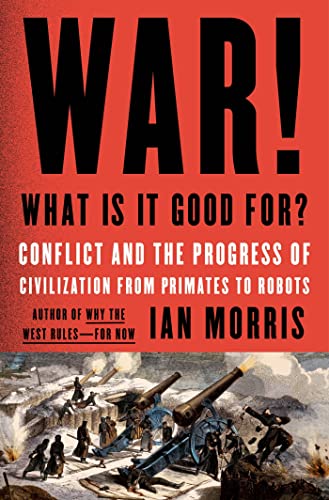
Sinopsis
A powerful and provocative exploration of how war has changed our society—for the better
"War! . . . . / What is it good for? / Absolutely nothing," says the famous song—but archaeology, history, and biology show that war in fact has been good for something. Surprising as it sounds, war has made humanity safer and richer.
In War! What Is It Good For?, the renowned historian and archaeologist Ian Morris tells the gruesome, gripping story of fifteen thousand years of war, going beyond the battles and brutality to reveal what war has really done to and for the world. Stone Age people lived in small, feuding societies and stood a one-in-ten or even one-in-five chance of dying violently. In the twentieth century, by contrast—despite two world wars, Hiroshima, and the Holocaust—fewer than one person in a hundred died violently. The explanation: War, and war alone, has created bigger, more complex societies, ruled by governments that have stamped out internal violence. Strangely enough, killing has made the world safer, and the safety it has produced has allowed people to make the world richer too.
War has been history's greatest paradox, but this searching study of fifteen thousand years of violence suggests that the next half century is going to be the most dangerous of all time. If we can survive it, the age-old dream of ending war may yet come to pass. But, Morris argues, only if we understand what war has been good for can we know where it will take us next.
"Sinopsis" puede pertenecer a otra edición de este libro.
Acerca del autor
Ian Morris is the Jean and Rebecca Willard Professor of Classics and Professor in History at Stanford University and the author of the critically acclaimed Why the West Rules—for Now. He has published ten scholarly books and has directed excavations in Greece and Italy. He lives in the Santa Cruz Mountains in California.
"Sobre este título" puede pertenecer a otra edición de este libro.
Resultados de la búsqueda para War! What Is It Good For?: Conflict and the Fate of...

Imagen del vendedor
War! What Is It Good For?: Conflict and the Progress of Civilization from Primates to Robots
Publicado por
Farrar, Straus and Giroux, 2014
ISBN 10: 0374286000
ISBN 13: 9780374286002
Antiguo o usado
Tapa dura
Librería: Zoom Books Company, Lynden, WA, Estados Unidos de America
Calificación del vendedor: 5 de 5 estrellas

Condición: very_good. Book is in very good condition and may include minimal underlining highlighting. The book can also include "From the library of" labels. May not contain miscellaneous items toys, dvds, etc. . We offer 100% money back guarantee and 24 7 customer service. Nº de ref. del artículo: ZBV.0374286000.VG
Comprar usado
EUR 5,79
Gastos de envío gratis
Se envía dentro de Estados Unidos de America
Se envía dentro de Estados Unidos de America
Cantidad disponible: 1 disponibles
Imagen de archivo
War! What Is It Good For? : Conflict and the Progress of Civilization from Primates to Robots
Publicado por
Farrar, Straus & Giroux, 2014
ISBN 10: 0374286000
ISBN 13: 9780374286002
Antiguo o usado
Tapa dura
Original o primera edición
Librería: Better World Books, Mishawaka, IN, Estados Unidos de America
Calificación del vendedor: 5 de 5 estrellas
Condición: Good. First Edition. Former library copy. Pages intact with minimal writing/highlighting. The binding may be loose and creased. Dust jackets/supplements are not included. Includes library markings. Stock photo provided. Product includes identifying sticker. Better World Books: Buy Books. Do Good. Nº de ref. del artículo: 4235527-6
Comprar usado
EUR 6,63
Gastos de envío gratis
Se envía dentro de Estados Unidos de America
Se envía dentro de Estados Unidos de America
Cantidad disponible: 2 disponibles
Imagen del vendedor
War! What Is It Good For?: Conflict and the Progress of Civilization from Primates to Robots
Publicado por
Farrar, Straus and Giroux, 2014
ISBN 10: 0374286000
ISBN 13: 9780374286002
Antiguo o usado
Tapa dura
Librería: Goodwill, Brooklyn Park, MN, Estados Unidos de America
Calificación del vendedor: 4 de 5 estrellas

Condición: good. All pages and cover are intact including the dust cover, if applicable . Spine may show signs of wear. Pages may include limited notes and highlighting. May include "From the library of" labels. Shrink wrap, dust covers, or boxed set case may be missing. Item may be missing bundled media. Nº de ref. del artículo: MINV.0374286000.G
Comprar usado
EUR 3,88
Envío por EUR 3,63
Se envía dentro de Estados Unidos de America
Se envía dentro de Estados Unidos de America
Cantidad disponible: 1 disponibles
Imagen de archivo
War! What Is It Good For?: Conflict and the Progress of Civilization from Primates to Robots
Publicado por
Farrar, Straus and Giroux, 2014
ISBN 10: 0374286000
ISBN 13: 9780374286002
Antiguo o usado
Tapa dura
Librería: ThriftBooks-Reno, Reno, NV, Estados Unidos de America
Calificación del vendedor: 5 de 5 estrellas
Hardcover. Condición: Fair. No Jacket. Former library book; Readable copy. Pages may have considerable notes/highlighting. ~ ThriftBooks: Read More, Spend Less. Nº de ref. del artículo: G0374286000I5N10
Comprar usado
EUR 7,55
Gastos de envío gratis
Se envía dentro de Estados Unidos de America
Se envía dentro de Estados Unidos de America
Cantidad disponible: 1 disponibles
Imagen de archivo
War! What Is It Good For?: Conflict and the Progress of Civilization from Primates to Robots
Publicado por
Farrar, Straus and Giroux, 2014
ISBN 10: 0374286000
ISBN 13: 9780374286002
Antiguo o usado
Tapa dura
Librería: ThriftBooks-Reno, Reno, NV, Estados Unidos de America
Calificación del vendedor: 5 de 5 estrellas
Hardcover. Condición: Good. No Jacket. Missing dust jacket; Pages can have notes/highlighting. Spine may show signs of wear. ~ ThriftBooks: Read More, Spend Less. Nº de ref. del artículo: G0374286000I3N01
Comprar usado
EUR 7,55
Gastos de envío gratis
Se envía dentro de Estados Unidos de America
Se envía dentro de Estados Unidos de America
Cantidad disponible: 1 disponibles
Imagen de archivo
War! What Is It Good For?: Conflict and the Progress of Civilization from Primates to Robots
Publicado por
Farrar, Straus and Giroux, 2014
ISBN 10: 0374286000
ISBN 13: 9780374286002
Antiguo o usado
Tapa dura
Librería: ThriftBooks-Dallas, Dallas, TX, Estados Unidos de America
Calificación del vendedor: 5 de 5 estrellas
Hardcover. Condición: Good. No Jacket. Missing dust jacket; Pages can have notes/highlighting. Spine may show signs of wear. ~ ThriftBooks: Read More, Spend Less. Nº de ref. del artículo: G0374286000I3N01
Comprar usado
EUR 7,59
Gastos de envío gratis
Se envía dentro de Estados Unidos de America
Se envía dentro de Estados Unidos de America
Cantidad disponible: 1 disponibles
Imagen de archivo
War! What Is It Good For?: Conflict and the Progress of Civilization from Primates to Robots
Publicado por
Farrar, Straus and Giroux, 2014
ISBN 10: 0374286000
ISBN 13: 9780374286002
Antiguo o usado
Tapa dura
Librería: ThriftBooks-Atlanta, AUSTELL, GA, Estados Unidos de America
Calificación del vendedor: 5 de 5 estrellas
Hardcover. Condición: Good. No Jacket. Former library book; Pages can have notes/highlighting. Spine may show signs of wear. ~ ThriftBooks: Read More, Spend Less. Nº de ref. del artículo: G0374286000I3N10
Comprar usado
EUR 7,59
Gastos de envío gratis
Se envía dentro de Estados Unidos de America
Se envía dentro de Estados Unidos de America
Cantidad disponible: 1 disponibles
Imagen de archivo
War! What Is It Good For?: Conflict and the Progress of Civilization from Primates to Robots
Publicado por
Farrar, Straus and Giroux, 2014
ISBN 10: 0374286000
ISBN 13: 9780374286002
Antiguo o usado
Tapa dura
Librería: ThriftBooks-Atlanta, AUSTELL, GA, Estados Unidos de America
Calificación del vendedor: 5 de 5 estrellas
Hardcover. Condición: Good. No Jacket. Pages can have notes/highlighting. Spine may show signs of wear. ~ ThriftBooks: Read More, Spend Less. Nº de ref. del artículo: G0374286000I3N00
Comprar usado
EUR 7,59
Gastos de envío gratis
Se envía dentro de Estados Unidos de America
Se envía dentro de Estados Unidos de America
Cantidad disponible: 1 disponibles
Imagen de archivo
War! What Is It Good For?: Conflict and the Progress of Civilization from Primates to Robots
Publicado por
Farrar, Straus and Giroux, 2014
ISBN 10: 0374286000
ISBN 13: 9780374286002
Antiguo o usado
Tapa dura
Librería: World of Books (was SecondSale), Montgomery, IL, Estados Unidos de America
Calificación del vendedor: 5 de 5 estrellas
Hardback. Condición: Very Good. A POWERFUL AND PROVOCATIVE EXPLORATION OF HOW WAR HAS CHANGED OUT SOCIETY--FOR THE BETERWar / What is it good for? / Absolutely nothing, says the famous song--but archaeology, history, and biology show that war in fact has been good for something. Surprising as it sounds, war has made humanity safer and richer. In War What Is It Good For?, the renowned historian and archaeologist Ian Morris tells the gruesome, gripping story of fifteen thousand years of war, going beyond the battles and brutality to reveal what war has really done to and for the world. Stone Age people lived in small, feuding societies and stood a one-in-ten or even one-in-five chance of dying violently. In the twentieth century, by contrast--despite two world wars, Hiroshima, and the Holocaust--fewer than one person in a hundred died violently. The explanation: War, and war alone, has created bigger, more complex societies, ruled by governments that have stamped out internal violence. Strangely enough, killing has made the world safer, and the safety it has produced has allowed people to make the world richer too. War has been history's greatest paradox, but this searching study of fifteen thousand years of violence suggests that the next half century is going to be the most dangerous of all time. If we can survive it, the age-old dream of ending war may yet come to pass. But, Morris argues, only if we understand what war has been good for can we know where it will take us next. Nº de ref. del artículo: 00101575662
Comprar usado
EUR 10,17
Gastos de envío gratis
Se envía dentro de Estados Unidos de America
Se envía dentro de Estados Unidos de America
Cantidad disponible: 1 disponibles
Imagen de archivo
War! What Is It Good For?: Conflict and the Progress of Civilization from Primates to Robots
Publicado por
Farrar, Straus and Giroux, 2014
ISBN 10: 0374286000
ISBN 13: 9780374286002
Antiguo o usado
Tapa dura
Librería: World of Books (was SecondSale), Montgomery, IL, Estados Unidos de America
Calificación del vendedor: 5 de 5 estrellas
Hardback. Condición: Good. A POWERFUL AND PROVOCATIVE EXPLORATION OF HOW WAR HAS CHANGED OUT SOCIETY--FOR THE BETERWar / What is it good for? / Absolutely nothing, says the famous song--but archaeology, history, and biology show that war in fact has been good for something. Surprising as it sounds, war has made humanity safer and richer. In War What Is It Good For?, the renowned historian and archaeologist Ian Morris tells the gruesome, gripping story of fifteen thousand years of war, going beyond the battles and brutality to reveal what war has really done to and for the world. Stone Age people lived in small, feuding societies and stood a one-in-ten or even one-in-five chance of dying violently. In the twentieth century, by contrast--despite two world wars, Hiroshima, and the Holocaust--fewer than one person in a hundred died violently. The explanation: War, and war alone, has created bigger, more complex societies, ruled by governments that have stamped out internal violence. Strangely enough, killing has made the world safer, and the safety it has produced has allowed people to make the world richer too. War has been history's greatest paradox, but this searching study of fifteen thousand years of violence suggests that the next half century is going to be the most dangerous of all time. If we can survive it, the age-old dream of ending war may yet come to pass. But, Morris argues, only if we understand what war has been good for can we know where it will take us next. Nº de ref. del artículo: CIN0374286000G
Comprar usado
EUR 10,17
Gastos de envío gratis
Se envía dentro de Estados Unidos de America
Se envía dentro de Estados Unidos de America
Cantidad disponible: 1 disponibles